
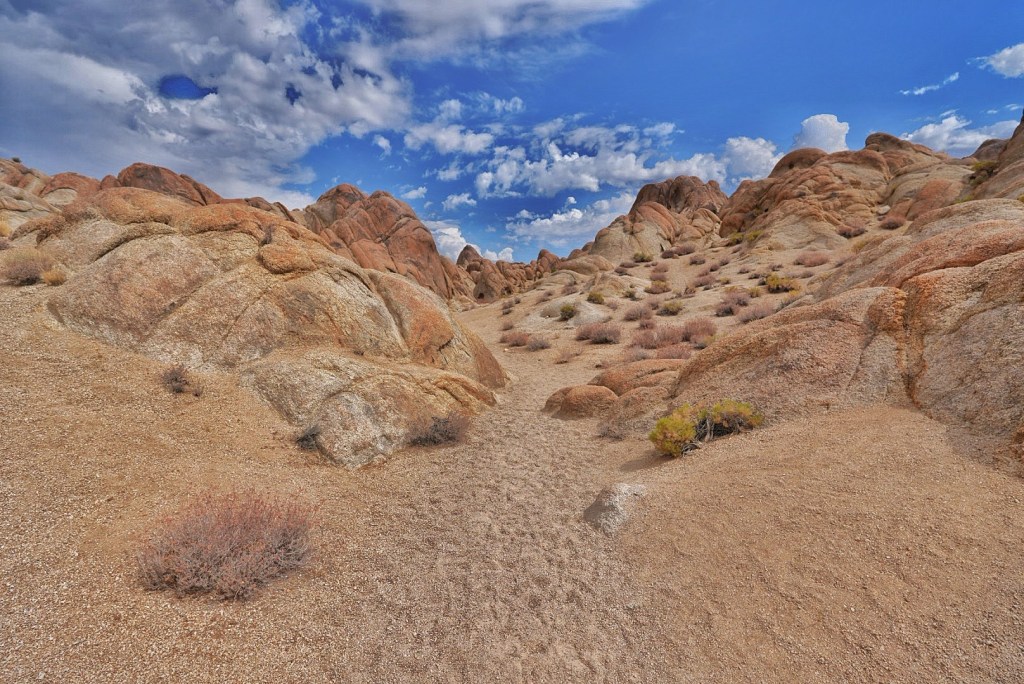
We are indeed still in California, but the surrounding landscape is named after Alabama — evidently because miners naming their claims in the late 19th century were sympathetic to the Confederate cause. It was a different time I suppose. We each grabbed a cinnamon roll at the very popular Alabama Hills Bakery before venturing deeper into these so-called Alabama Hills.
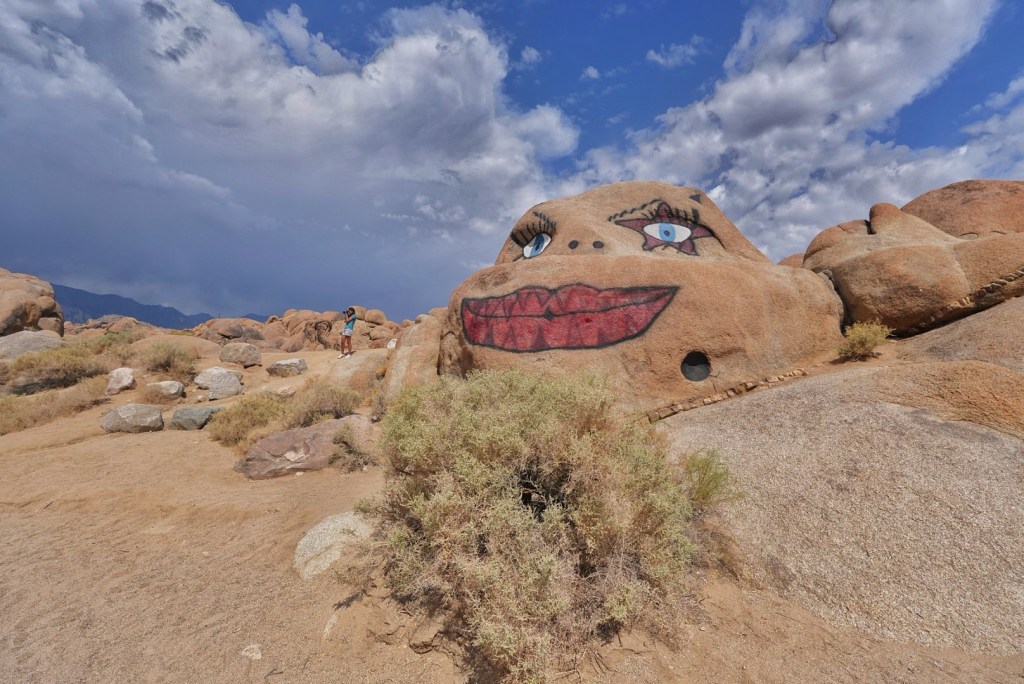
First we encountered what is known as Nightmare Rock, and I think we can all see why. Rock painting is obviously frowned upon within such lands, but since people seem to keep repainting the same rock, I guess it’s ok? Anyway, our main objective was a loop trail that went by a few small natural arches. This required briefly driving on an unpaved road, so I thought perhaps it was maybe good we had a rental car, and not my own Hyundai, whose steering wheel rattles anytime I’m not driving on a smooth road.
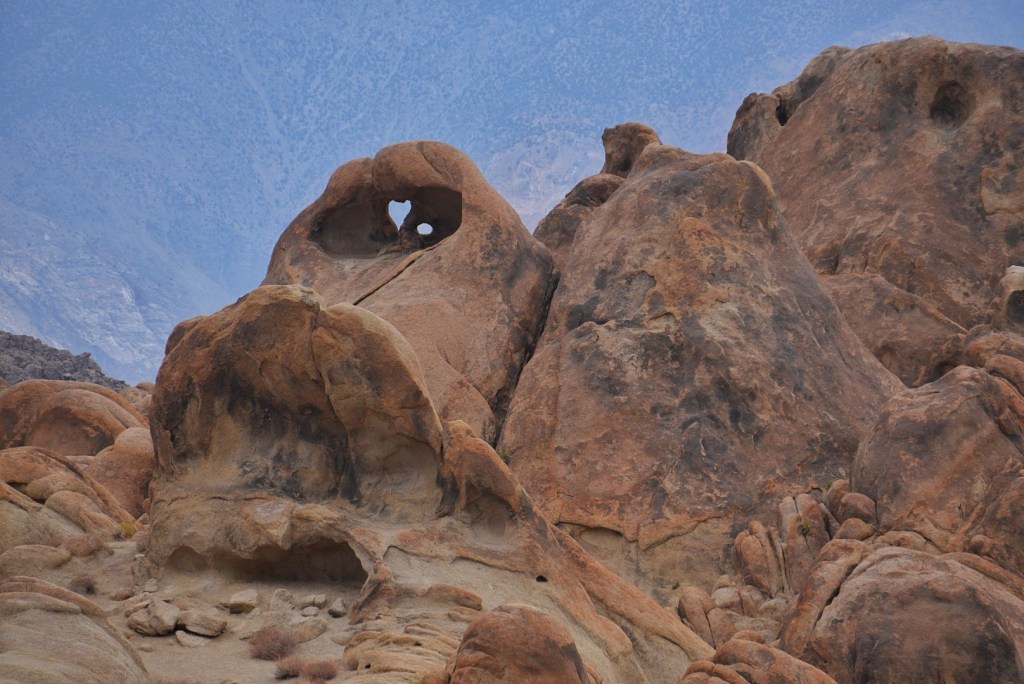
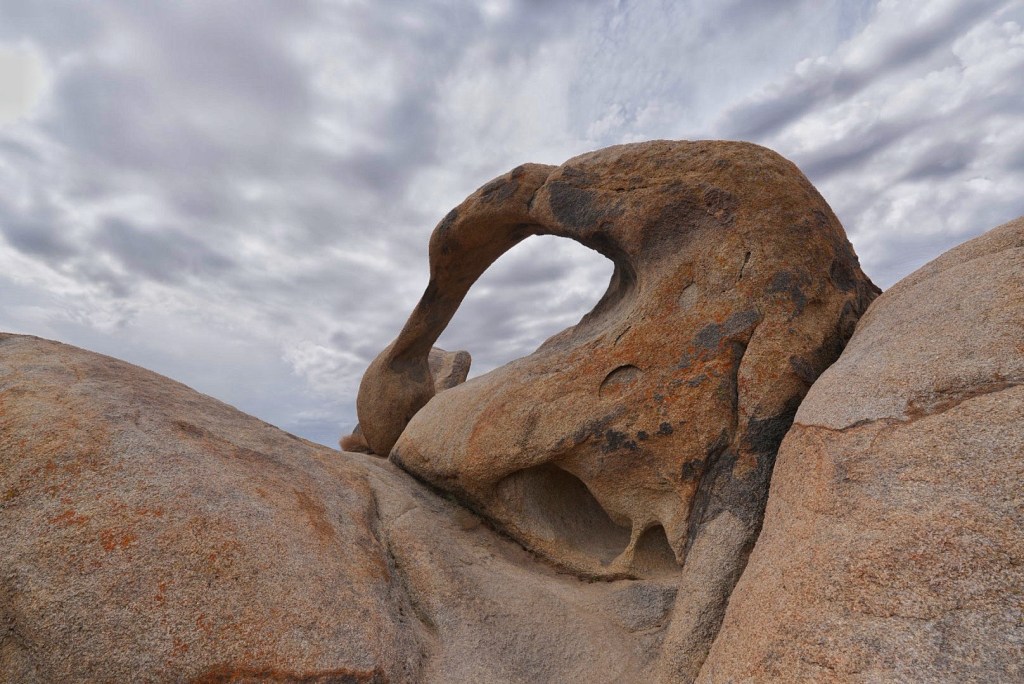
One of the natural windows in the rocks was heart-shaped, but our main destination was the mobius arch, on the same loop trail. We did the entire trail in about 15 minutes and enjoyed taking in the unique landscape that has been used in countless B-Westerns and other films throughout history. We would learn more about that later at the Museum of Western Film History in Lone Pine.
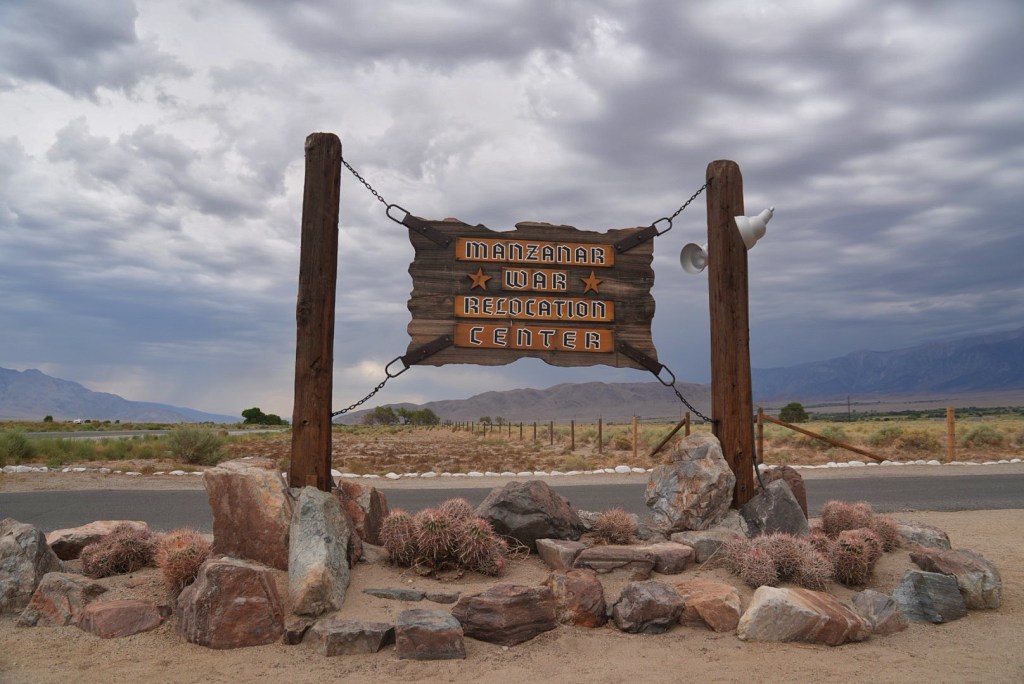
Following our brief excursion into the Alabama Hills, we headed back to Manzanar. We still had to hit up the Visitor Center, but first we stopped at the original location of the camp entrance, which referred to the site as a “War Relocation Center,” a euphemism that was doing quite a bit of heavy lifting considering that FDR himself would refer to these as “concentration camps.” This was also the area where two young internees were shot and killed by MPs during a protest. The MPs account was that the unarmed prisoners were rioting and things were getting well out of hand and turning violent. Every other eyewitness, however, said the protest was peaceful and the inexperienced MPs simply panicked.
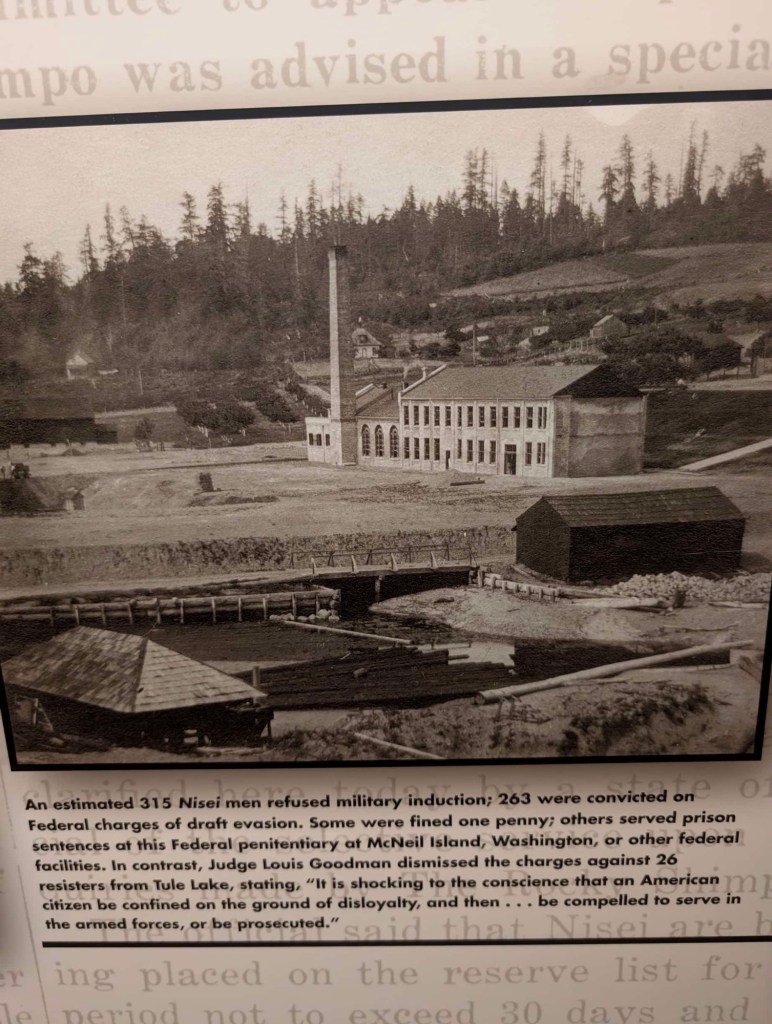
Next, we hit up the Visitor Center, which is located within the camp’s former high school auditorium and one of the few structures that wasn’t sold for parts or demolished after the war. It was very informative. There was also a theater playing the movie Remembering Manzanar, but you can also watch it on the YouTube link. It is worth noting that not everyone in the halls of power was on board with this forcible relocation of primarily American citizens. FDR’s Attorney General opposed the internment believing it to be unconstitutional. But everyone just kind of fell in line and approached the idea with increasing enthusiasm as FDR’s executive order 9066 came into effect.
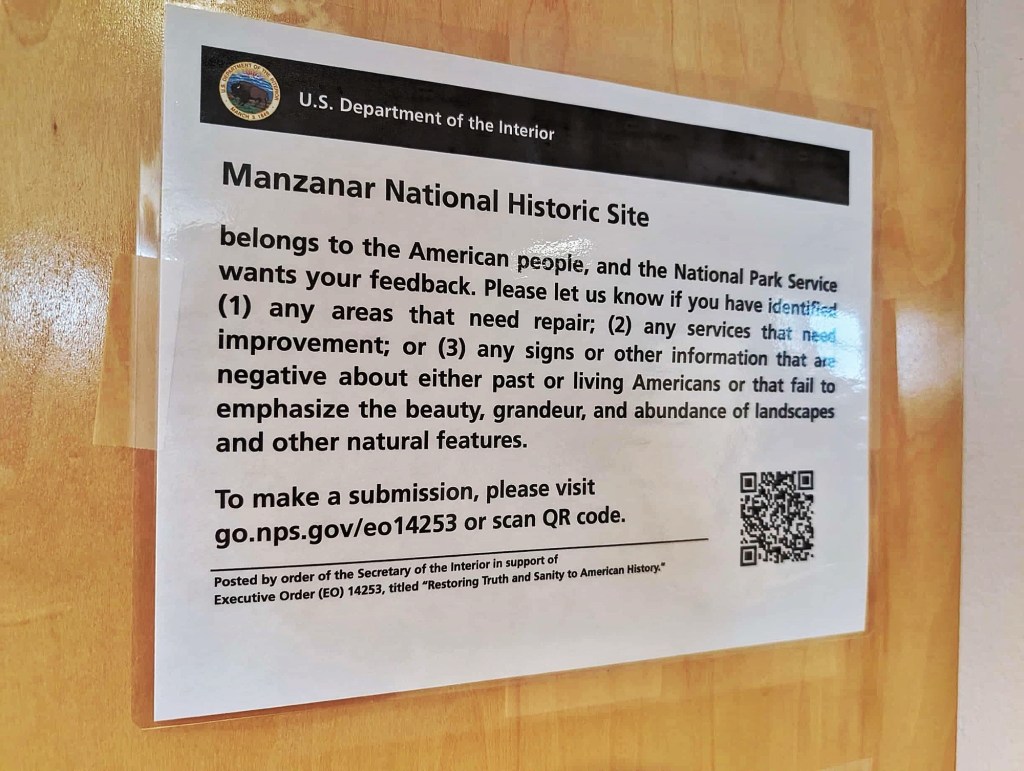
One of the most disturbing sights at the Visitor Center, however were the signs posted on the front door, and at the gift shop that are now required per another executive order: 14253. This is known as a measure to “restore truth and sanity” in American history by ostensibly ignoring all the bad bits. It has recently been in the news because Trump attacked the Smithsonian for focusing too much on slavery at the National Museum of African American History and bullied his way into having his own name removed from another exhibit about presidents who have been impeached. That kind of egotistical image-fixing is why presidential libraries exist. Museums being asked to bend to the political ideology of a president is unheard of. Anyway, the third point of the message below was the most unnerving. As I cheekily stated on my instagram story after seeing this, “Who can forget when the U.S. government threw a big block party for all the Japanese-Americans during WWII?”
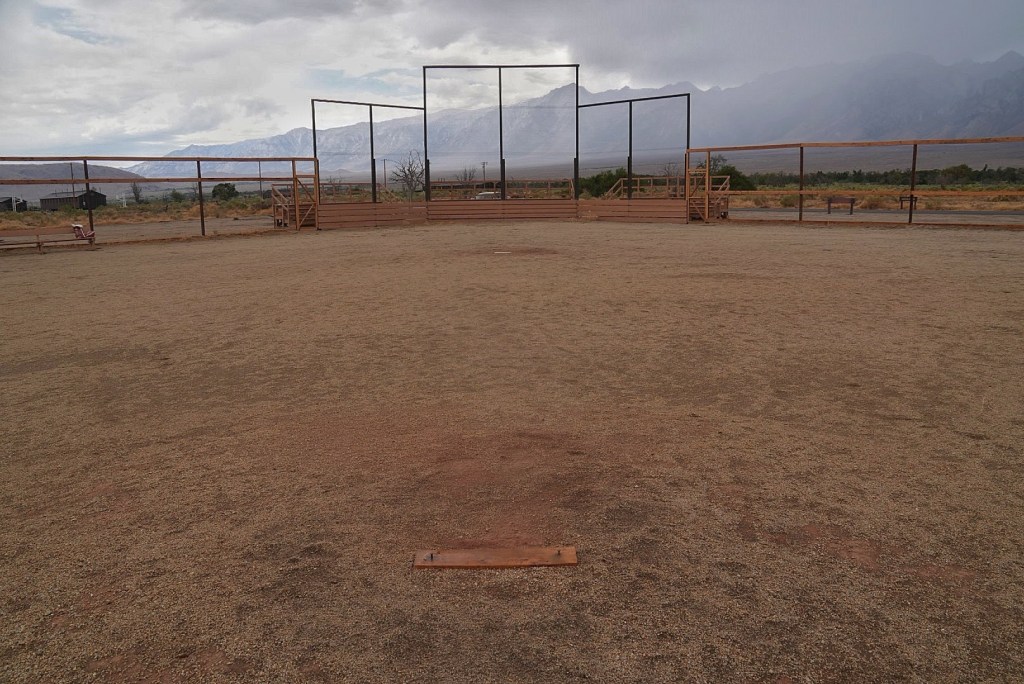
As we left the Visitor Center, we decided to take another lap on the auto tour, but a storm descended on us rapidly causing us to wait it out while parked at the reconstructed baseball field. More than 100 teams formed up to play as it was one of the few ways to let off some steam — many stating that it was the only thing that kept them sane.
We then continued the 3 mile circuit and made a brief stop to check out what they called the fish pond. As a way of trying to beautify the otherwise dry, dusty, and brown landscape, many created rock gardens and ponds in an attempt to carve out a little area of green and zen. Photos from the time period indicate that many of these were quite nice, but over the decades, they had gotten buried under desert dust and have only recently been excavated by the NPS.
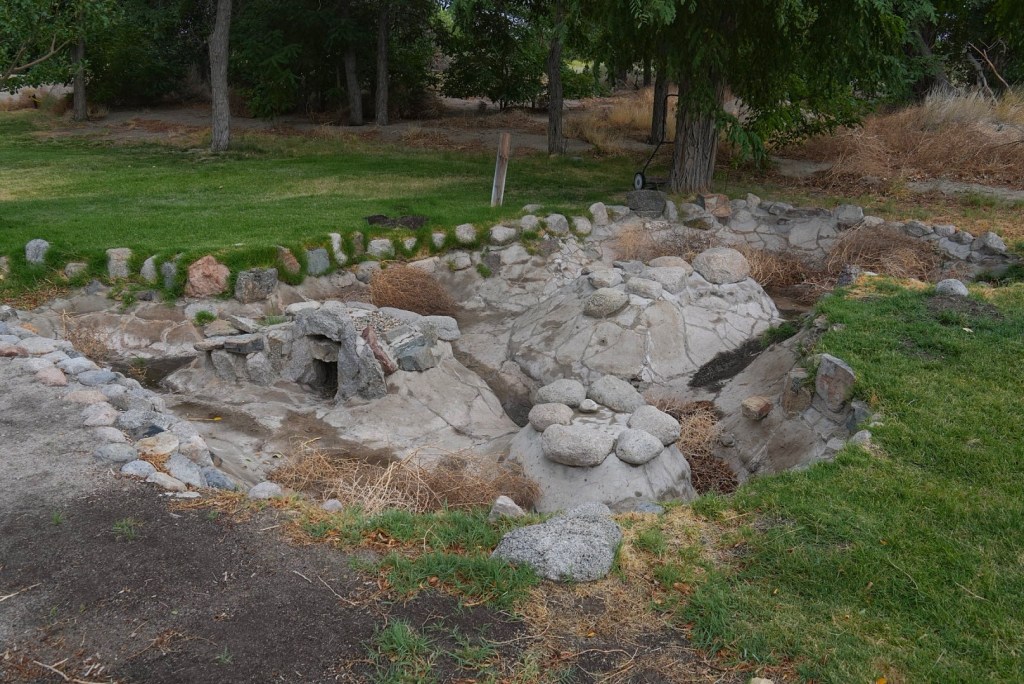
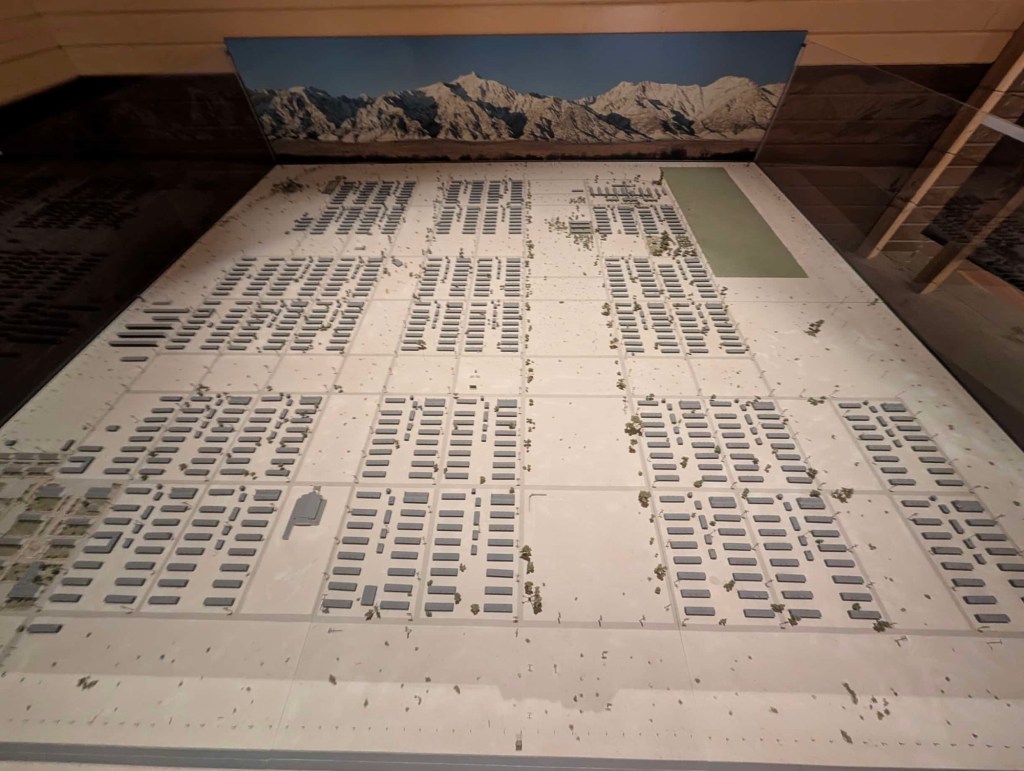
And that’s what is kind of interesting, yet confusing about the site. It is like an archaeological site that is not even 100 years old — just scant hints of a once massive complex of barracks and civilization. Water pumps stick out of the ground in spots, concrete foundations crumbling in others, steps leading to nowhere. It is hard to envision the scale of what it once was. A model at the visitor center helped a little, but the park service has only erected three two barracks in a camp that had hundreds.
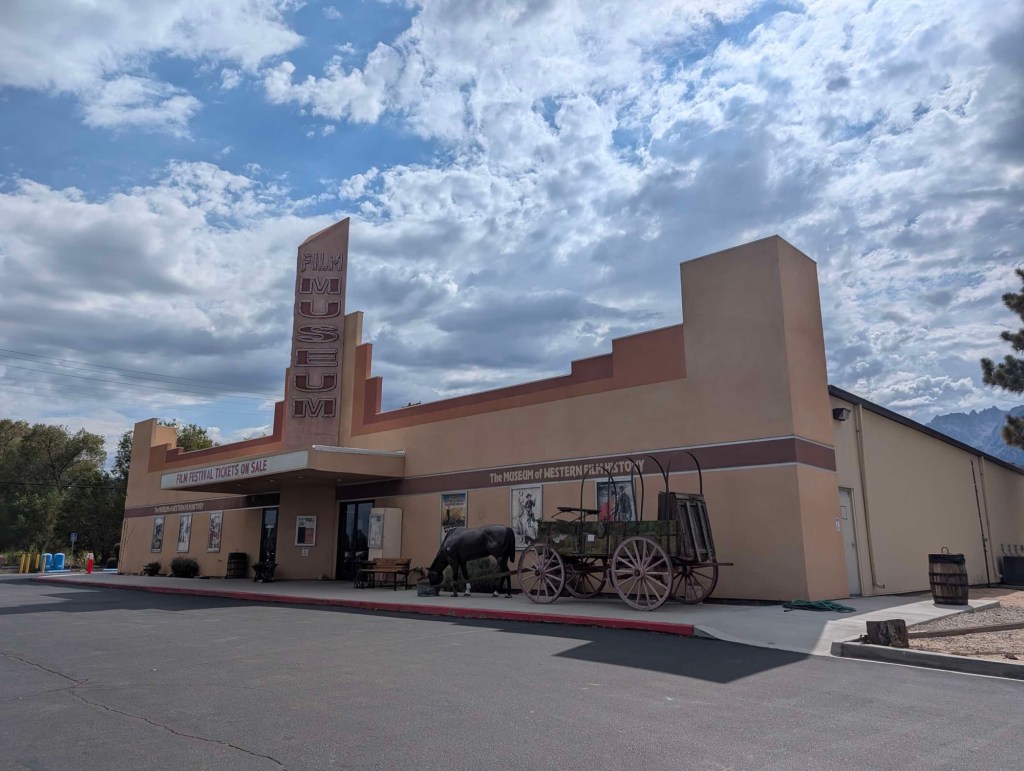
We finally returned to Lone Pine to have a makeshift lunch and then went to the Museum of Western Film History. I didn’t realize that so many movies had been filmed here. After all, it isn’t the easiest drive from Los Angeles. Nevertheless, at its peak, the area was averaging one production per month. Most of these were naturally westerns, so I hadn’t personally seen many, but I am sure Walt of famed senior travel couple Salt, enjoyed many of these in his youth.
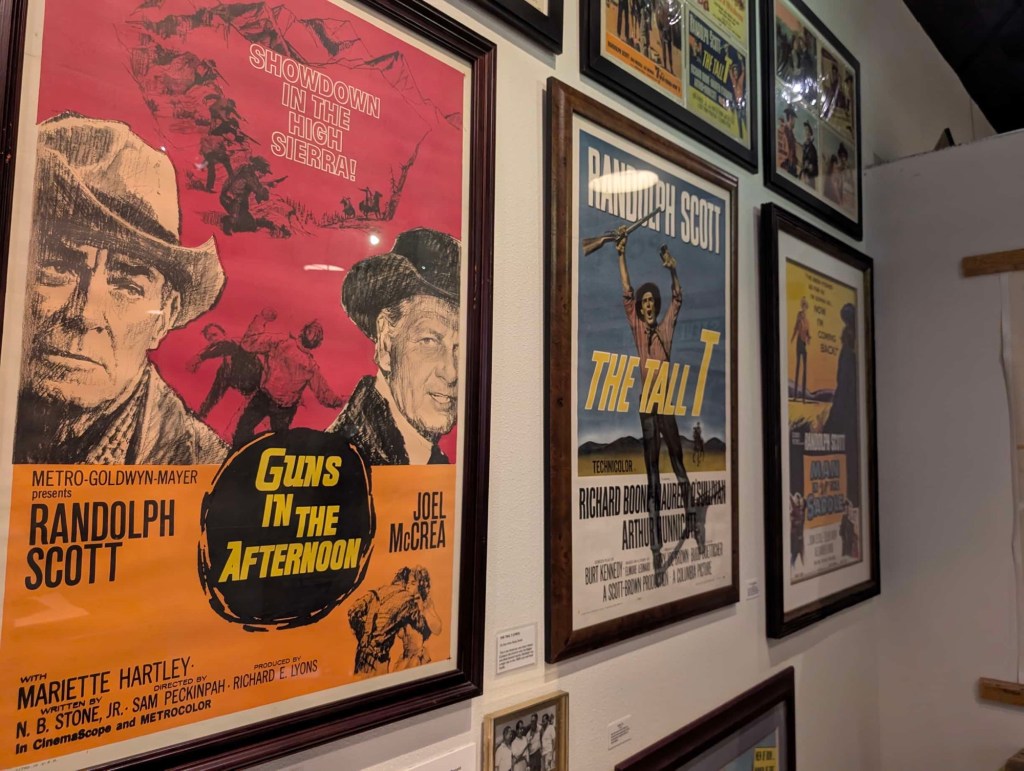
Its usage has tapered since the 1960s when the western fell out of favor, but was still used in more recent films like Sum of All Fears, where it filled in for Syria or Django Unchained. We watched a film in the museum’s theater that covered Lone Pine’s film industry. I briefly fell asleep in the theater. I think Gunga Din is what did me in.
We swung by the rock store for a few minutes, but acquired no rocks. We had a dinner reservation at The Grill, one of Lone Pine’s few restaurants. It was an okay meal, but it didn’t really move the needle. Afterward, I convinced Nicole to go to Jake’s saloon because it had the swinging doors like old timey western establishments. We were a little apprehensive that the music would stop as soon as we entered, but luckily no shootout took place. The town was ultimately big enough for all of us.
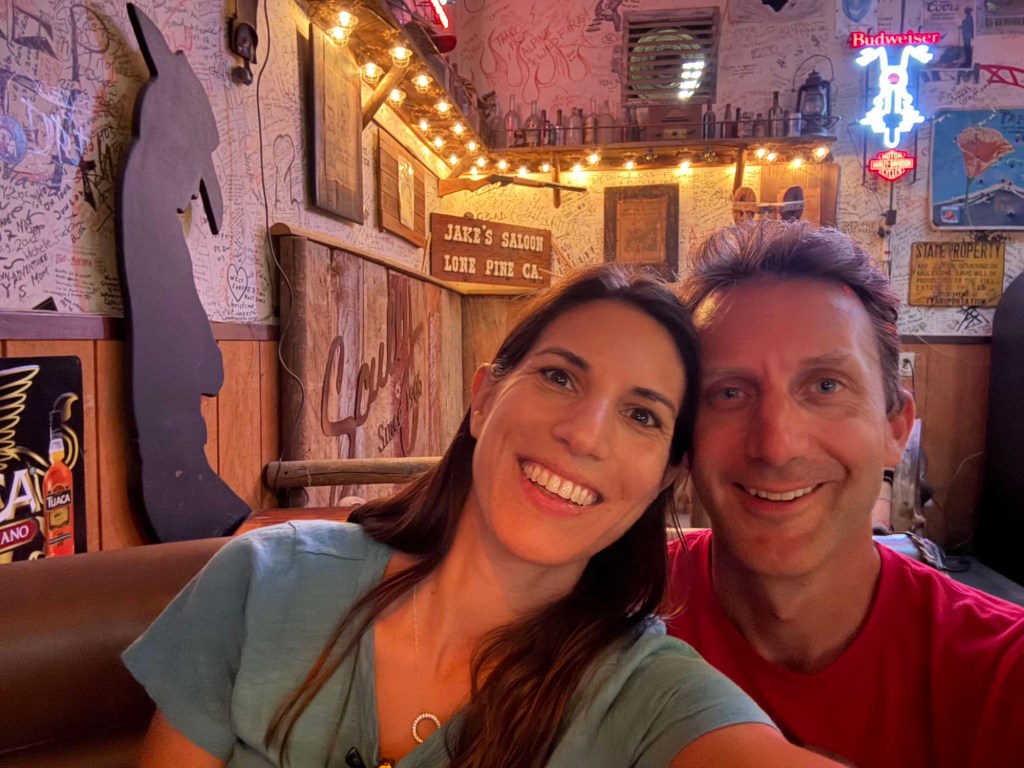
After our beers, we returned to our Air BnB, and determined we will have to drive back to LA tomorrow. Nicole kept corresponding with someone from Advanced Air, the airline in question, and it still remains unknown if and how the flight will happen, so we decided to change our rental instead of facing the likelihood of getting stranded in the eastern sierras. Though it will be more driving, it will make things less stressful in a way knowing that we don’t need to fret about getting on airplanes that may or may not exist. Happy Trails.
 passports & pepto bismol