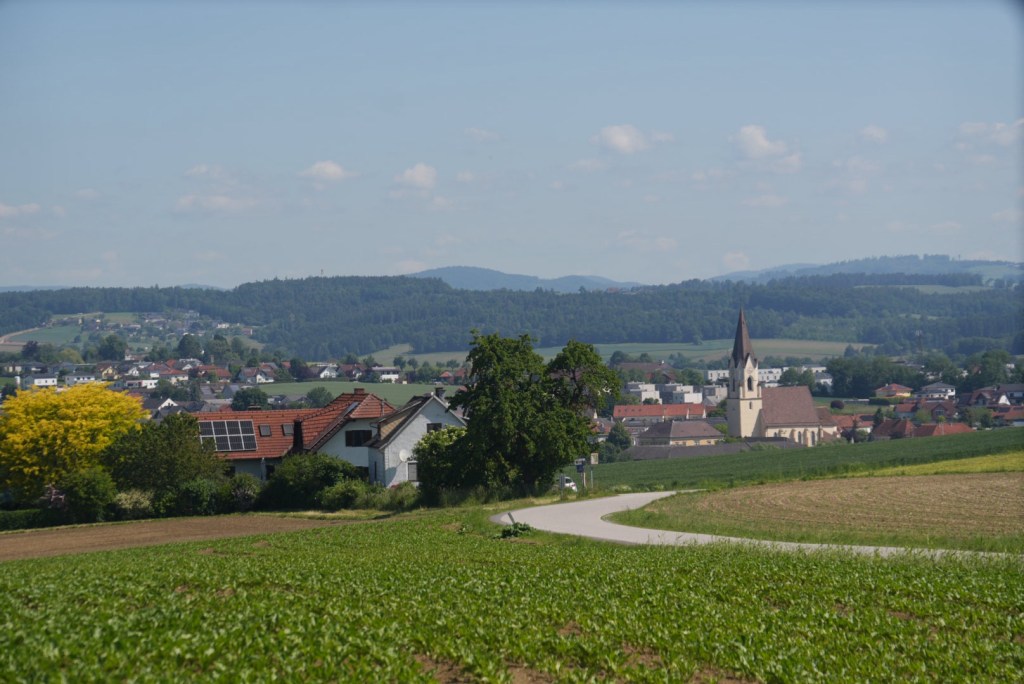
After another breakfast of bread, we drove the short distance to Mauthausen concentration camp. Mauthausen itself was like the headquarters and main camp of many other satellite camps including Gusen, which we saw later. Its origin is pretty much aligned with the Anschluss (the sort of voted on, but sort of forced Austrian unification with Germany). There was a referendum for Austria to become part of a greater Germany, though the vote was not private. One’s name was attached to their vote, so it passed with 99.7% in favor. The other 0.3% were presumably gathered up and immediately sent to a camp like Mauthausen.
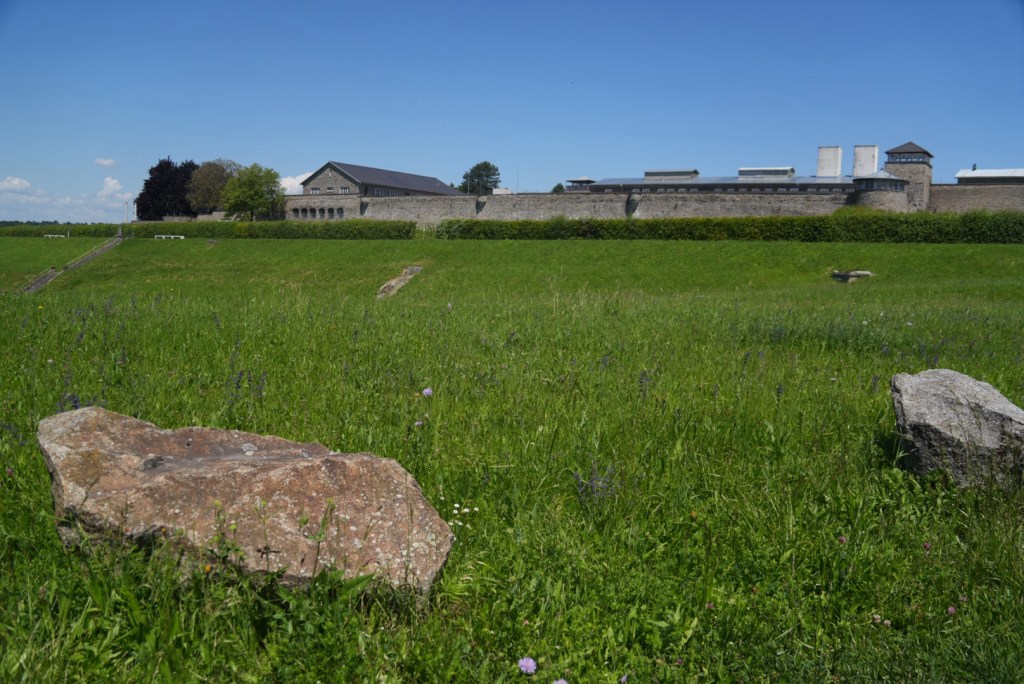
The camp itself was built by slave labor. Thousands had already been imprisoned there by the end of 1938 — primarily political prisoners. This is what made Mauthausen a bit unique. One associates concentration camps with predominantly Jewish victims and “a few” other groups like Roma, homosexuals, political prisoners etc, but Mauthausen had a very diverse group. Spanish asylum seekers who had fought General Franco’s forces in the Spanish Civil War and moved to France, got rounded up and sent to Mauthausen as soon as France fell. As each new territory became occupied by the Nazis, others such as Dutch, Bulgarians, and Soviets began to appear en masse.
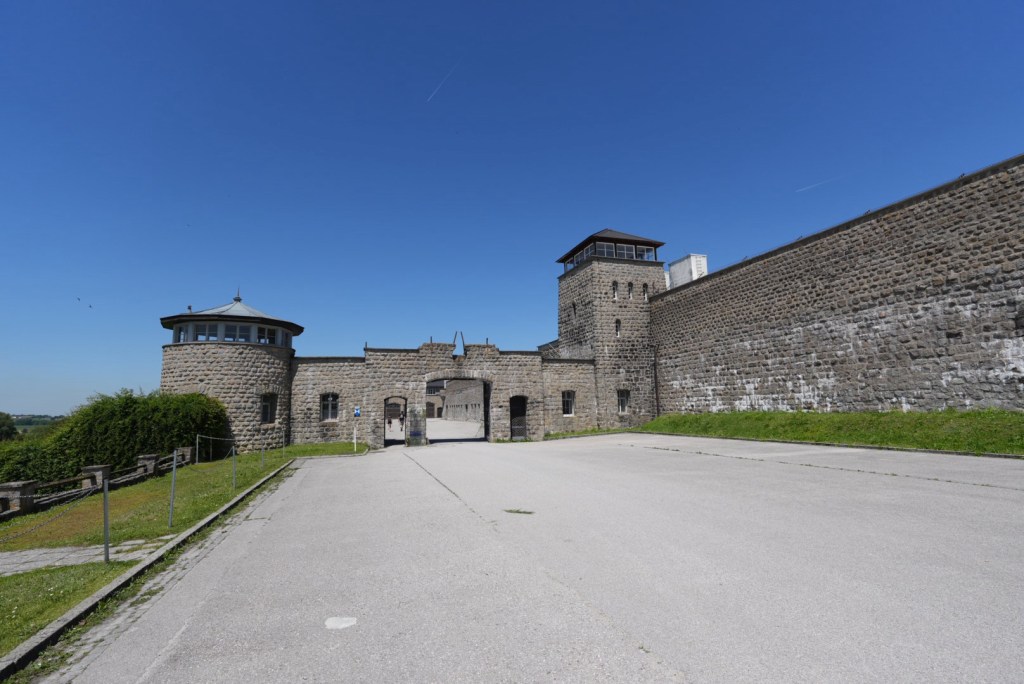
It was created for slave labor to work a granite quarry that was run by the SS. While a true work camp may have seemed more appealing to prisoners than say an extermination camp like Auschwitz, it sounded like a rather horrifying day-to-day existence. The quarry, where they worked, required the prisoners to carry large (up to 50kg) chunks of granite on their shoulders and run up what came to be known as the “Death Stairs.” In reality, this seemed to serve less purpose for the granite company and more for the SS guards amusement.
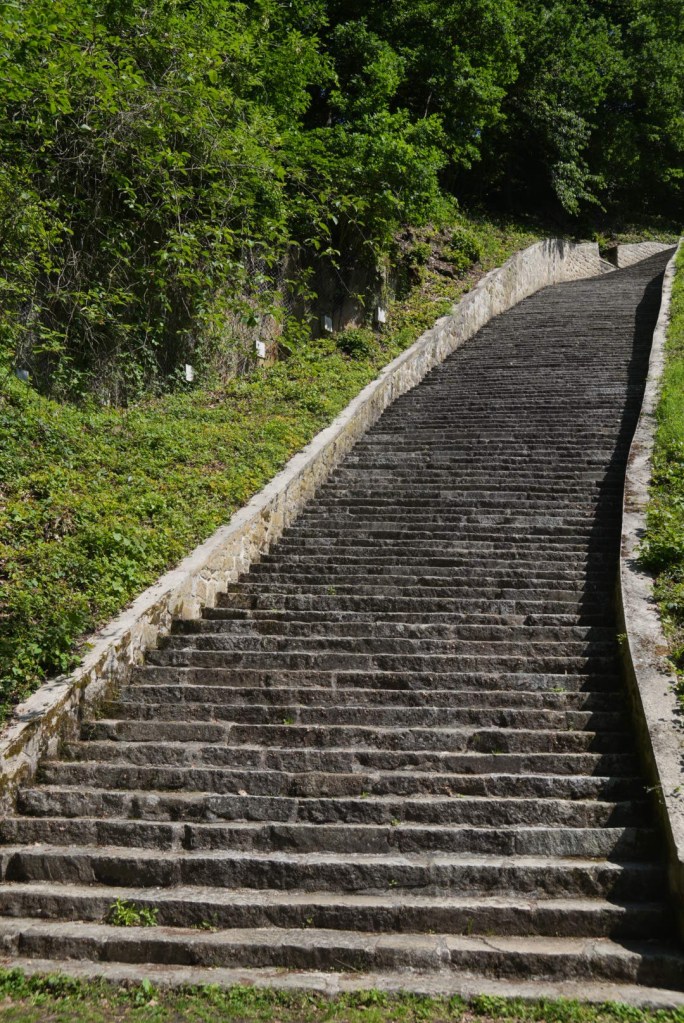
The stairs were not equal in size and often quite steep. Slipping and falling was common — creating a domino effect since the prisoners were packed tightly together when carrying the granite. Death was never far away when working the quarry. Just for “fun,” SS guards would also play sadistic games with prisoners and say things like, “Push this other guy off the cliff or I’ll shoot you!”
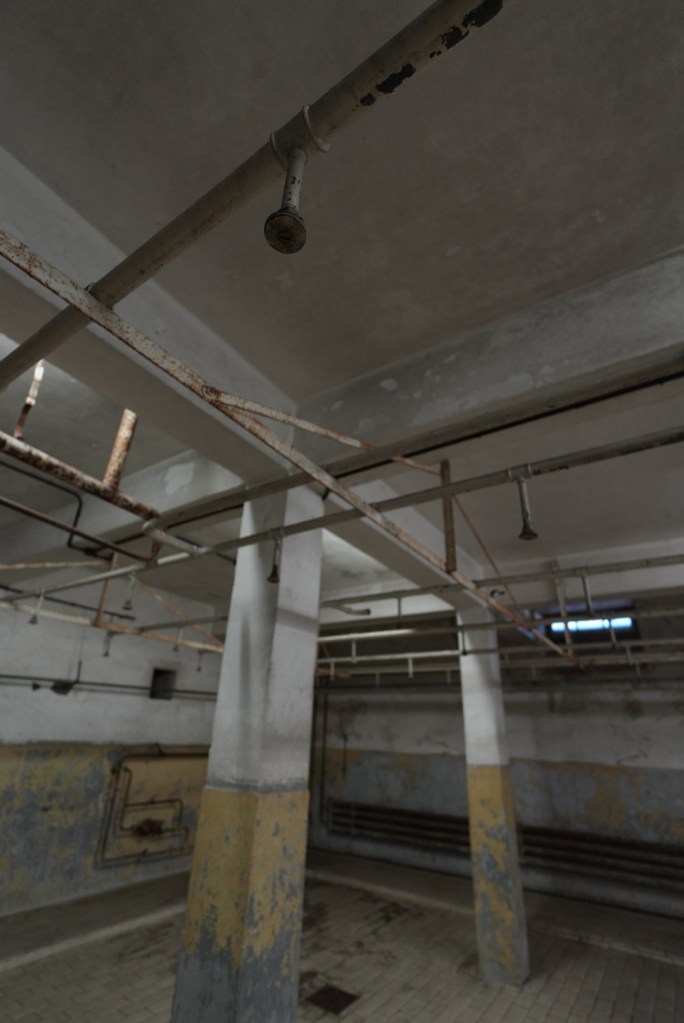
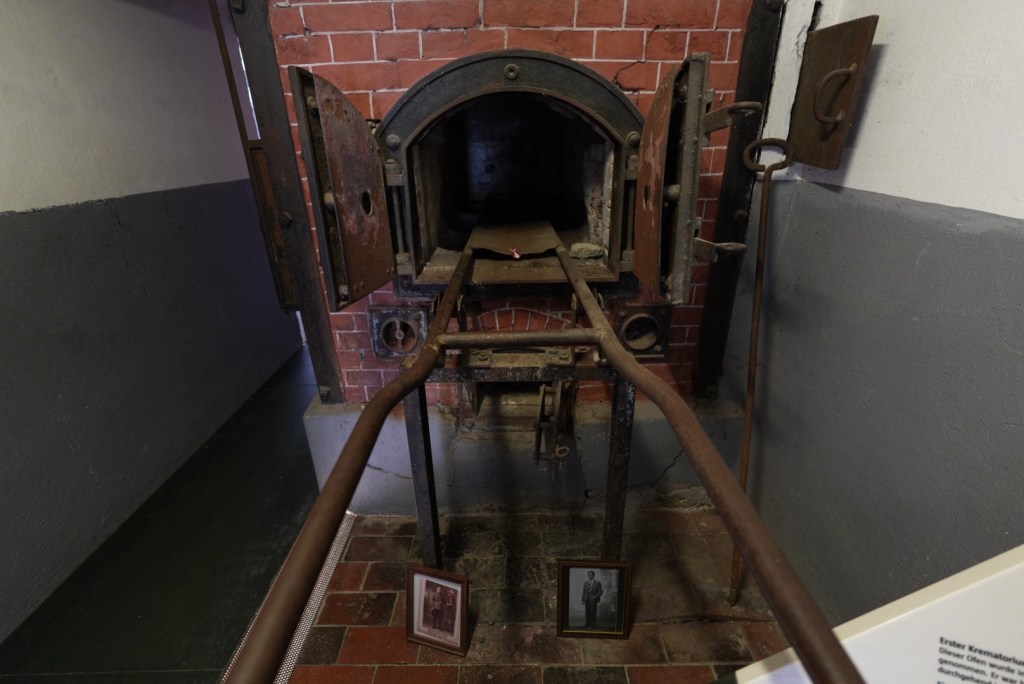
If a prisoner appeared sick or weak, there was also an on-site gas chamber and crematorium to conveniently dispose of this problem. As the Americans closed in toward the end of the war, the killing accelerated. Many Jews who were forced out of other camps were sent to Mauthausen for an expeditious murder. Mauthausen was, after all, the last camp liberated at the end of the war. The SS tried to destroy numerous records when they knew the end was near, but some prisoners who also had roles as clerks managed to save a lot of the evidence.
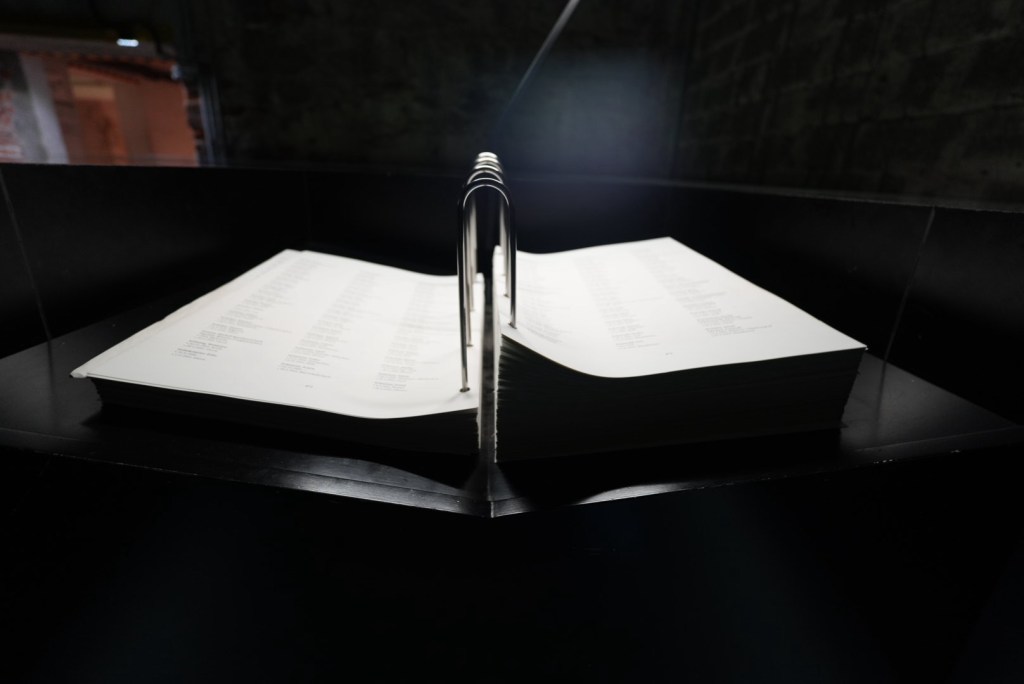
What I find the most interesting is that only at the very end, the Nazis seemed to admit to themselves that perhaps they had done something wrong — or that the world was going to at least perceive them as having done something wrong. It’s like they didn’t have a conscience before that. And that goes not just for those who wore the swastika on their armband, but Austria as a whole. While the Anschluss came into effect as a result of a not truly free and fair referendum, it was a union celebrated by not an insignificant portion of the Austrian population. Conveniently, after the war, Austrians could play the victim card and distance themselves from the horrors of the concentration camps. As it turns out, Captain Von Trapp and a rogue nun tearily singing “Edelweiss” with longing for their lost homeland may have indeed been in the minority.
I think that is what becomes increasingly more profound as I get older. In my youth, I could not fathom how something as large-scale as the holocaust could ever have occurred. For their egregious crimes, the Nazis and the SS are easily labeled as evil, but at the end of the day (and the war), many went back to their mundane lives — going through life under the radar. So while they were indeed monsters, they were also bakers, postmen, police officers, farmers, etc. The point is that it is often not so easy to identify such monsters because they already exist among us. Whereas such widespread horrors like concentration camps seemed improbable to repeat, no country is immune . . .including the United States. All that is needed is hate and ignorance. The United States is currently on an anti-trans and anti-immigrant kick. It doesn’t take much of a stretch to see elements of the past repeating themselves.
After Mauthausen, we made a quick stop at nearby Gusen, one of the satellite camps. It too had its own crematorium (for convenience I suppose). Otherwise, most of it had been destroyed and residential buildings were densely built up around it. Speaking of residential buildings…after Gusen, we continued on past the city of Linz to the Schloss Hartheim. This is where many euthanasia experiments were conducted.
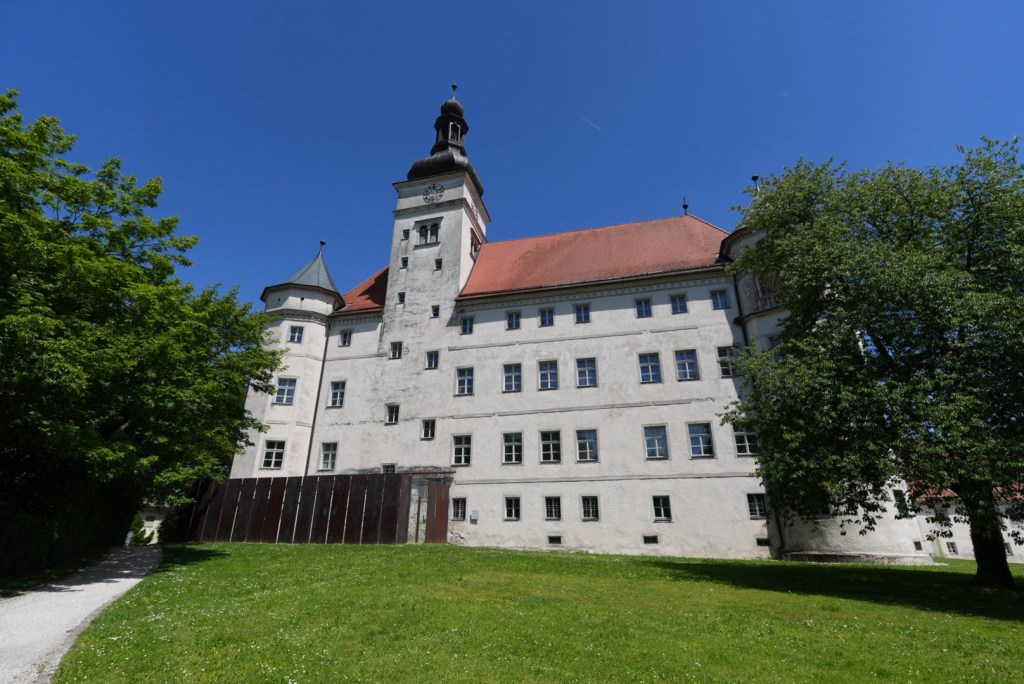
These were done in conjunction with prisoners arriving at Mauthausen. One simply needed to look a little “different.” “Ach! You look short! Let’s cut you open, maybe look at your brain, and see what’s going on in there!” It was as simple as that. As for what is now a museum, it was inexplicably closed on a Saturday, the least likely day of the week to close a museum. We could still walk around the outside of the old building, which was converted to residences after the war. They were residences until it became a museum in 2003! Can you imagine living there? There has got to be a lot of bad energy in a place like that. Was the rent cheap at least?
Finally, it was a two hour sprint to the Munich Airport — cruising down the Autobahn at around 160kph. My original drop off time was supposed to be about 2:30pm if I wanted to avoid any further charges. Our flight wasn’t until 8pm, so I had never really intended on dropping it off that early, but despite calling them about 10 times, sending an email, and trying to extend the rental online, Hertz never responded or even acknowledged that I had rented it. Why rush back, I thought. We arrived just before 5pm, and no extra charges were added. We then stood in line for a spell to complete our check-in with Tunisair. I ended up buying confirmed seats, since the Lufthansa flight showed full, and the Tunisair flights were reasonable enough.
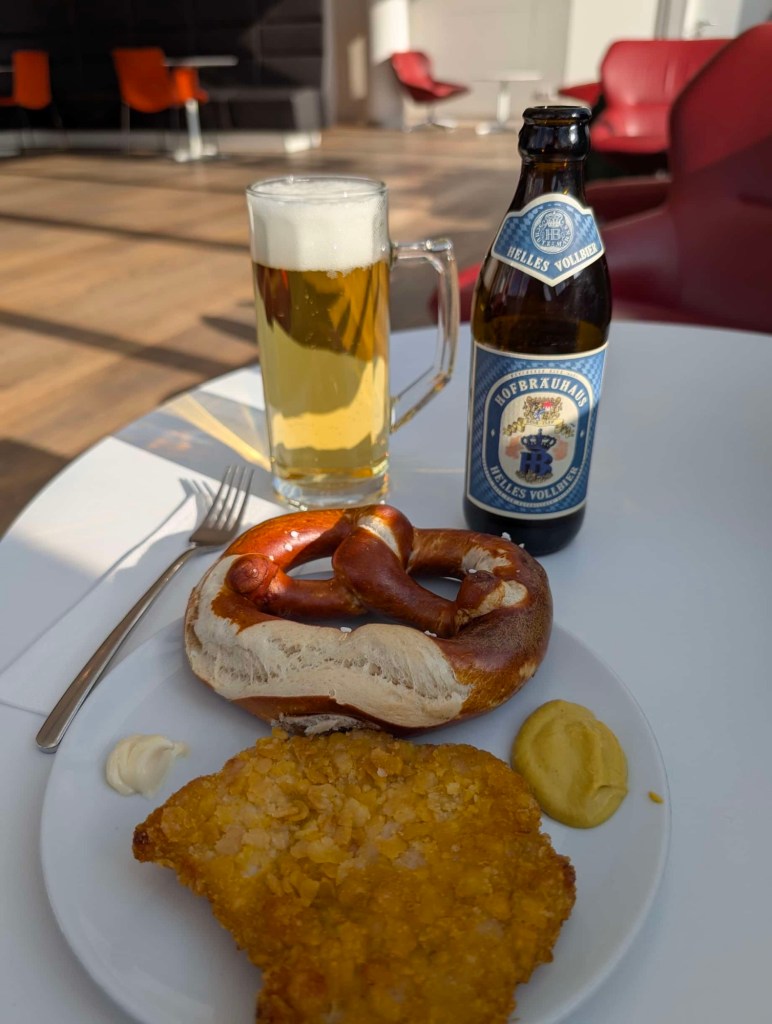
After a drawn out and thorough security process, we went to the Priority Pass Lounge. It was relatively calm and we fixed ourselves some makeshift dinners before going down to board . . .a bus. We sat on the bus for about 45 minutes before it started chugging toward the aircraft. I hate airport buses. They are the dumbest thing. Despite all that, we ended up departing only 25 minutes late, got served another meal for the hour and a half flight, and touched down in Tunis around 920pm.
Customs took a little while, and baggage claim took longer. The Avis car rental was scheduled to close at 10pm, so I was a little concerned, but we did arrive at the office just before 10pm. That didn’t stop the man from charging us a late pickup fee (as he was still slowly typing something in his computer after 10pm, which you know…that’s not on me). What Hertz giveth, Avis taketh away. A bit annoyed, we embarked on a short (albeit chaotic) drive to the Marriott. While loyal to the Hilton brand, the Marriott was like a little oasis after our experience in the Tunis-Carthage airport. The shower was a delight and we wound down for our first night in Tunisia.
 passports & pepto bismol