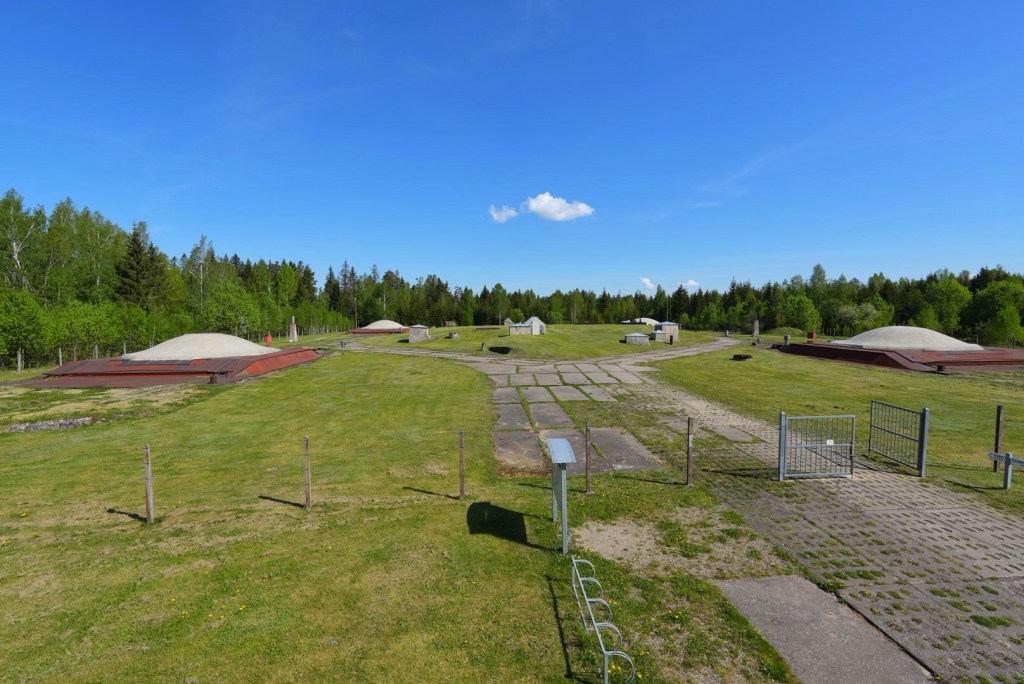
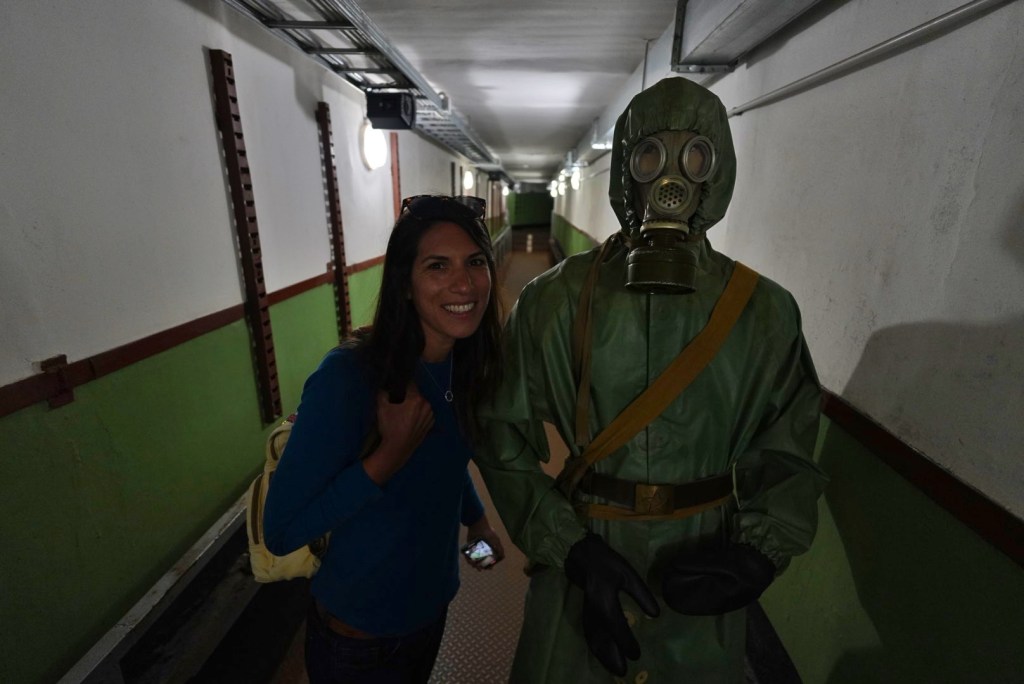
As a straight shot, it would have taken us about four hours to go from Klaipeda to Vilnius. But we felt that we couldn’t miss the chance to make a little detour to see the Plokštinė missile base, a relic of the Cold War. It was the first of its kind, created in the 1950s in response to U.S. bomber and missile buildup. It was evidently hidden so well, that it wasn’t discovered by U.S. reconnaissance until 1978.
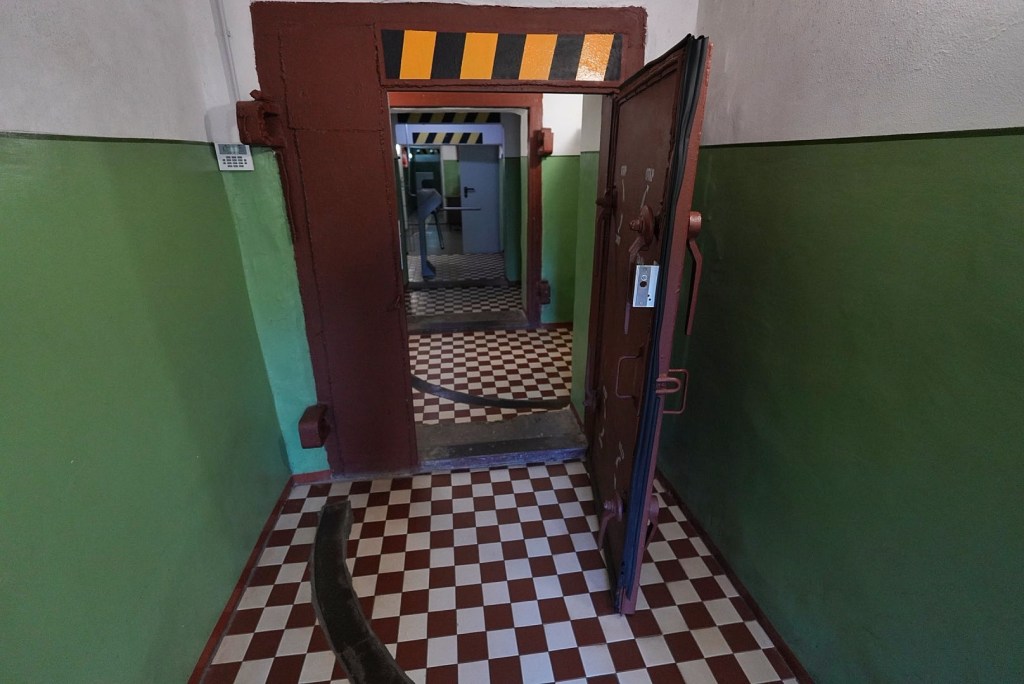
With Nicole having done such extensive research on U.S.-based missile command in her hit screenplay Silo, it was interesting to compare the Soviet complex to its American counterparts such as Titan II that we visited in Tucson or a Minuteman site in South Dakota. To my surprise, the Soviet crews only did eight hour shifts compared to Americans doing 24 hour stints. One thing that both sides of the iron curtain seemed to agree upon, however, was to maintain an unbearably cold temperature inside the missile site. It was a frigid 50 degrees despite an outdoor temperature of almost 70.
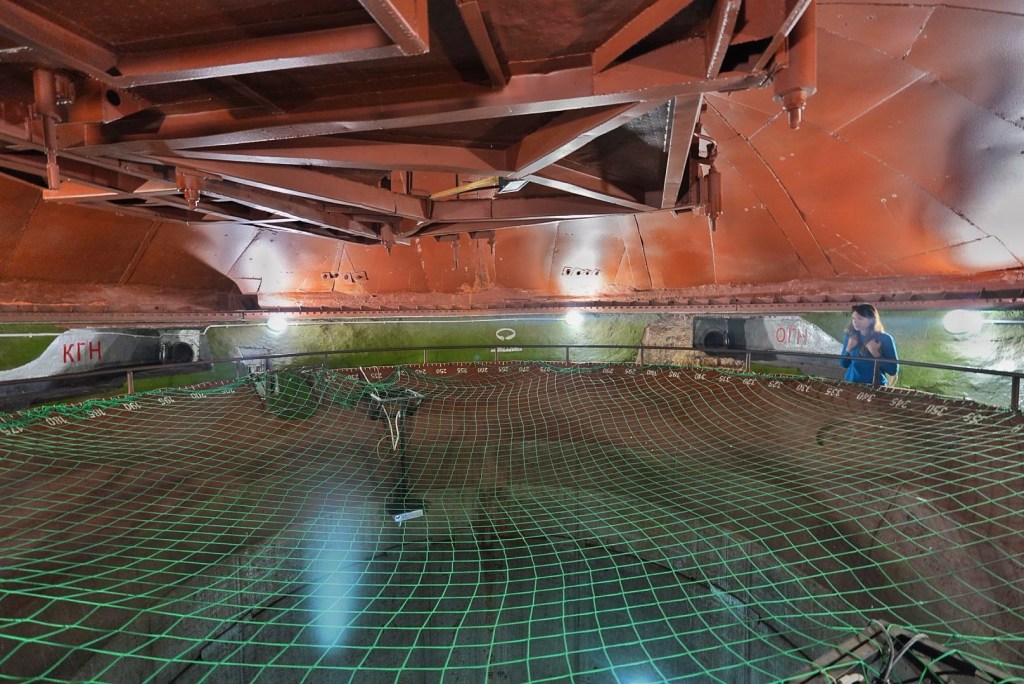
From this spot in Lithuania, the Soviet Union could reach targets in every NATO country in Europe, but not the United States. Soviet capabilities at the time enabled only mid-range ballistic missiles, a limitation that eventually would play a part in the Cuban missile crisis. It was interesting to see both sides running a pretty similar operation overall. It all seemed very mundane . . . and cold.
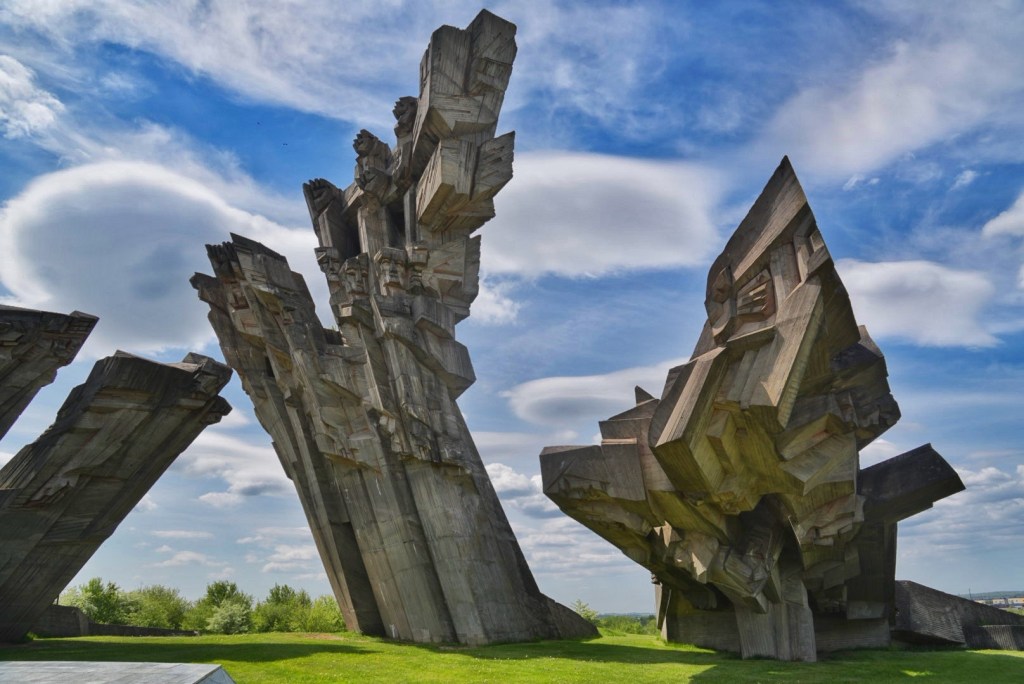
We then continued on the road for a couple hours until reaching the city of Kaunas, and stopped to have a look at the Monument to Commemorate the Victims of Nazism. It is a large and imposing concrete structure with faces sculpted into the sides like a piece of abstract art. During the Nazi occupation of the area, 50,000 Jews from the Kaunas area were murdered at this site after being forced to dig their own mass graves.
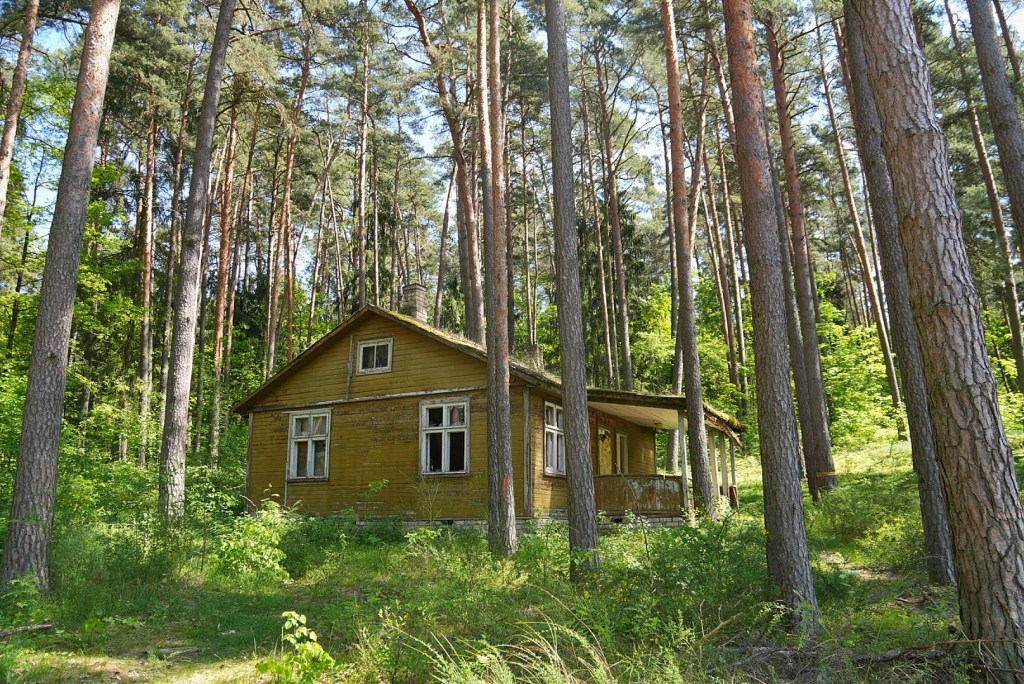
From there we drove for another 20 minutes to the outside of Kaunas to stop at the remnants of another occupying force — a former Soviet pioneer summer camp. Essentially these existed throughout the USSR as a hybrid of regular children’s summer camp mixed with a light dosing of state propaganda. In any event, it’s all abandoned now and nature is retaking the campsite.
From there, it was an hour push to the finish line in Vilnius. After battling some traffic near the city center, we finally reached the Shakespeare Boutique Hotel in the old town. It is a sort of author-themed hotel that is decorated mostly how an elderly person might have decorated a room circa 1987. Either way, it has free parking. After dropping off all of our stuff, we went for a walk around the area.
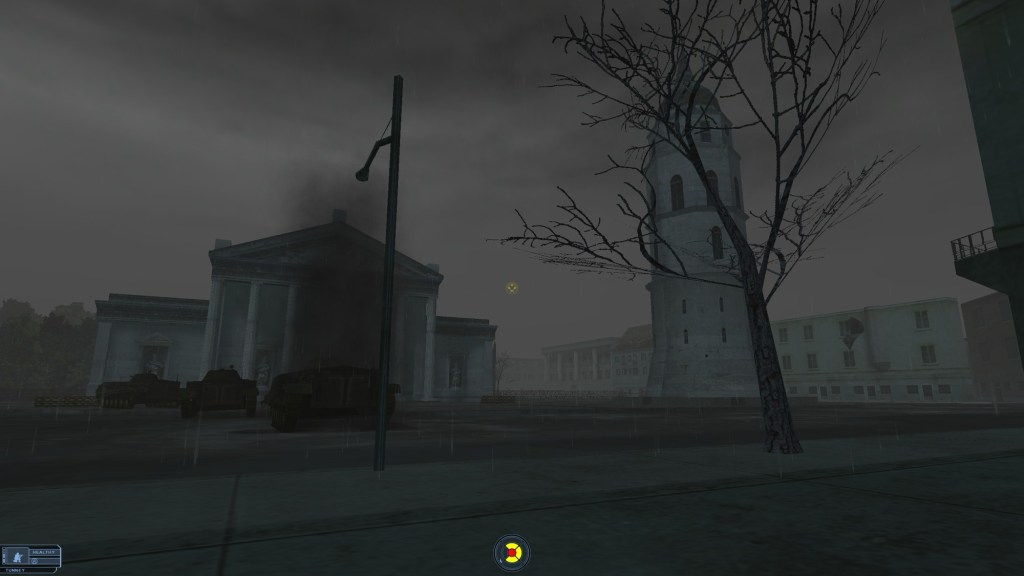
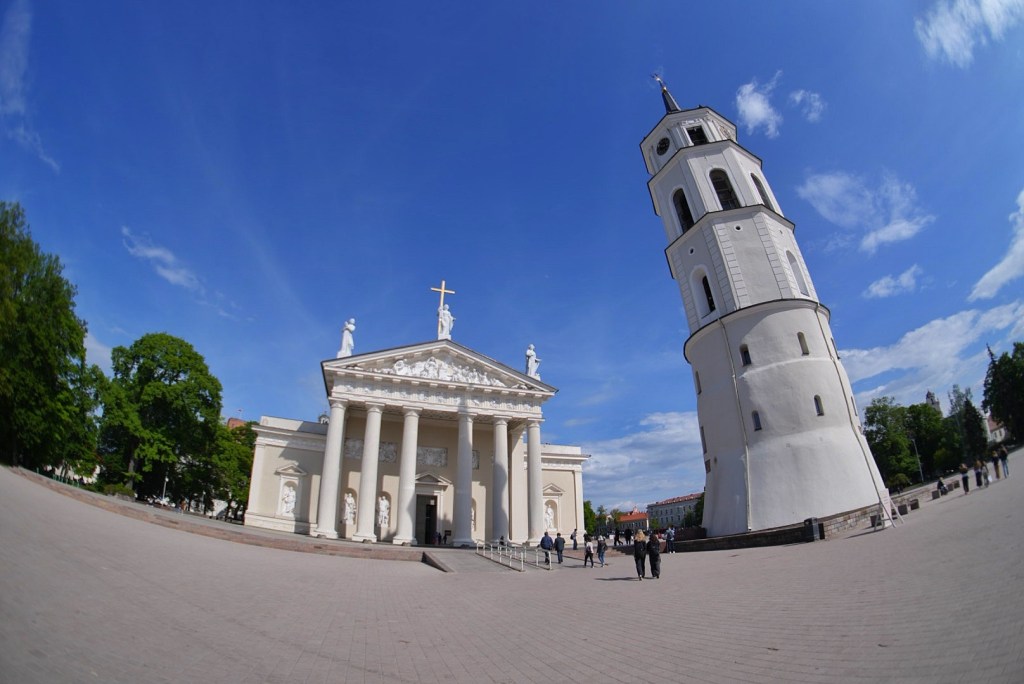
We had a look at the Vilnius Cathedral, the building that acts as the symbol of Vilnius with its iconic single tower. It is also the location of an important battle in the hit 2001 Tom Clancy Ghost Recon game. As you can see in the comparison photos above, the image on right differed from the one on the left in that the weather was much nicer for us and contained a notably fewer number of burning Russian tanks.
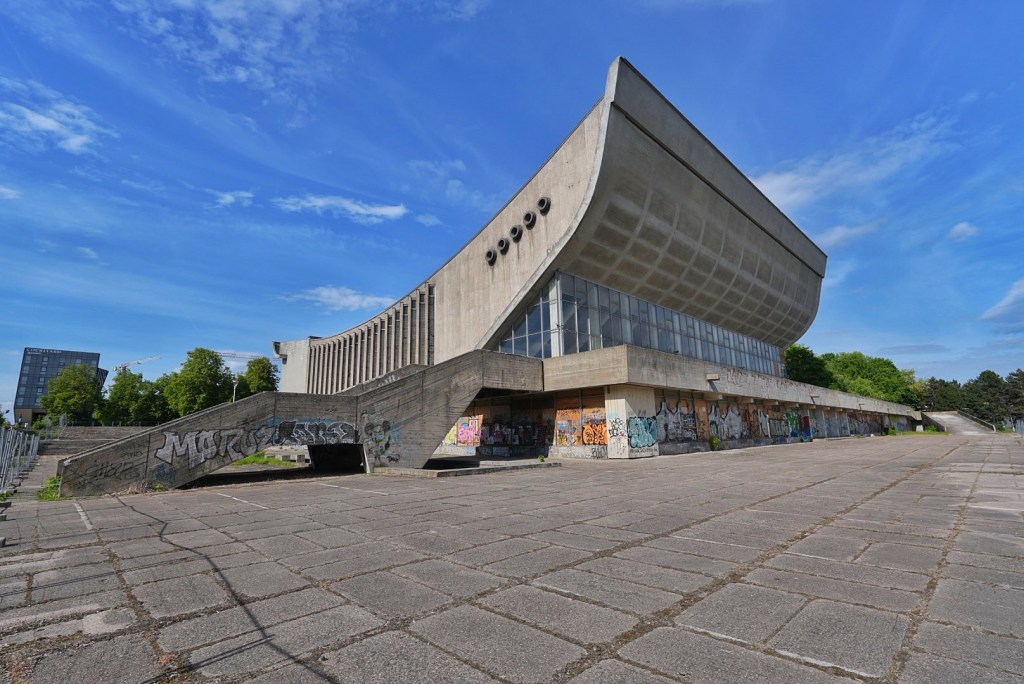
We continued our walk across the river to view one last homely relic of the Soviet Union — the Palace of Culture and Sports. It has fallen into disrepair and is fenced off, but still interesting to look at from afar. Then we walked around the old town. We got our various tchotchke items including a magnet that has Nicole’s old favorite — the Cepelinai (zeppelin).
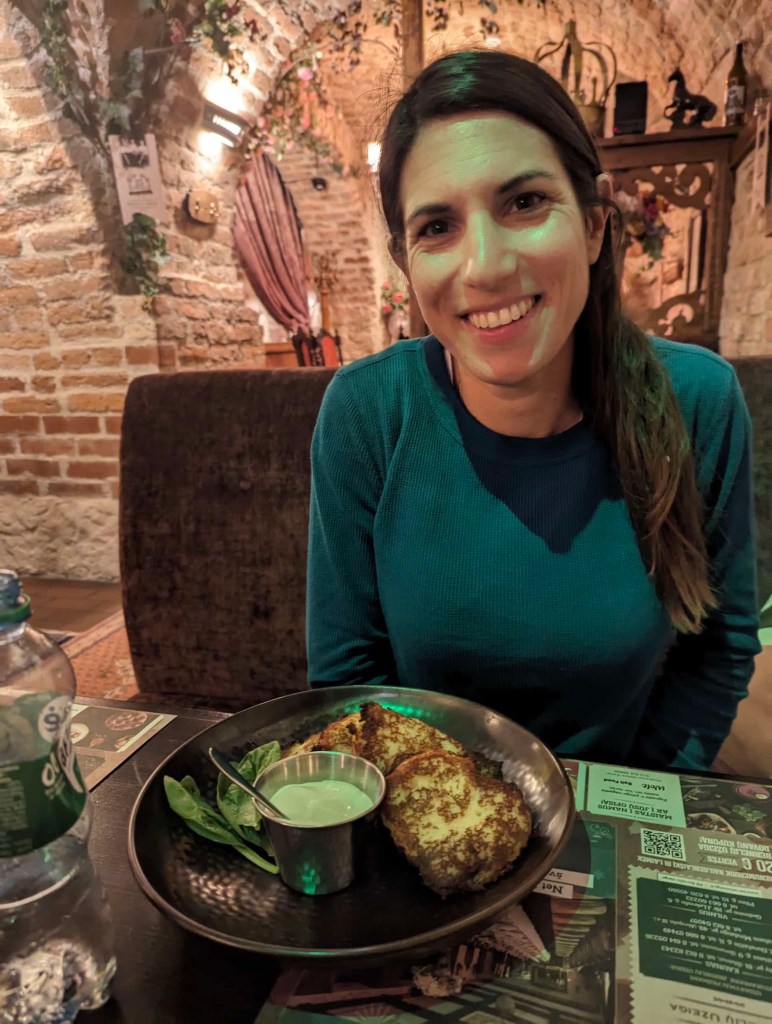
And on that note, Nicole was researching Lithuanian foods and discovered that the weird bread concoction she had yesterday is a Lithuanian staple (and also poorly translated). Unbeknownst to her, but knownst to Lithuanians, Nicole keeps inadvertently ordering everything that Lithuanians hold dear. So it seemed logical to take Nicole out to another Lithuanian restaurant. We took a short walk around the corner from our hotel into some sort of cave-like restaurant specializing in Lithuanian cuisine. I had a pork fillet with some kind of overpowering mushroom sauce with an order of the weird bread stuff on the side. Nicole got some blynai, or potato pancakes. It seemed innocuous enough, but everything is just so heavy, dense, and greasy. I think we are done with Lithuanian food. It comes as little surprise that there are few…or perhaps no Lithuanian restaurants outside Lithuania. The good news is that we are leaving this country tomorrow morning for Latvia. Obviously the food over there must be better.
 passports & pepto bismol