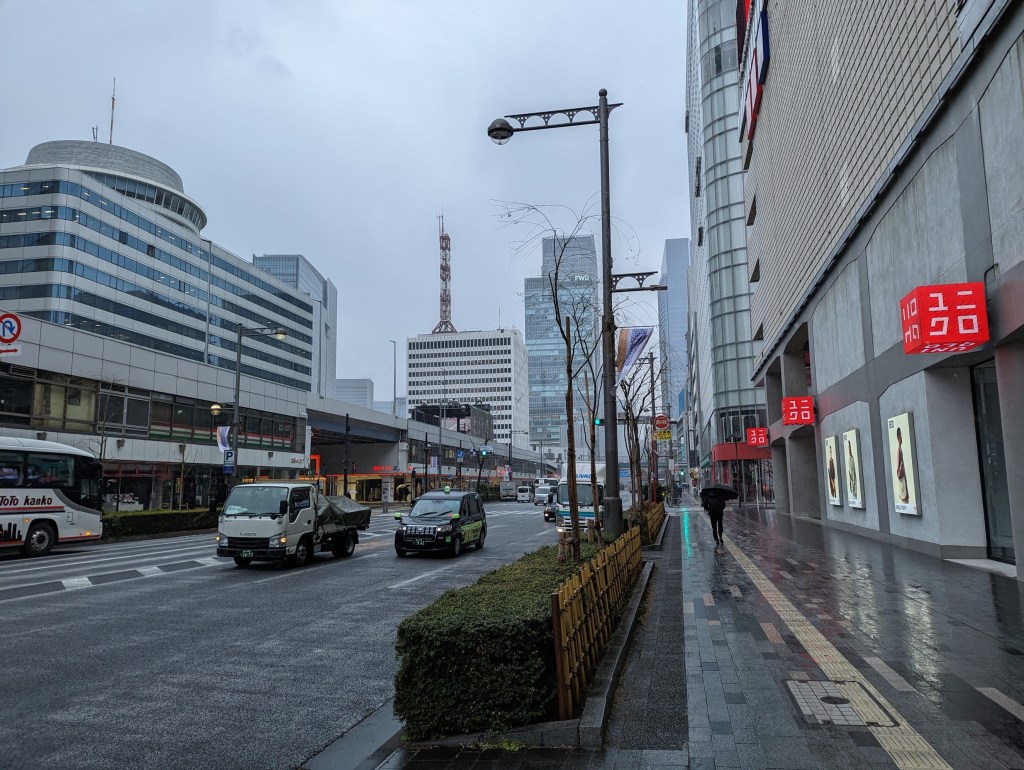
We went to bed last night slightly concerned about the weather forecast for the next day. It was going to be a wintry mix of sleet and snow. The trains had already projected the possibility of delays — something that Japan’s to-the-minute rail efficiency does not take lightly. We woke up with the forecast transpiring. We checked out of the Tokyustay and emptied onto Ginza’s streets with the snow falling somewhat painfully in our faces.
We walked about fifteen minutes to get to Tokyo Station to catch a Shinkansen to Nagano. We got on board with about five minutes to spare. The Shinkansen made a couple stops in the Tokyo environs before really picking up speed once we got out into the countryside. As we progressed further to the north, the snow seemed to be coming down heavier. Whereas the sidewalks and streets appeared wet in Tokyo, accumulation of snow was starting to occur as we sped toward Nagano.
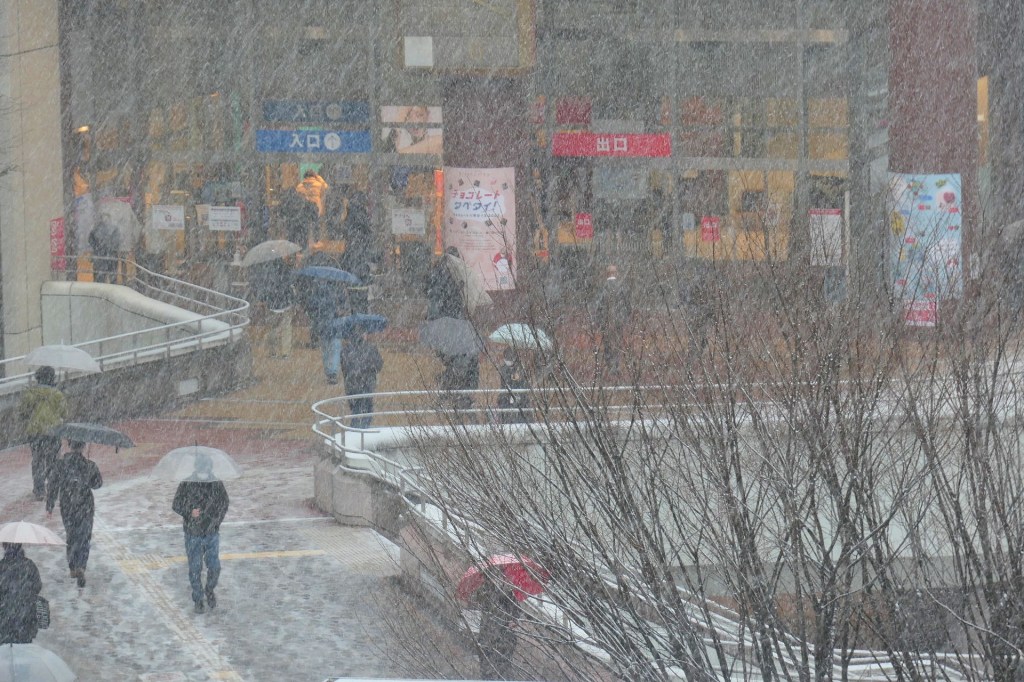
Nagano was the site of the 1998 Winter Olympic Games, so it seems reasonable that this region would be snowing more heavily. The train from Tokyo to Nagano took about an hour and a half. According to my google directions, we had just a twelve minute transfer time in Nagano. Since it was a different train company, we had to buy new tickets. I mistakenly went into the JR office for tickets (wrong company), but was helped along to the proper spot. The gentleman working tickets for the next leg of the line appeared from a small door behind the ticket kiosks like the Wizard of Oz. He entered the proper numbers into the machine and we promptly paid and boarded the next train with a few minutes to spare. It all went surprisingly smoothly, thanks to the help of the always accommodating and helpful Japanese workers.
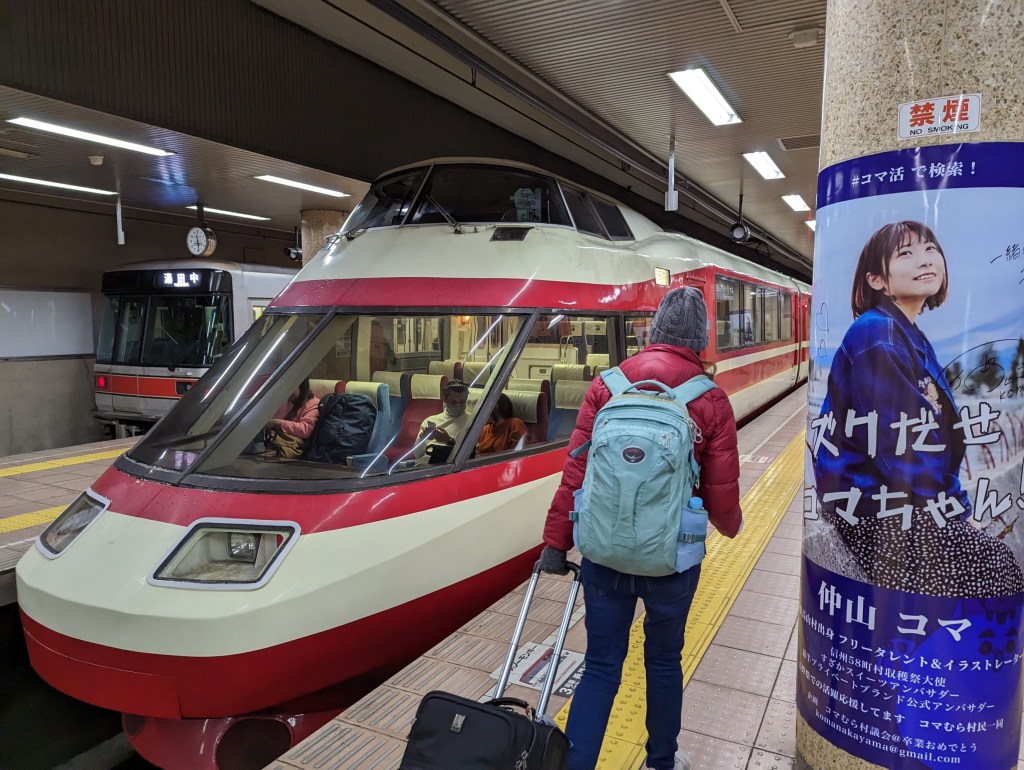
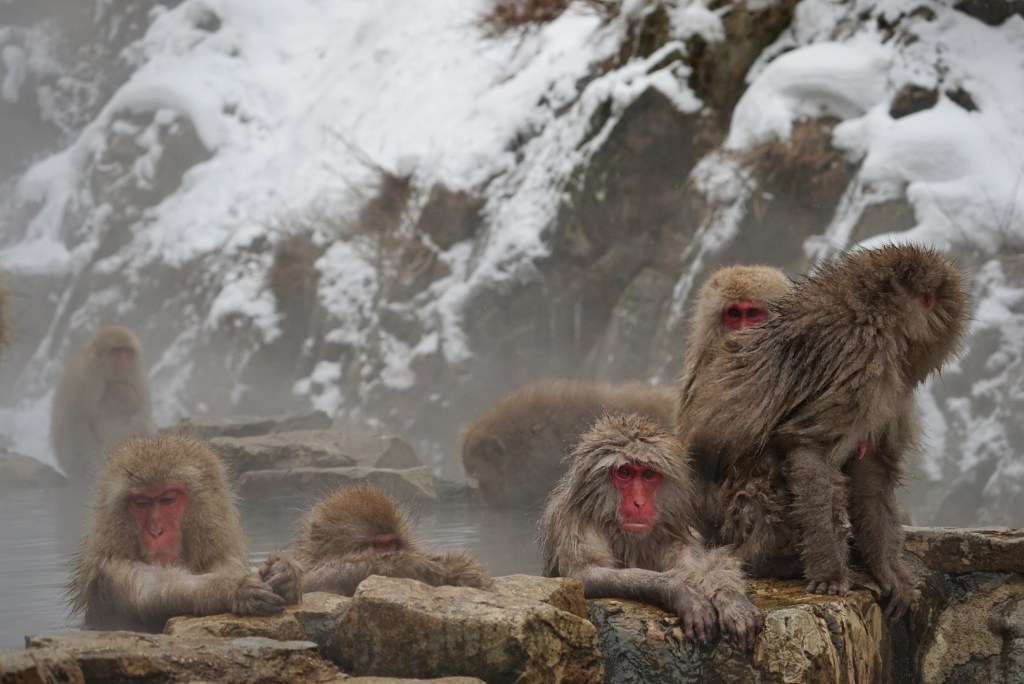
We rode this train for about 45 minutes until reaching the terminus at Yudanaka station. This area is famous for its onsens, but more so for its snow monkeys. Incidentally, the snow monkeys are famous for hanging out in an onsen, so it’s all connected. Our ryokan is only two blocks from the station, and because we had gotten there faster than anticipated (it was only 1230!), we were informed we would have to wait until 2pm to check-in. We left our bags there and I asked in Japanese if there was a toilet I could use. Aren’t you all proud of me? Then I asked in further broken Japanese how to get to the Snow Monkey Park. We had to go back to the train station and catch a bus.
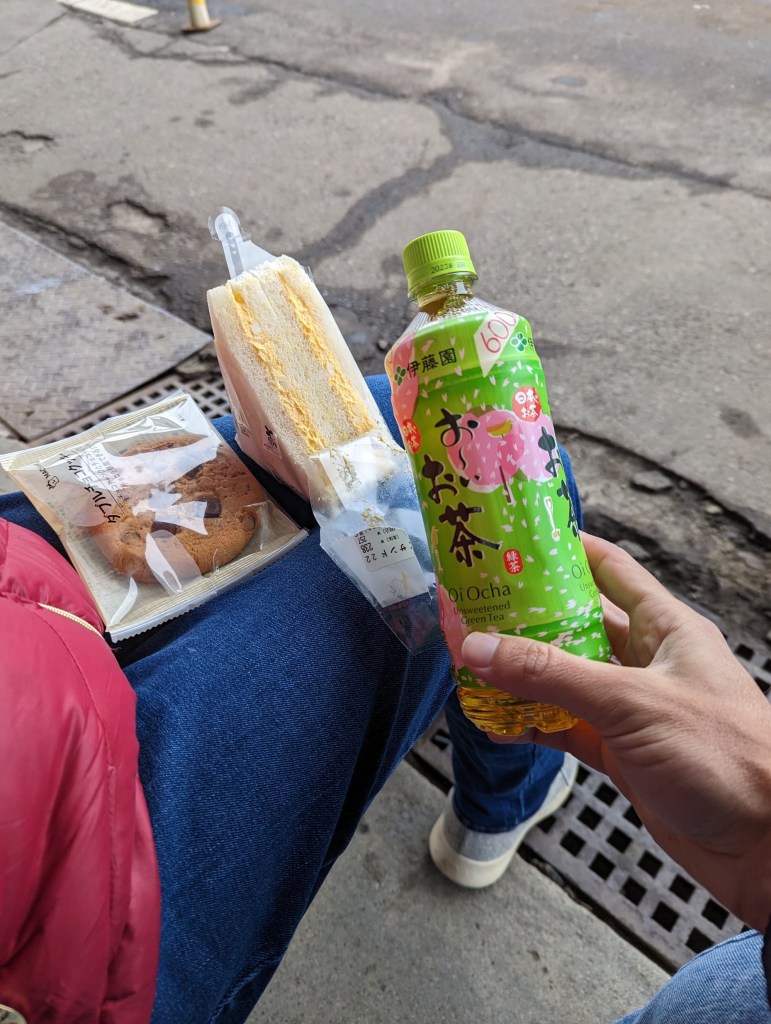
The buses are quite infrequent and we discovered that we had about 25 minutes to kill, so we walked to a nearby Lawson’s (convenience store) for an impromptu lunch of egg salad sandwich and cookies. By the time we finished our “lunch,” the bus was chugging into view. With chains attached to its rear wheels, we knew the weather here must be no joke. The bus ride was not particularly far — about 10 stops over the course of about 15 minutes, but all uphill. With an undeserved amount of confidence, we disembarked by ourselves at what we believed was the monkey park. It, in fact, was the correct stop, but we were speeding away from the other visitors on the bus as if we were on The Amazing Race.
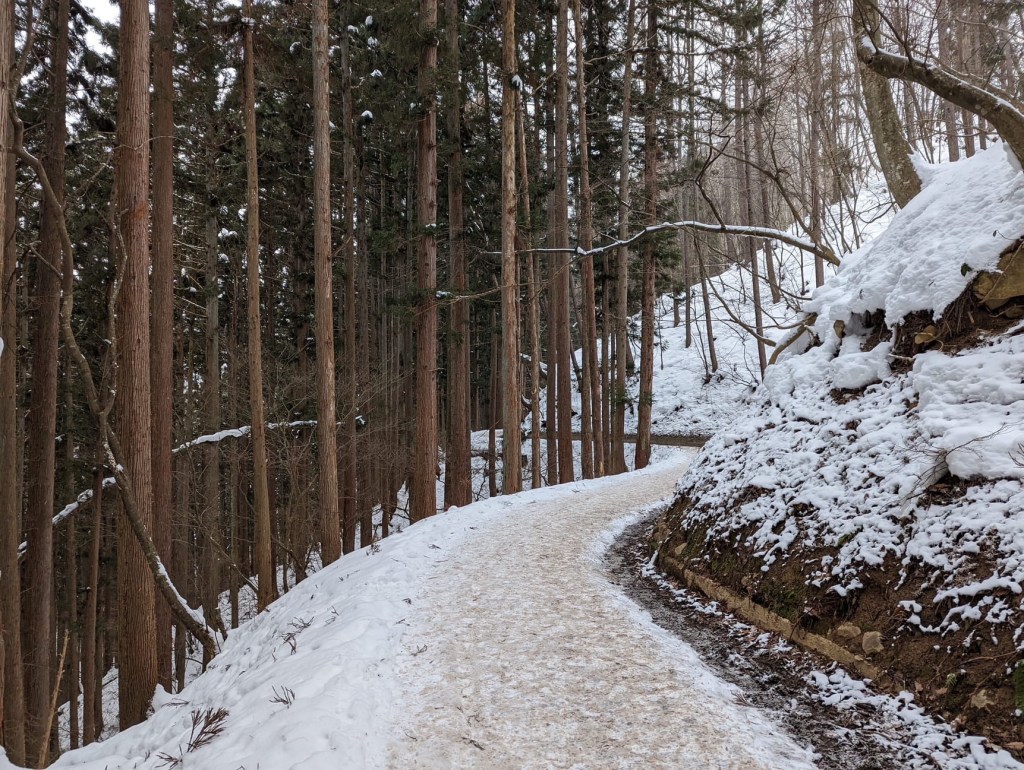
The entrance to the monkey park was an additional 2-3km from the bus stop on an icy/snowy pathway. We were using our covid masks to keep warm as snow continued to fall. The actual story behind the monkey park/onsen is perhaps slightly underwhelming. The snow monkeys would not have normally had a natural instinct to track down onsens as it turns out. As ski resorts and other development occurred in the region, the monkeys found themselves searching for a new habitat, which led them to raid farmers fields. This did not go over well with the farmers, who wanted to hunt them. A conservationist created a swathe of land and enticed the monkeys to enter the protected zone by repeatedly putting apples out. Creatures of habit, and following their stomachs, they came to the area now known as Jugokudani Monkey Park.
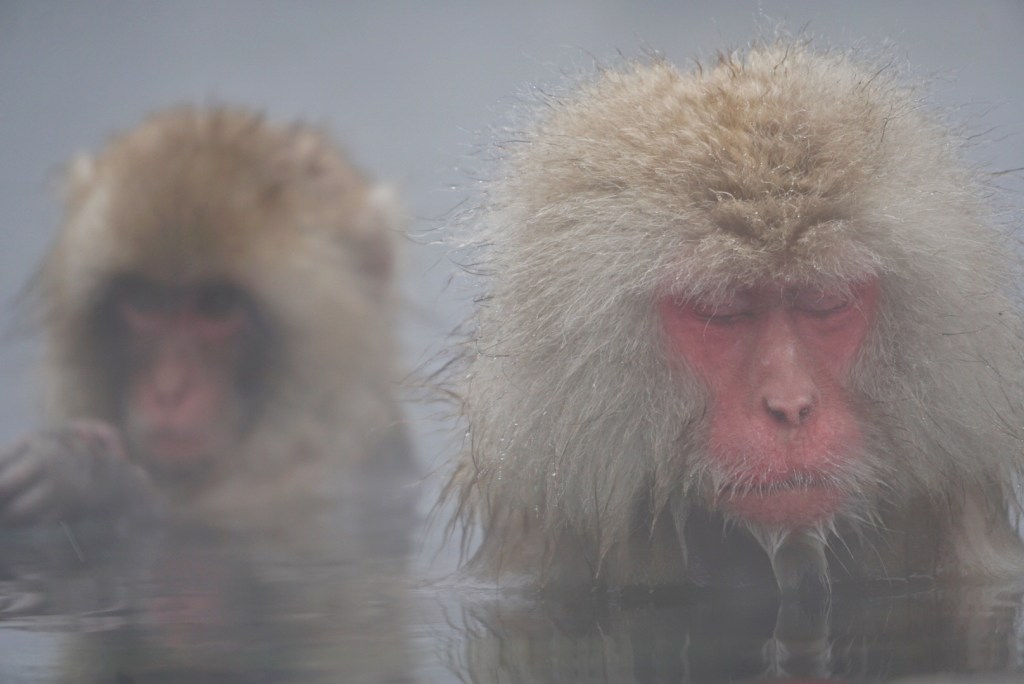
The natural hot springs or onsens are commonplace in this area, but seeing humans in them seems to have inspired the monkeys to follow suit. Looking at them and their poses, it does seem oddly “human” the way they soak in their new environment.
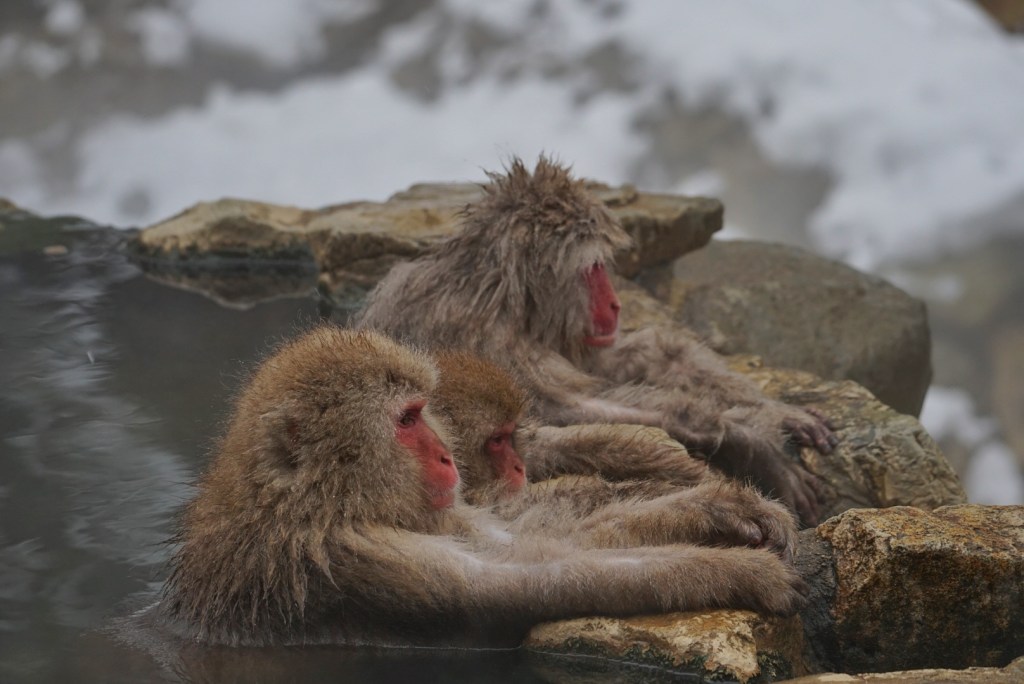
The snow continued to fall, though lightly. For viewing and photographing “snow” monkeys, one couldn’t ask for better weather. It wasn’t so cold that we couldn’t feel our faces, but exposed hands manipulating camera buttons did get uncomfortably chilled after a few minutes. With our 350mm zoom lenses, it was easy to close in on the monkeys and eliminate all the humans from our shots. With that being said, and in the interest of honesty, the reality of the scene may not be as tranquil as my photos appear.
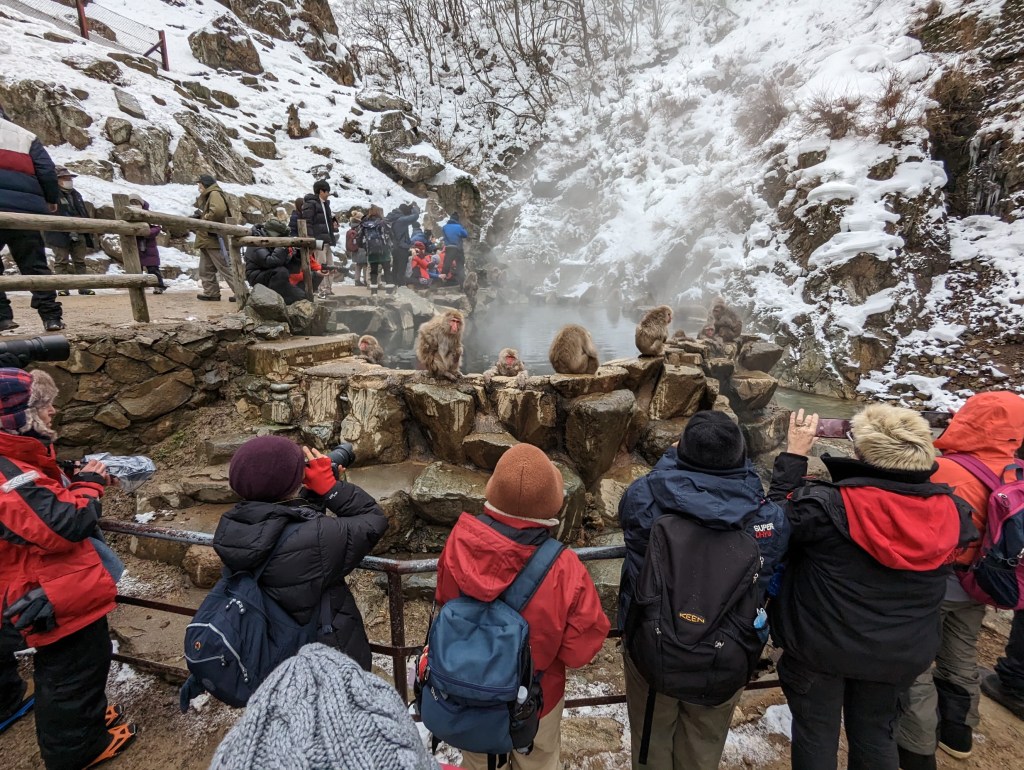
Interestingly enough, other people with massive zoom lenses were running into issues. Oftentimes the monkeys were no more than a couple feet away. They are obviously used to the presence of humans and weren’t too shy about wandering nearby. The long lens types seemed to be oblivious to all this whilst staring through viewfinders looking at monkeys 10m away and missing the action right in front of them.
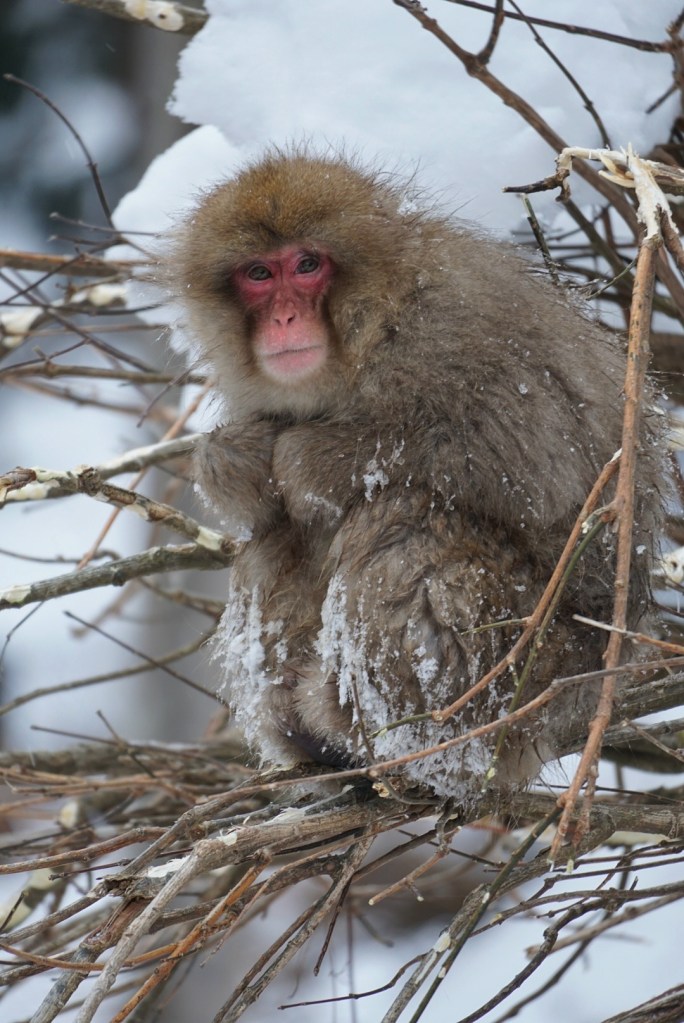
Either way, it was still really neat to see the monkeys in their element. I have been imagining this scene ever since I saw the docufilm Baraka for the first time many years ago. It featured a scene of snow monkeys juxtaposed with the meditation of monks. I always figured this required the filmmakers to lie in wait for weeks until the monkeys would enter the onsen. Little did I know it is a major tourist attraction. It was not, however, without considerable effort to get to. You would need to be in relatively decent physical fitness to reach the site, especially with the snowy path.
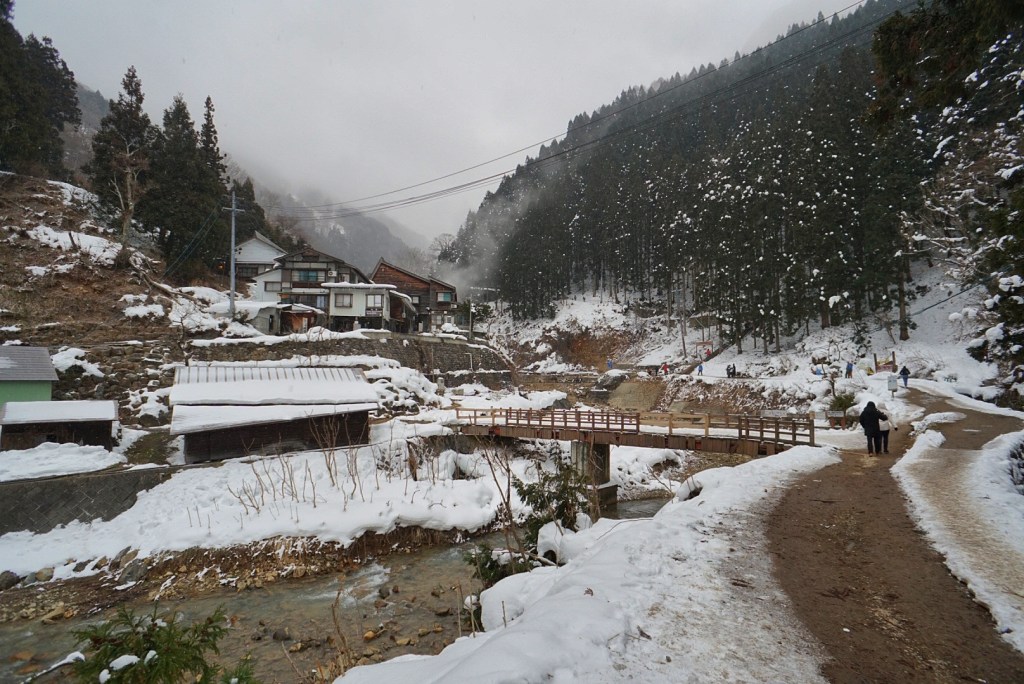
As we exited the park, I took a look at the bus schedule and the next one wouldn’t depart for another 45 minutes. Google suggested we just walk back to the ryokan (estimated time of 39 minutes). We listened to google, and luckily it was mostly downhill. The snow was coming down even heavier now. My mask was saturated with a combination of melted snow and my own snot. Hot.
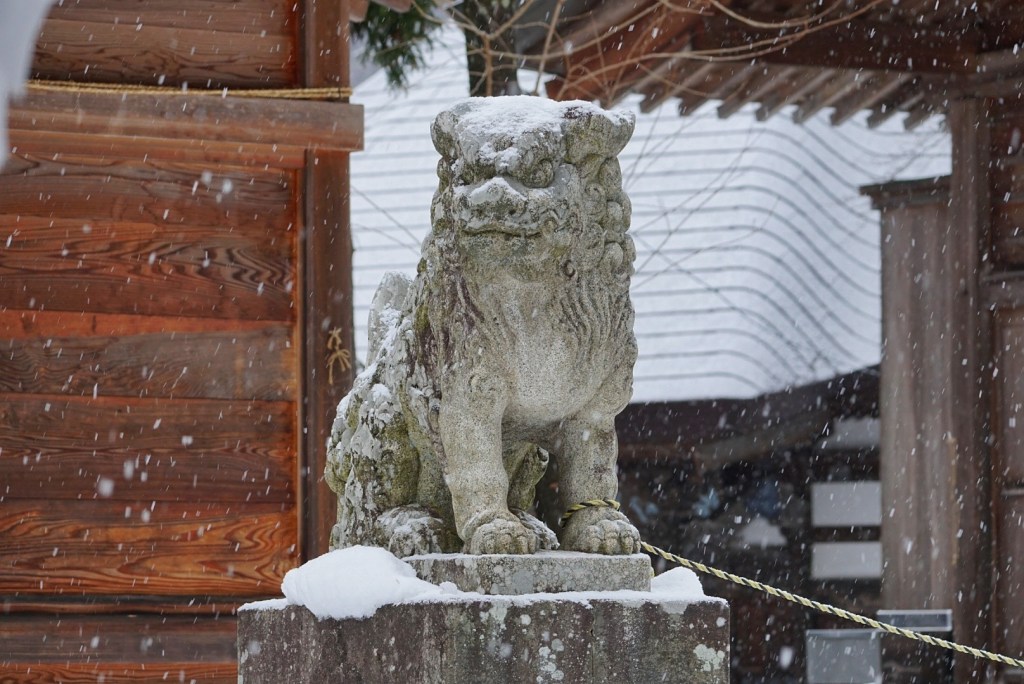
Despite the elements dumping down upon us during our walk, it was nice to take in the beautiful scenery around us. It was like the Japanese version of a Dickens village. Around the time the bus would have departed, we were settling in to our ryokan. We initially had an issue with the heat, which was unfortunate because it was quite cold in our room. I thought it was because I couldn’t understand the remote control, but it seems the unit was having a few glitches. They were extremely apologetic about the situation and offered us a private onsen for an hour for free. It was an unnecessary, but very kind gesture which is consistent with normal Japanese hospitality.
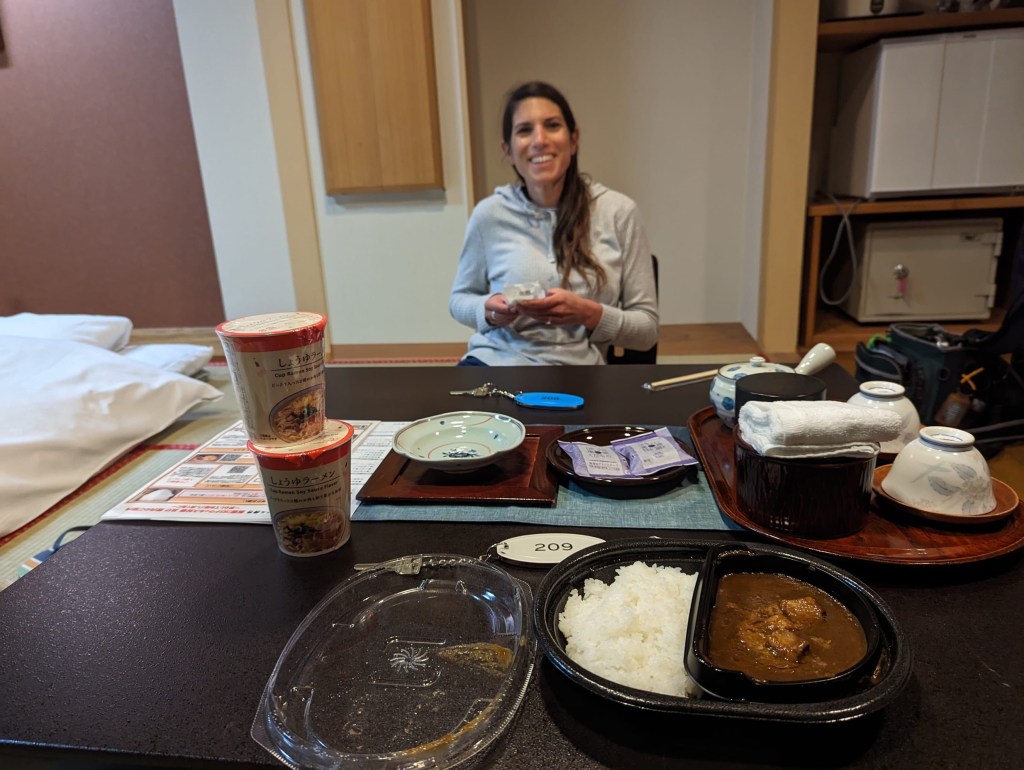
Our room rate did not include the elaborate ryokan dinner, so we made another trip to Lawson’s to fill the void. Beef curry and rice with some cup ramen, and a chocolate eclair completed the feast. After dinner, we relaxed for a bit before preparing for the onsen. It seemed logical to me that we should put on our yukata (kimonos) for easy access in and out of the onsen. I collected the key from the lobby and we headed up to our private onsen outside on the roof. Typically there is a public bath for men and one for women, but this unique situation allowed us both to go in. We wore our bathing suits, though the public ones are more often nude.
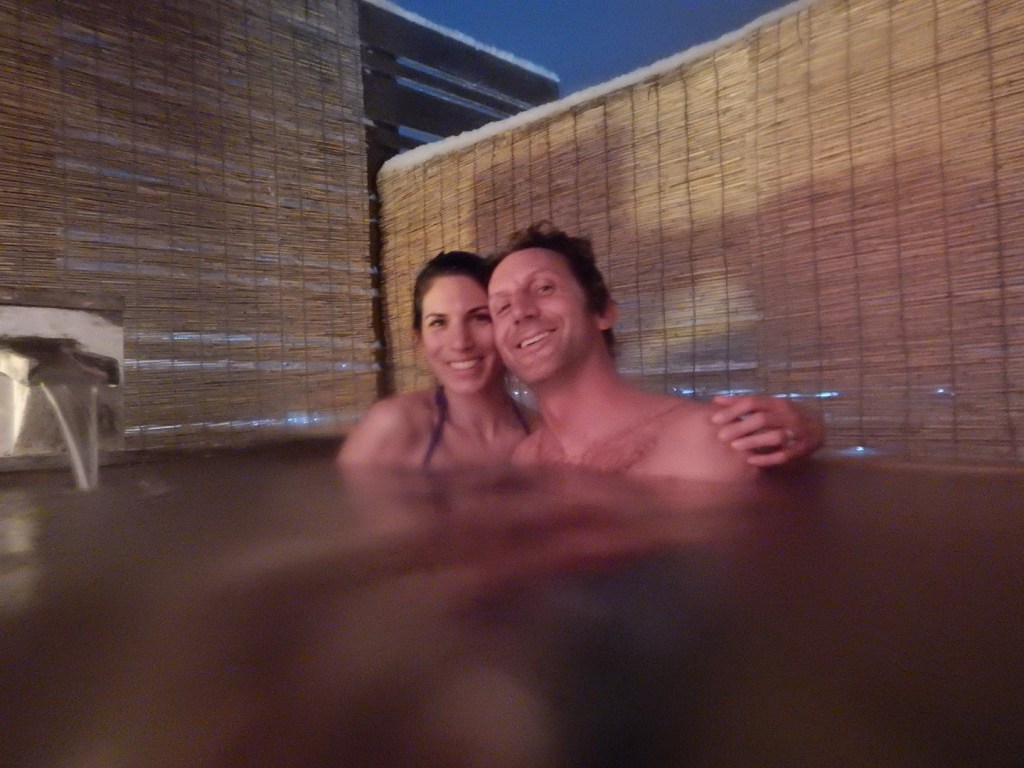
Being outside while the snow was falling, but in an onsen that was making us sweat was certainly a unique experience on a trip that has already been rich in experiences. Our allotted time was 50 minutes, but we got out after about 30. The heat was making our hearts race. I returned the key by thanking the man working the lobby with a “Arigato-gozaimashita.” He thanked me back for bringing back the key. That in a nutshell is Japanese culture. Thank people for everything, and apologize for things that aren’t even your fault. Everyone simultaneously seems flustered, yet eager. That inadvertently seems to be how I have been acting due to my limited knowledge of Japanese and overwhelming fear that I am somehow going to offend someone.
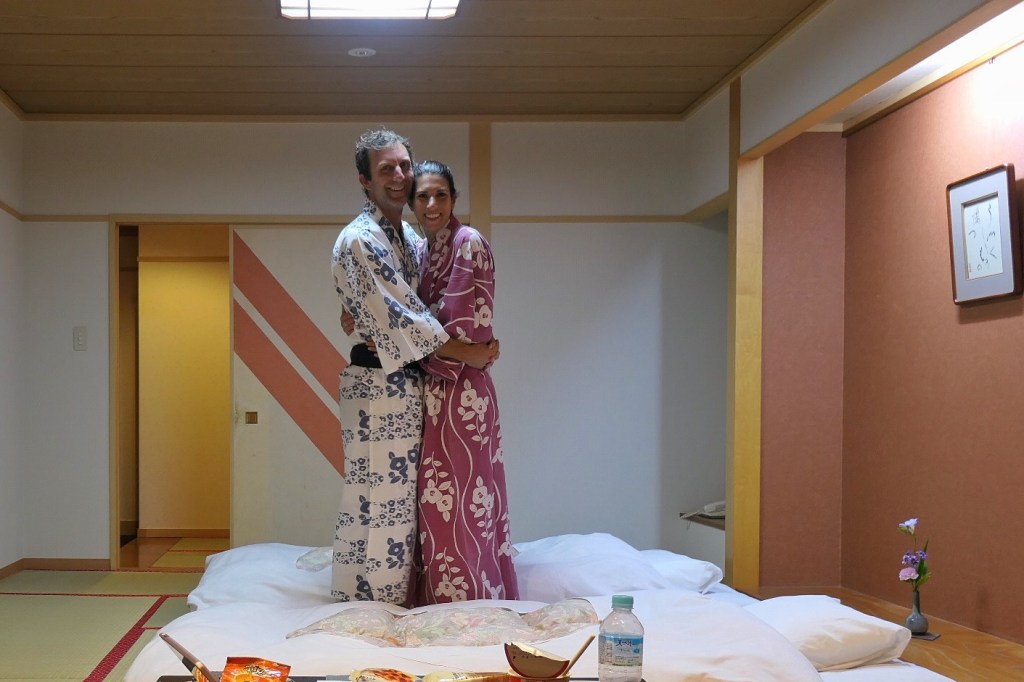
I’ve been trying to use the Japanese words when I know them, but I think my appearance gives away the fact that my knowledge is quite limited. Hopefully the effort is appreciated. I bid the gentleman good night with an “Oyasuminasai!,” which he delivered back with a bow. I shuffled away due to my yukata limiting my stride. Luckily I didn’t trip over myself during my exit. I am very glad we were able to do something a bit different in Japan today. As a whole, we have primarily been in this country’s cities previously, so it was a nice change to get out in the country where things are a bit slower and more traditional. Tomorrow, however, we will head back into the Tokyo area as we slowly work our way back home.
 passports & pepto bismol