
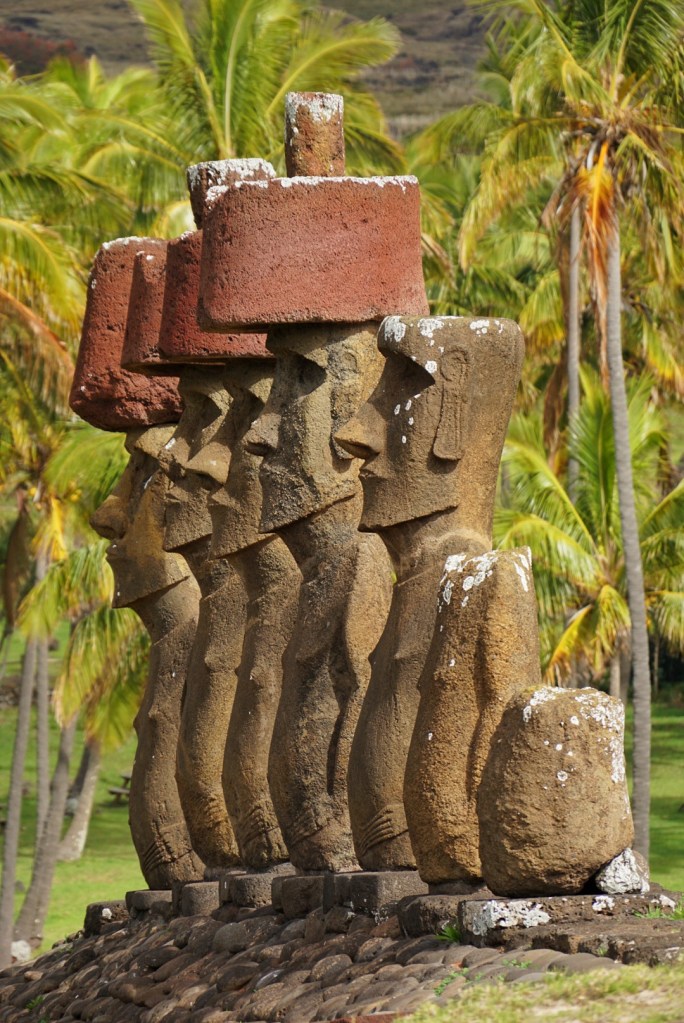
After a light breakfast during a light rain, we got back in the Jimny and puttered off to Anakena beach. It is in the far northeast corner of the island, and we thought that we could perhaps avoid people by doing a reverse route from what the tour companies might do. Based on the crowds there, or lack thereof, our theory was successful.
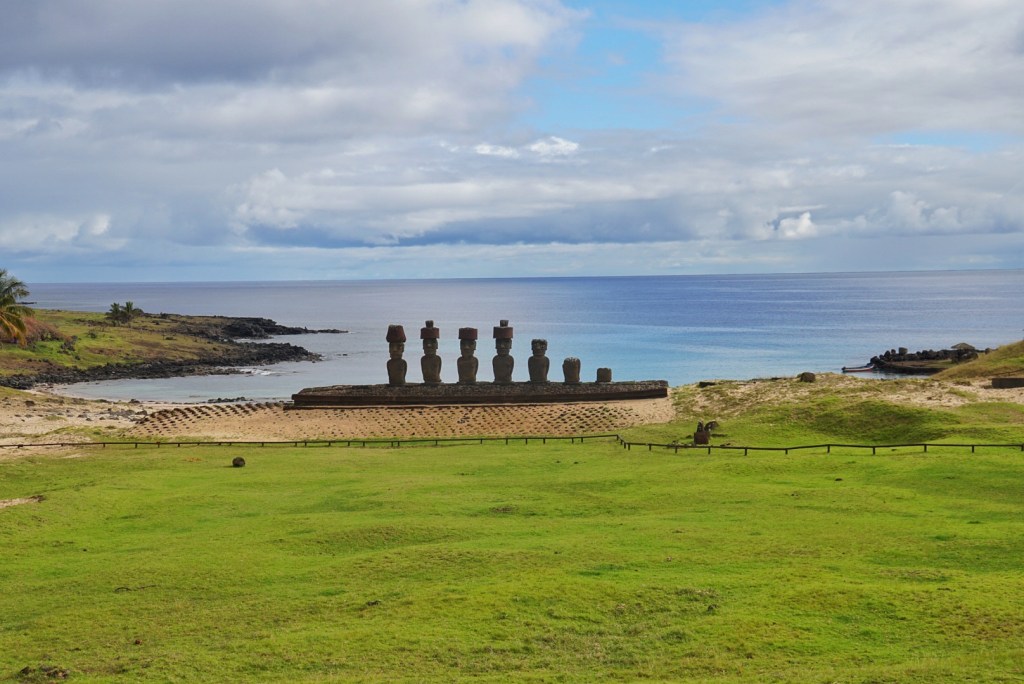
We were the only people there, which was kind of nice. It was very peaceful in the morning, though a bit of a chill remained in the air. The sky did look like it could possibly rain again, and it would within about ten minutes of our departure. Lots of brambles had also attached themselves to our pants and shoes during our exploration of the site, but we were able to scrape them off eventually.
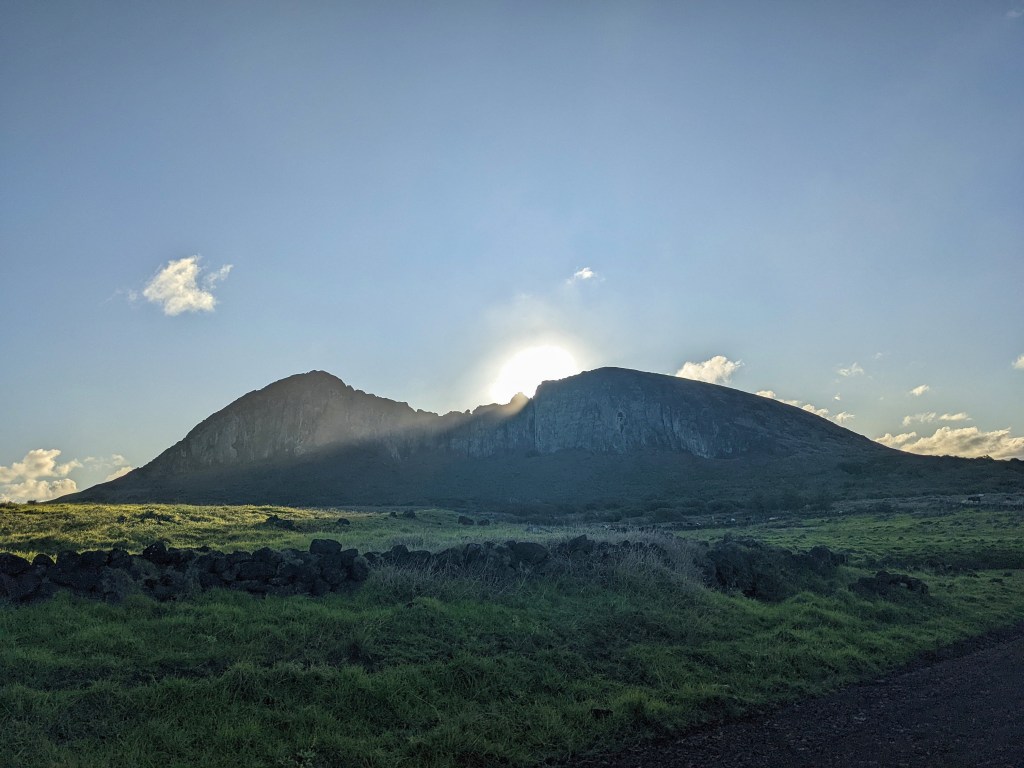
From the beach, we drove inland to Rano Raraku, where the moai were created before making their way to the coast. It was raining fairly heavily when we arrived, so we elected to wait it out inside the Jimny. The humidity increased quite a bit as a result of the rain. It seemed to stop just as suddenly as it began. Everyone immediately seemed to materialize and begin their trek along the trail. We tried to stagger ourselves a bit behind to avoid the crowds, though there weren’t even really that many to begin with. There were no more than twenty people at what is perhaps the most popular sight on the island.
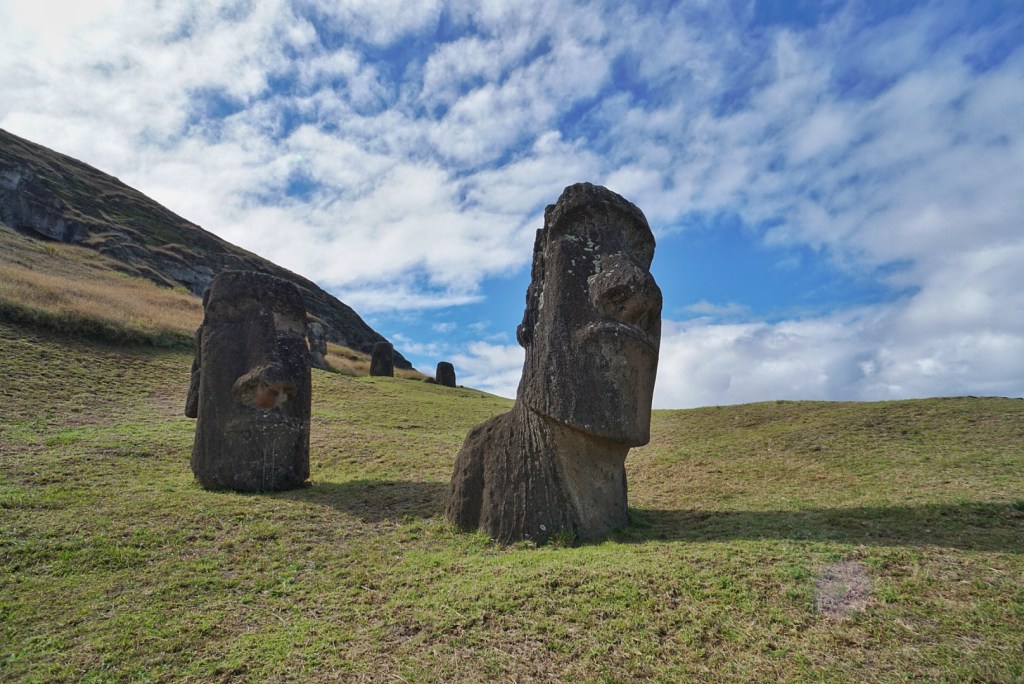
We had to hire a guide, as expected, but the lady checking tickets initially said there weren’t any there. We were able to sort out the issue by getting a young local guide who only spoke Spanish. I said we would be able to work it out. He spoke slowly enough that I could understand most things surprisingly. I actually learned some things despite the information being in another language.
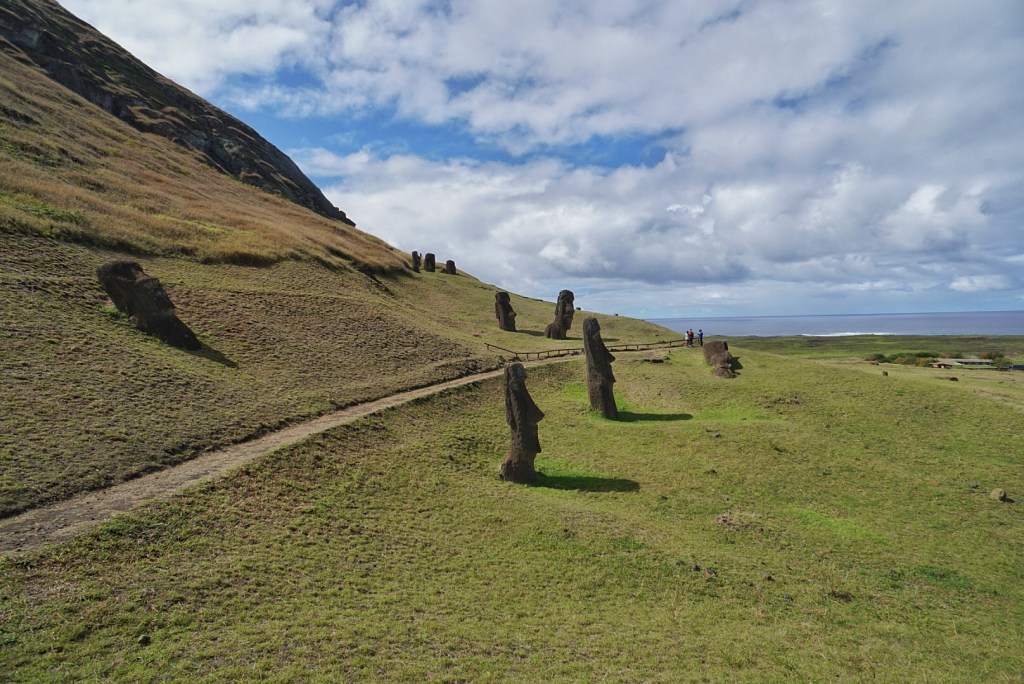
Some of the theories about how they were moved and how long it took to construct them have changed over the years. The current belief is that it took about six sculptors less than 18 months to construct a single moai. Furthermore, a formerly widely-believed theory about the moai “walking” down to the coast by being shifted back and forth has been debated because there would have been more evidence of this on both the ground and on the bases of the statues themselves. With my lack of a vast vocabulary in Spanish, I inquired if the movement was more like a “tobogán” (water slide). He seemed to understand what I was getting at.
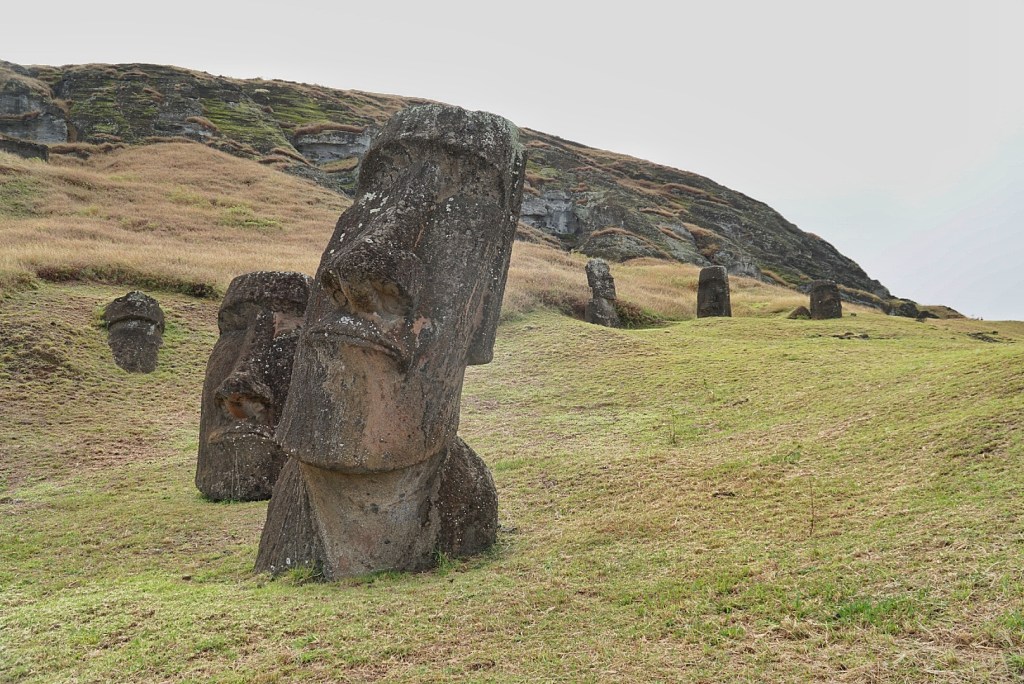
At the end of the trail, we talked a bit about Rapa Nui and the pandemic. He said there were too many tourists before. The island was running out of water, and had issues with power cuts. He said people were very upset because it was cutting out in the middle of football matches. Hopefully the island is able to better regulate the amount of people coming to the island to promote better sustainability in the future.
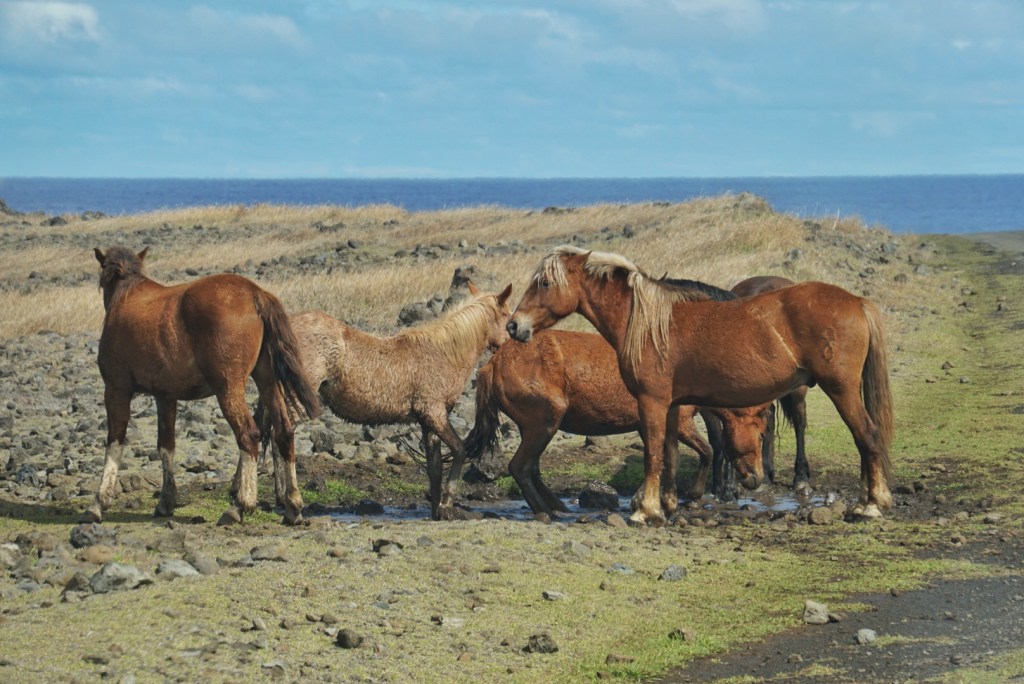
It was slightly awkward on our way out because I think something got lost in translation. I think he thought he was going to be our guide for the rest of the day, but the Jimny really only has room for two. We continued onward without our new friend. We hope we let him down easy. Our last stop for our half day tour around the island was the Rano Kau overlook, a viewpoint into the caldera near the town of Hanga Roa.
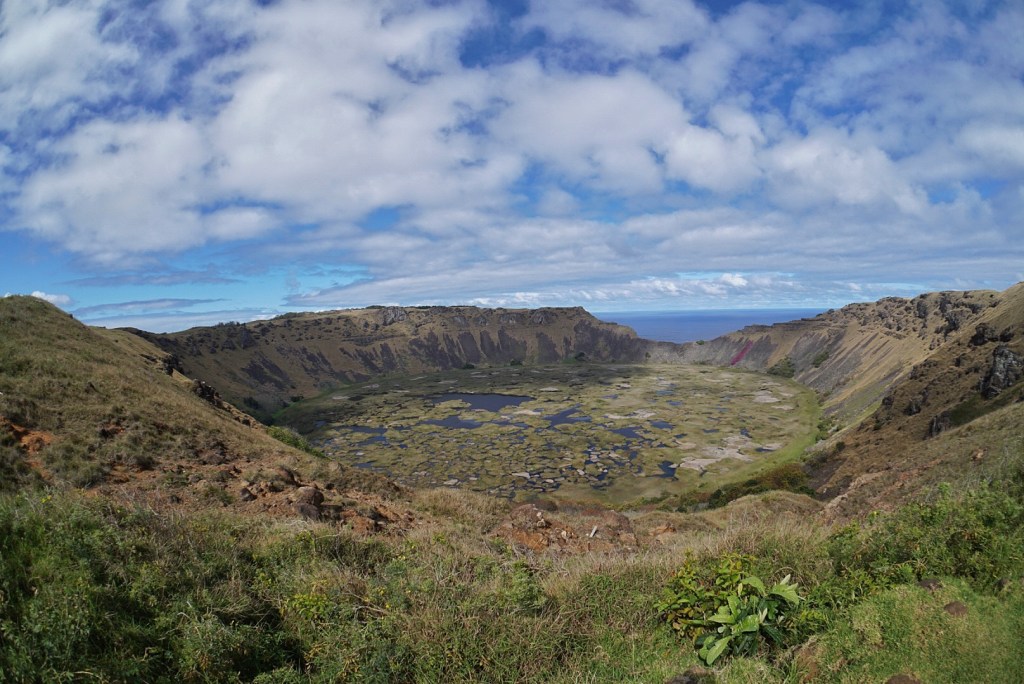
It was a quick and easy stop . . .for us at least. There were numerous other people riding bicycles to the viewpoint and beyond. Why? Why would you choose to ride a bike UP a hill? I am a bike enthusiast and do not understand the appeal. Anyway, that was our last stop for the time being. We returned to the hotel where we regrouped and then went back to Mikafé (which I have been pronouncing McCafe) to get some muffins and a banana/coconut cake.
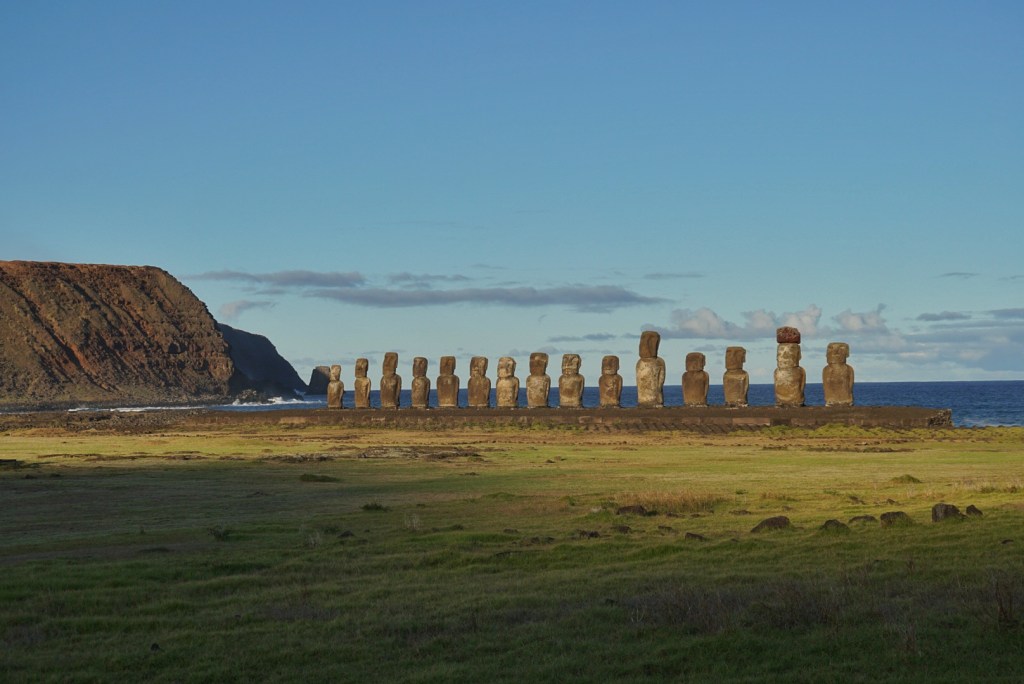
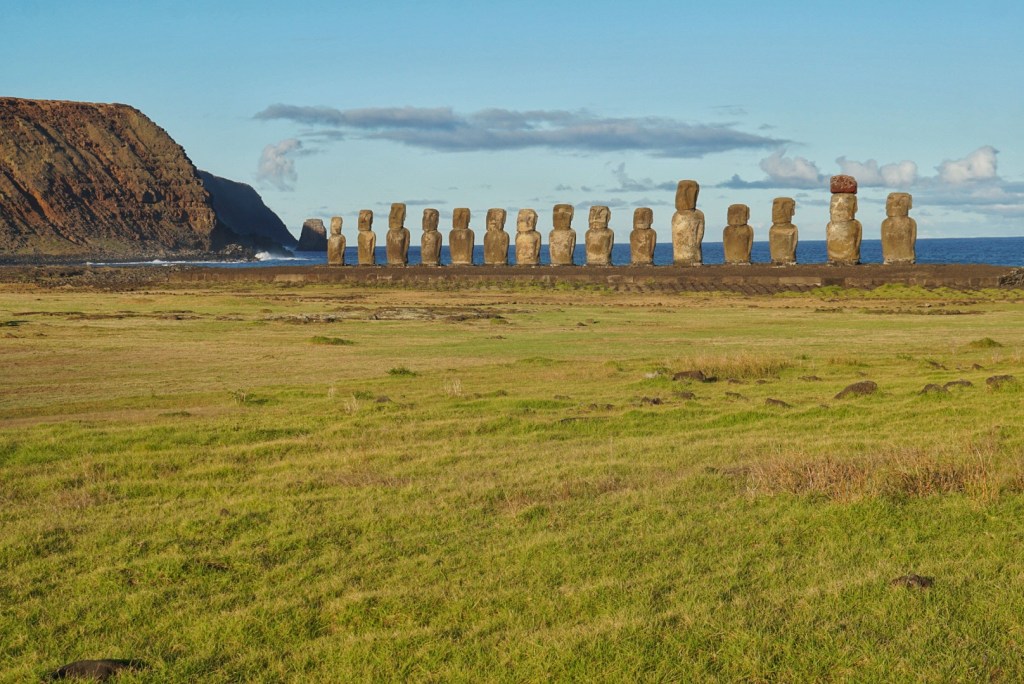
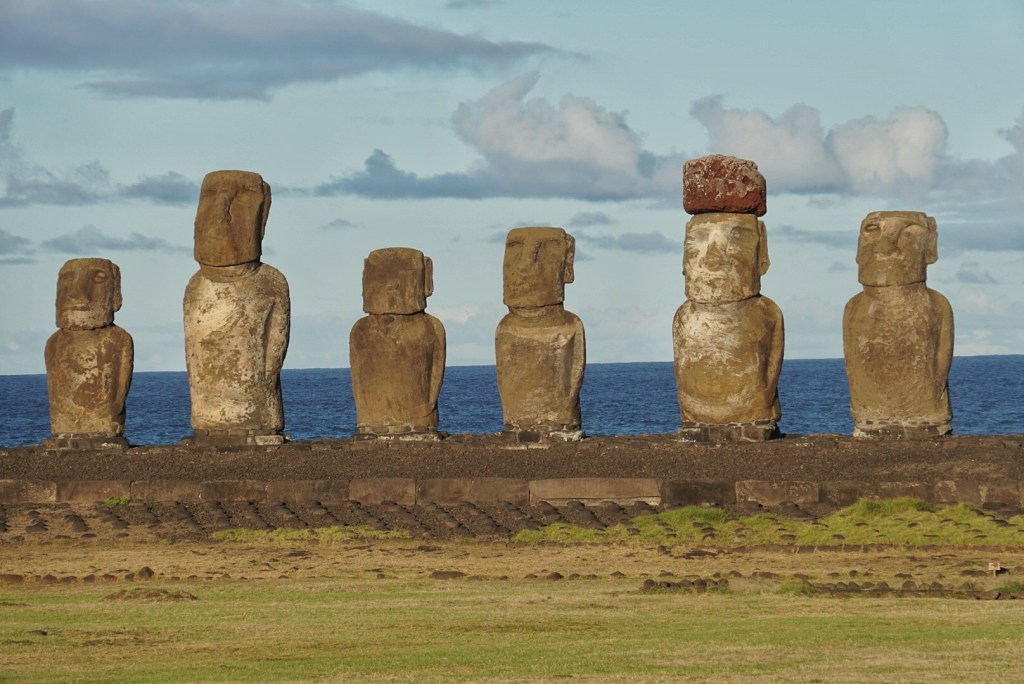
We did some shopping and then spent about 90 mins fighting with a nonexistent internet connection at our hotel. The cell and internet service on this island as a whole is pretty bad. I wisely had maps for the whole island cached on my phone so we wouldn’t be lost every time service dropped out. We elected to drive back toward Ahu Tongariki, or the fifteen moai on the southern coast. There was a particular angle that we just missed out on with good lighting yesterday evening. We had the time and figured why not head on back out. It was only a 25 minute drive, and we arrived just in time to catch the evening sun’s glow on their faces.
We have been very productive with our exploration of the island. We have not, however, been productive at all with determining our future plans thanks to the horrible internet. How I’m able to upload anything is a small miracle, though it also took hours. We were trying to look up flight loads, check hotels for tomorrow, or in some cases just check email, and were mostly unsuccessful.
Our flight is at 3pm tomorrow, but we were told to get there three hours ahead of time. Considering there is no further paperwork to return to mainland Chile, that all seems a bit excessive. With that being said, maybe the internet is better at the airport. I’m thinking no, but maybe we will be pleasantly surprised.
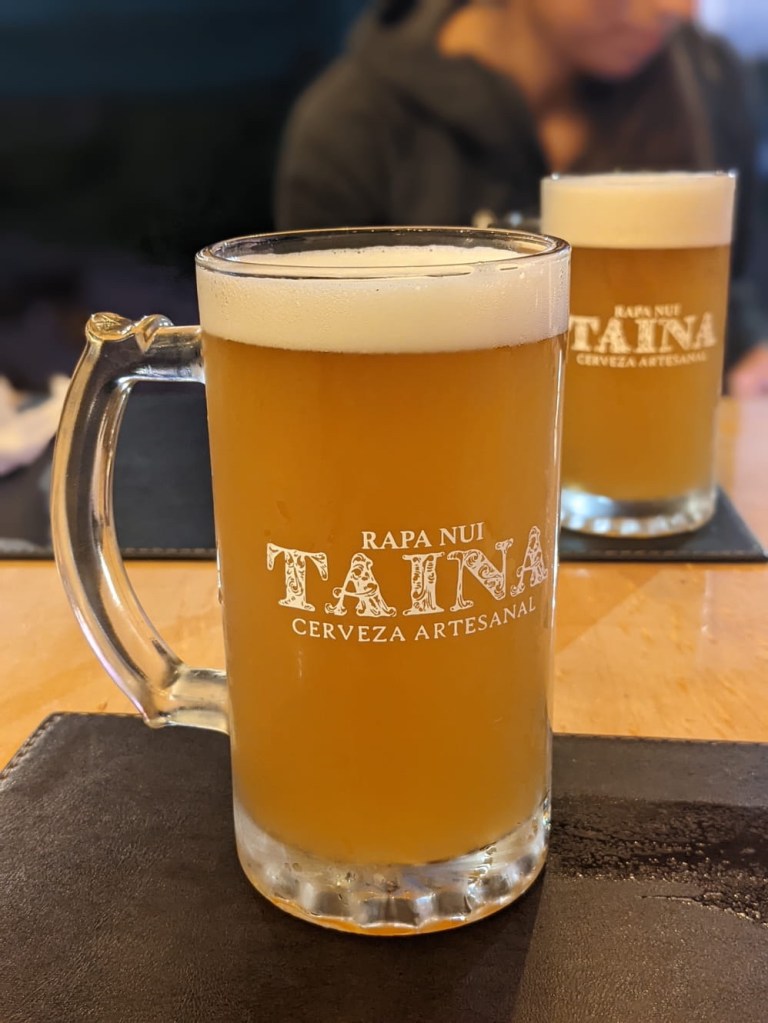
For dinner we went back to the Taina Beer Garden. They had their own beer on tap today, so it must have been aided by the arrival of yesterday’s flight. Nicole thought it tasted too wheat-y, or grainy. I agreed that the ratios were a bit off. That’s the charm of island microbrews. We got some merchandise before leaving — including two mugs to add to our collection. Souvenirs—check. Tomorrow we will likely be in Buenos Aires, but have no hotel and the internet hasn’t allowed me to check-in for that connecting flight, so perhaps we will end up back in Santiago. Only time and the wifi capability will tell.
 passports & pepto bismol