I didn’t sleep great last night. I’m thinking the sun rising at 330am along with nonstop gusting wind had something to do with this, but I used my time to do a little research on the volcano and the weather. I may have mentioned that it has been quite windy since we’ve been here. The warnings on the Iceland safety website had essentially said not to go hiking near the volcano due to the wind. I asked them if the wind warning was an annoyance thing or a general safety concern. They gave kind of a vague answer, but an hour later, their site had an update saying poisonous gas was detected in the hiking zone, so that was that.
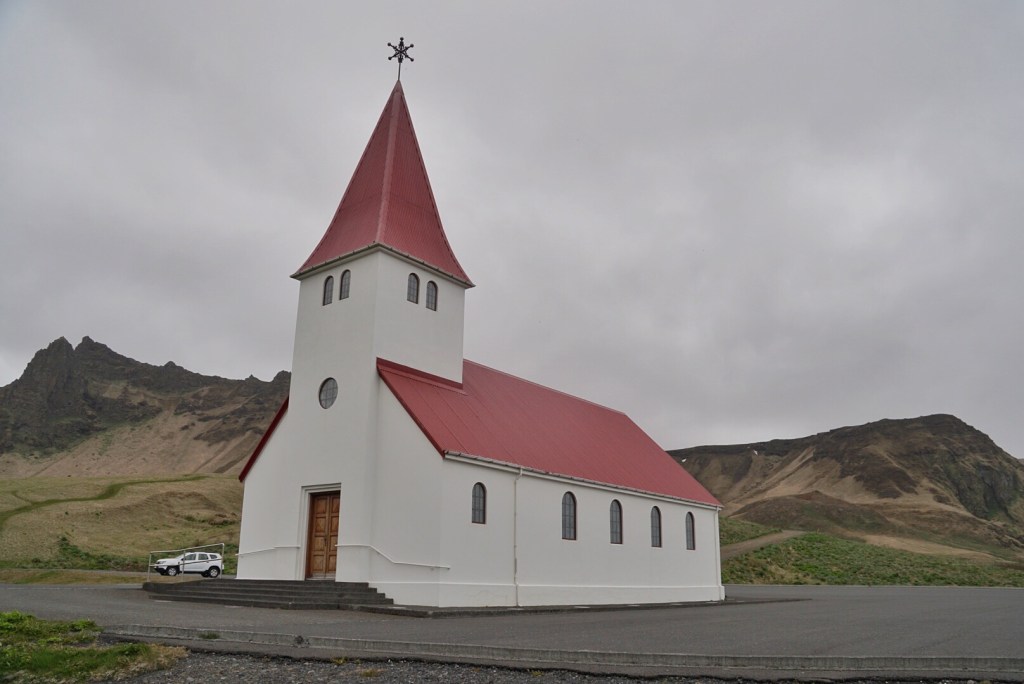
We had breakfast at 830 am and headed out afterward. We checked out an overpriced wool shop before checking out the simple church perched above Vik. Red seems to be a common church color in these parts.
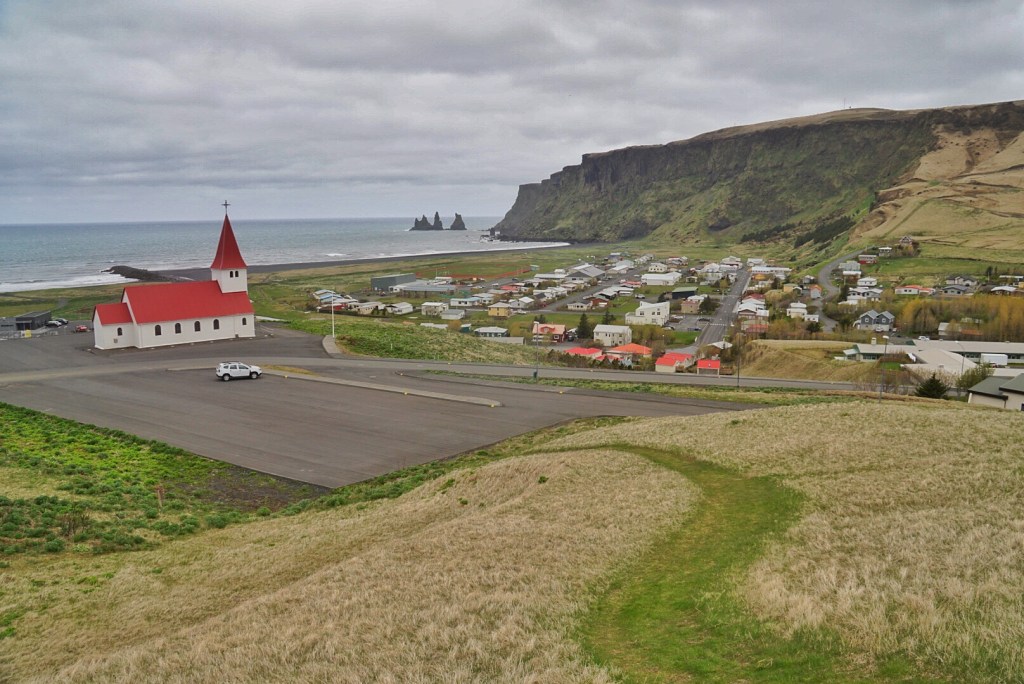
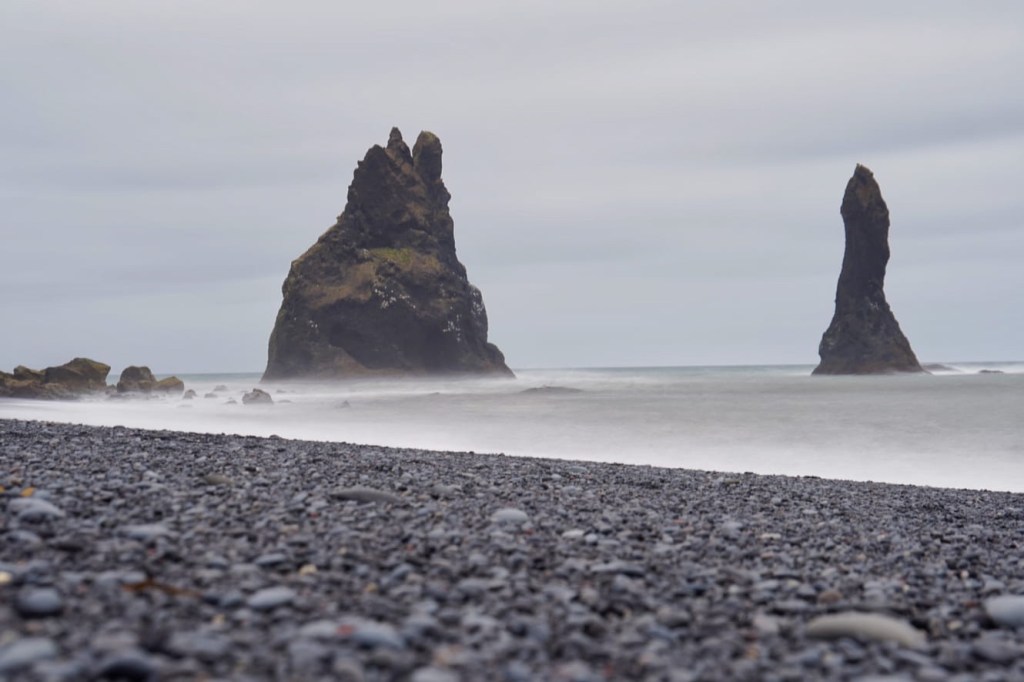
From there we drove to Reynisfjara beach. The wind was now kicking dirt into our eyes. While it was nice scenery, it is a challenge to really soak it in, change lenses, or really do anything without it going incredibly wrong in these conditions.
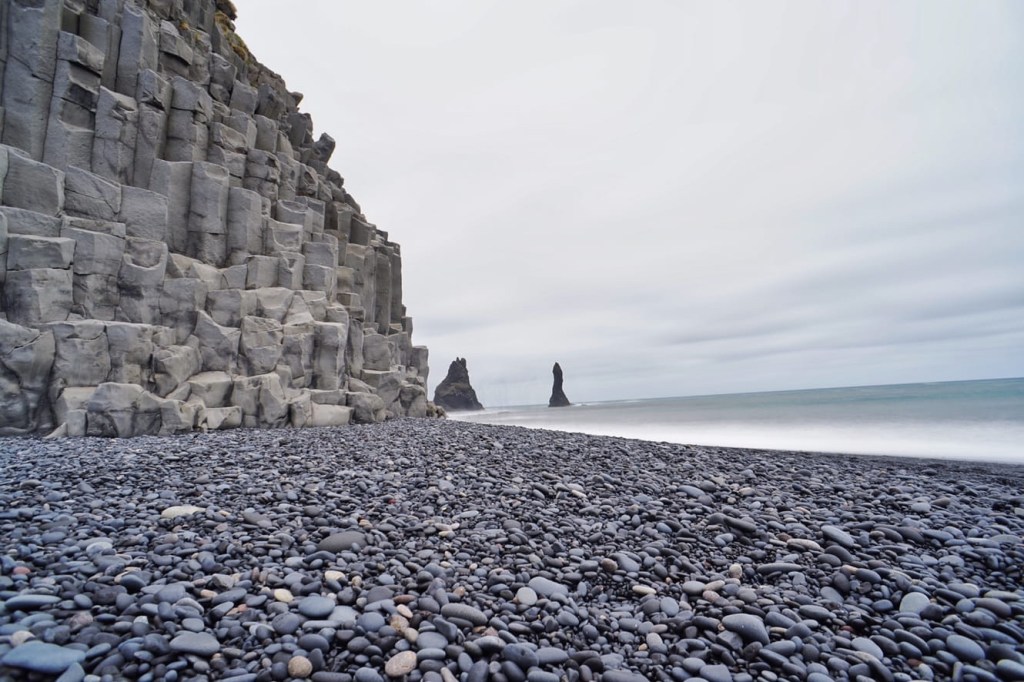
It reminded me of Giant’s Causeway in Northern Ireland except Northern Ireland in February was warmer.
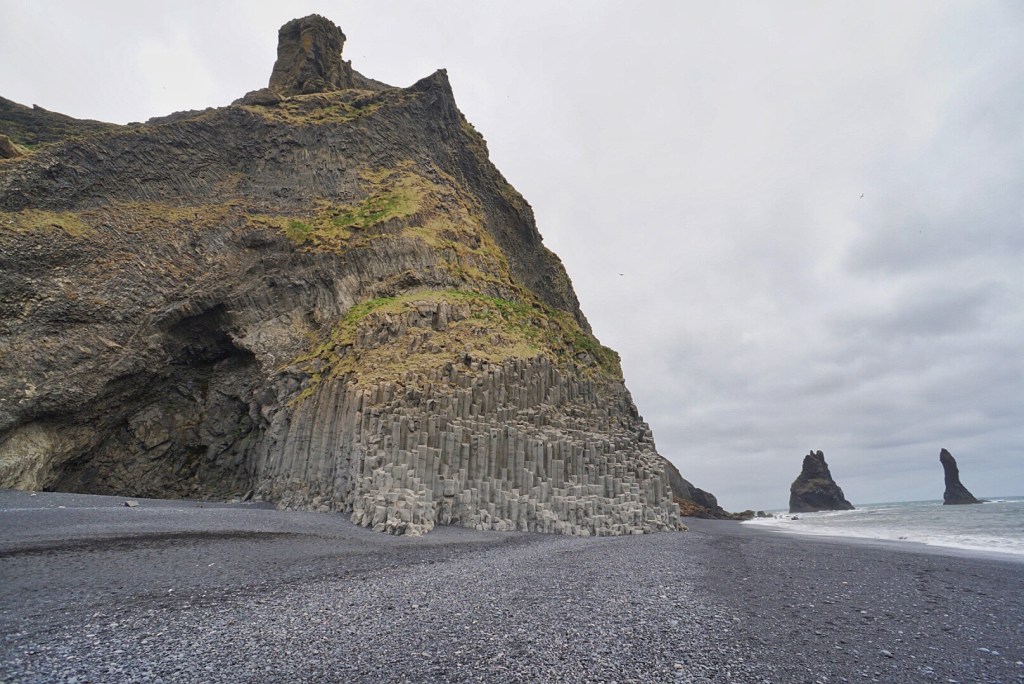
As you can also tell, there are not many tourists at any of these sites nor on the roads. This has been the positive that we are trying to focus on. In spite of the rescinding of the mask mandate, we have elected to wear our masks outside to protect our faces and help keep us a bit warmer. In my entire life, I’ve never experienced wind like this. The rental car companies claim most damage is from car doors swinging violently open in the wind.
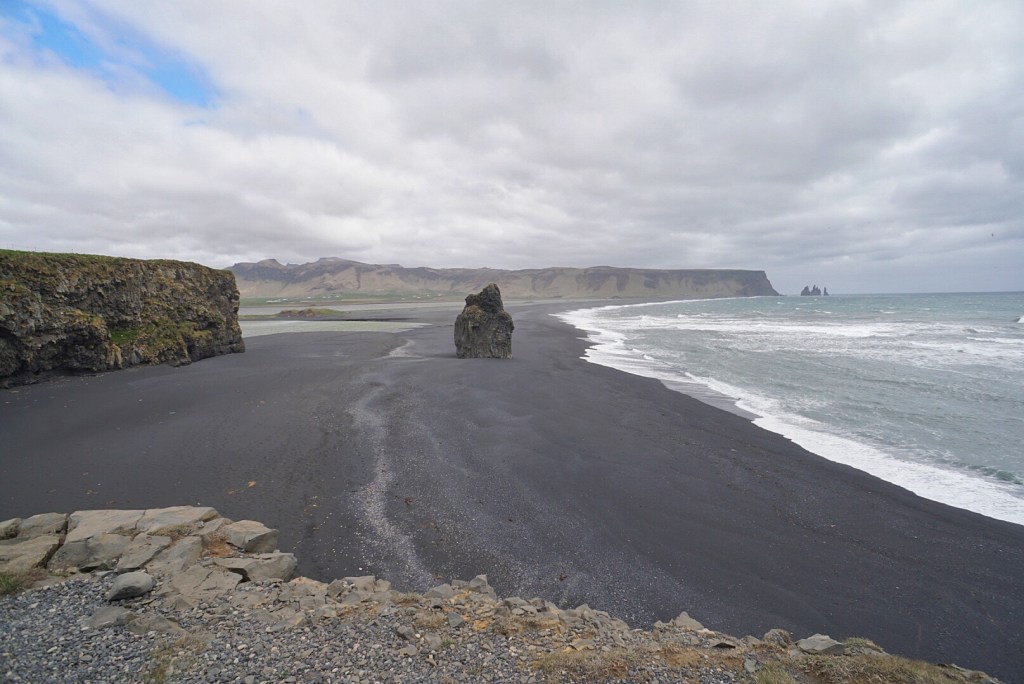
We then made our way over to the adjacent beach area. Supposedly there are puffins in this vicinity, but I think they all blew away. The wind actually seemed to be getting worse.
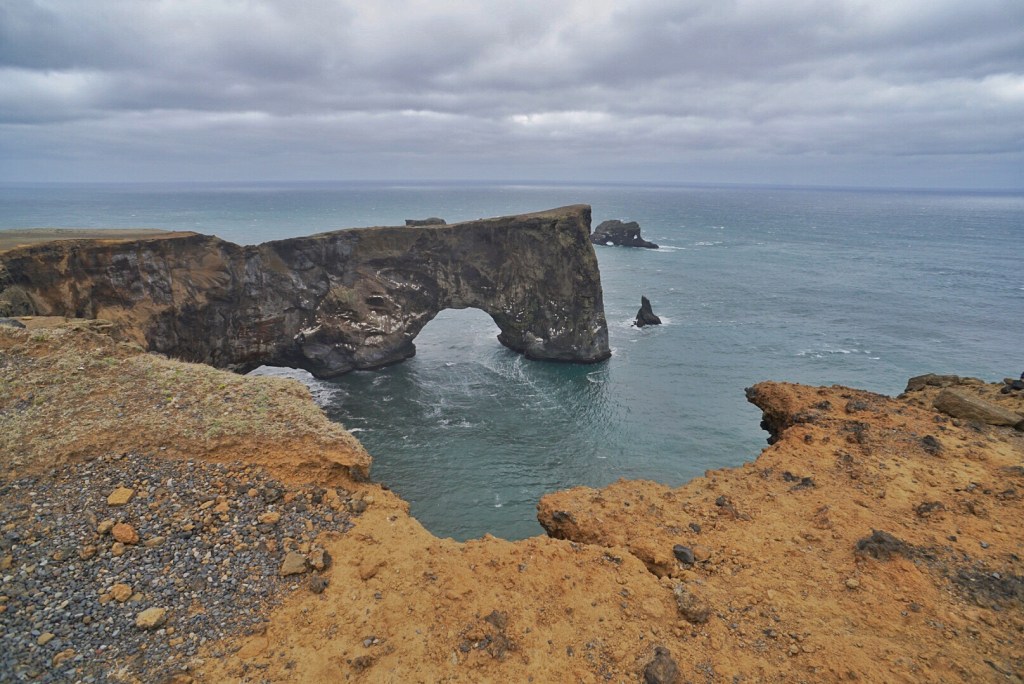
We then saw a natural arch at Dyrhólaey that was reminiscent of our winter visit to Durdle Door on England’s Dorset Coast, except wintry England was substantially warmer. Nicole could lean back into the wind and it would hold her up like it was playing a game of trust.

We stopped at the trailhead to a heavily-photographed abandoned DC-3 on the beach, but the wind was so strong that the prospect of hiking over 2 miles one way was not super appealing. Our faces hurt. We ate some lunch in the parking lot before stopping off back at Skógafoss, now completely bathed in sunlight. The nice sunshine might lead you to believe it was warming up. It was not.
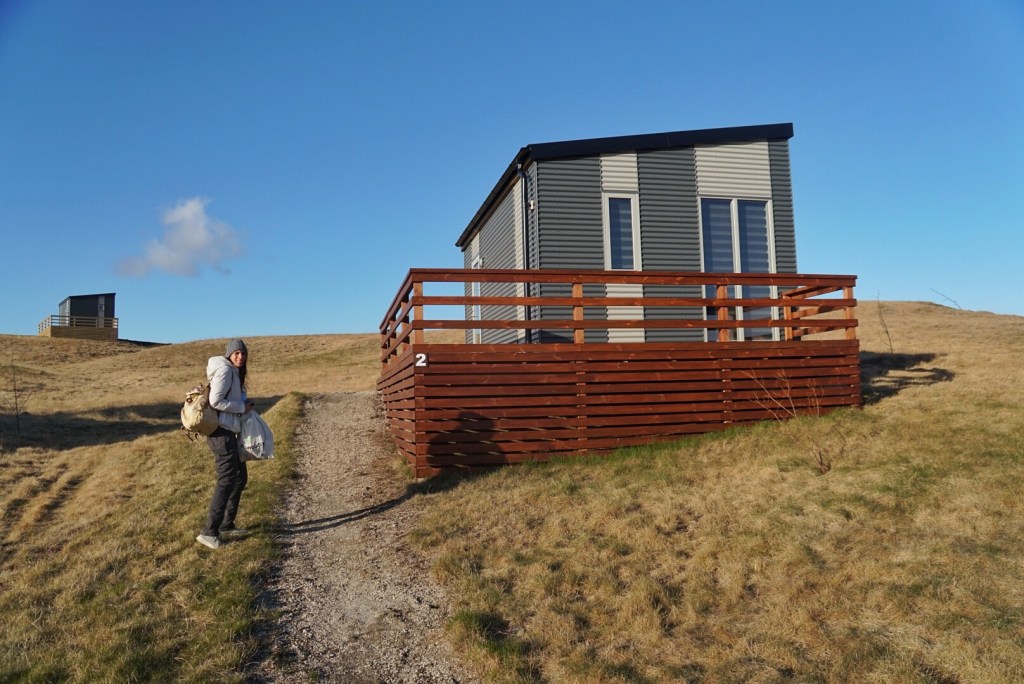
As we neared the town of Hella, we picked up some groceries and self-checked into the afternoon cottages, which are very much in the middle of nowhere and quite open to the wind’s assault. People reviewing it said it got really scary at night from shaking in the wind, so we are cautiously excited to see what that is all about.
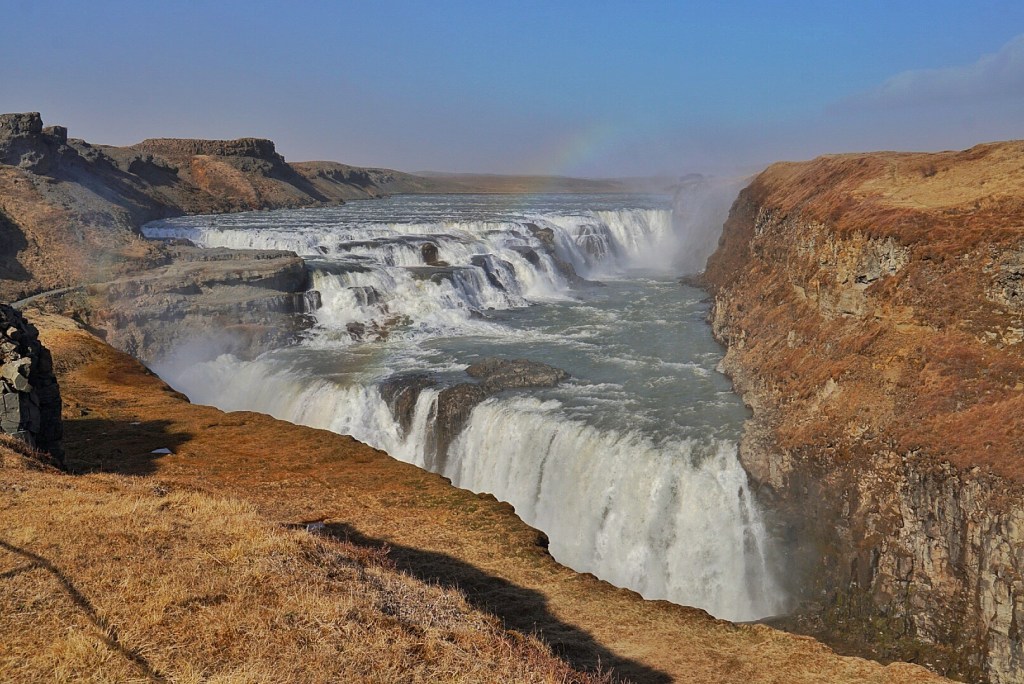
Since some weather forecasts show the region getting pelted with rain for the next couple days, we thought it might be good to drive some more to check out Gullfoss, Iceland’s most famous waterfall before this happens. Word on the street is that, rain and mist often prevent one from being able to see the bottom tier.
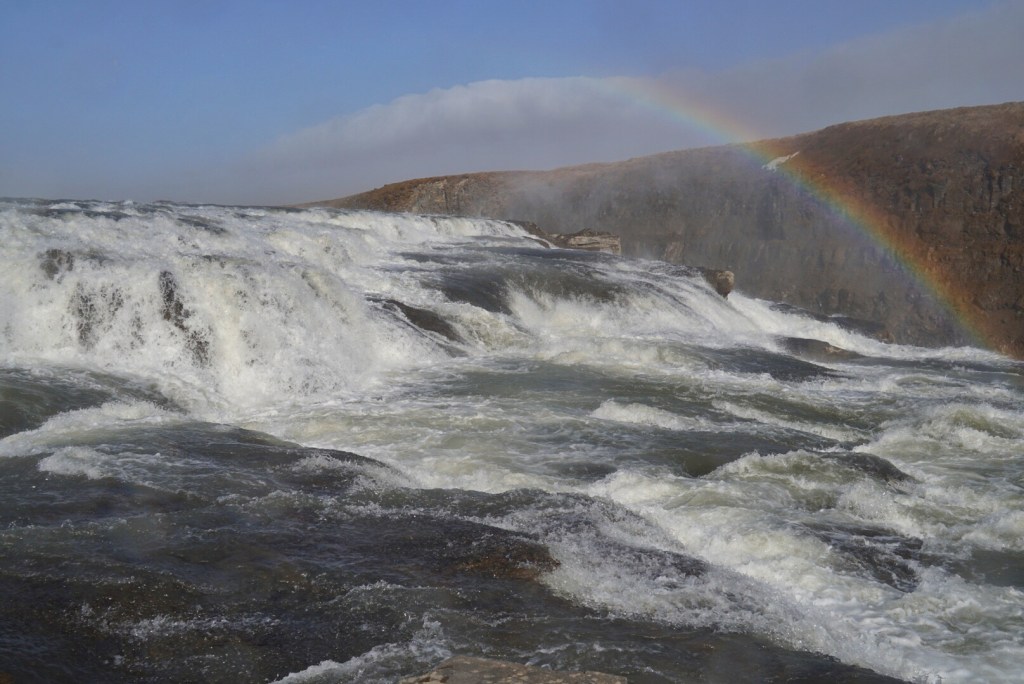
It wasn’t super close to where we are staying, but I think it was worth the trek, even though the wind was just as bad as ever. We were, however, able to see it in sunlight and with rainbows and all those bonuses that come with it.
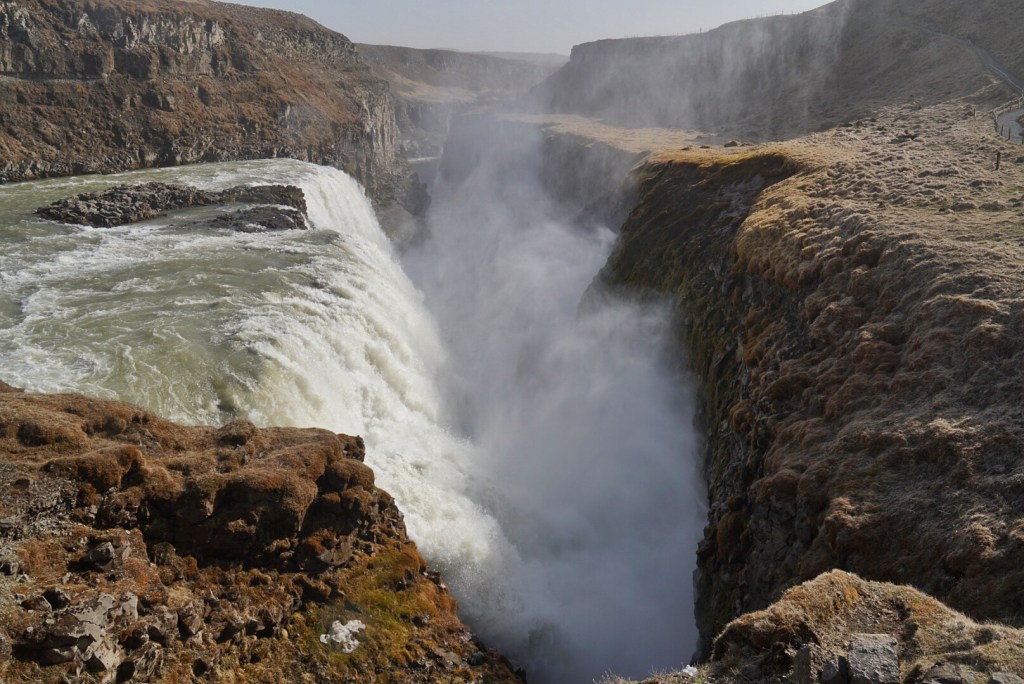
While it was certainly an impressive site, I think the majority of photographs that are in National Geographic and other classy publications were taken with drones to gain a more lofty vantage point. We saw one gentleman trying to launch his own drone, but it seemed to be struggling a bit with the wind. We will presume it’s somewhere in the jet stream and on its way to Svalbard now.
We drove back to our cottage in the middle of nowhere and cooked up some pasta on the stove and enjoyed a Hamingjukaka (happy cake) for dessert. Wish us and our cottage’s foundation some luck for the night. If we start hearing a welcoming chant from the Lollipop Guild when we wake up tomorrow, things have gone horribly wrong.
 passports & pepto bismol