
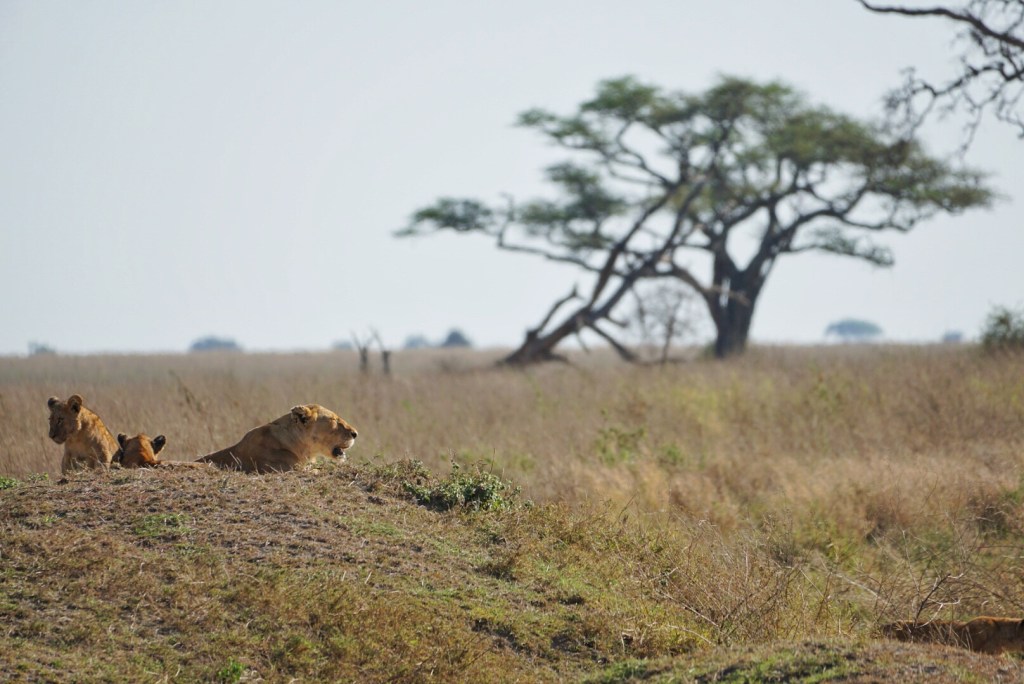
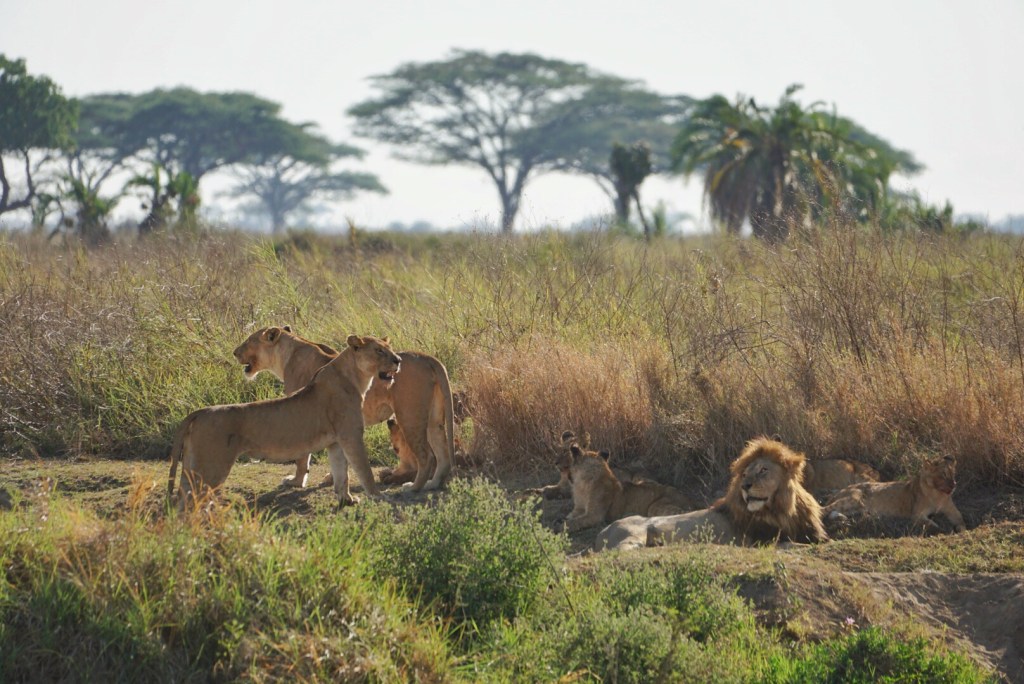
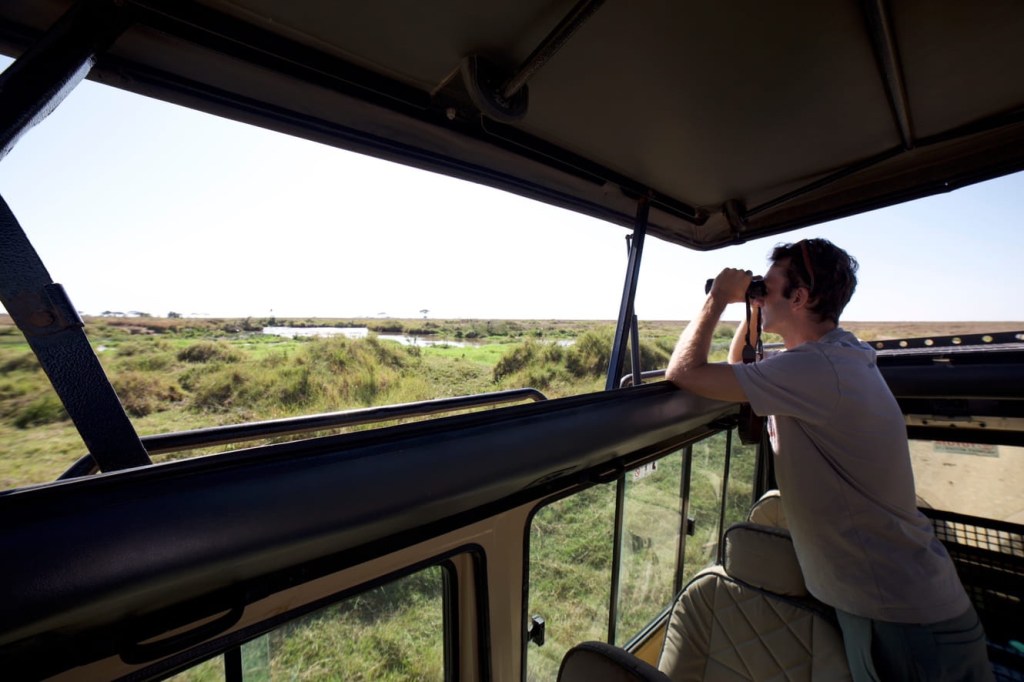
Our day began early, in order to beat the heat, and to have a better chance of seeing the animals being active rather than passed out. Very early on, we discovered a pride of at least eight lions. Three of them were large males. We lingered there for at least an hour watching them engage in different actions in the area. At one point, one of the lionesses attacked a bird near the water’s edge. I had my camera pointed at one of the other lions at that point, so I missed it, but there was a lot of other activity. There were hippos in the water as well, and one of the hippos had died due to natural causes, and one of the male lions was trying to get to it for an easy meal. In the very complicated circle of African life, the lion was skittish, however, because the dead hippo was at the water’s edge and made the lion vulnerable to crocodile attack. Complicated stuff.
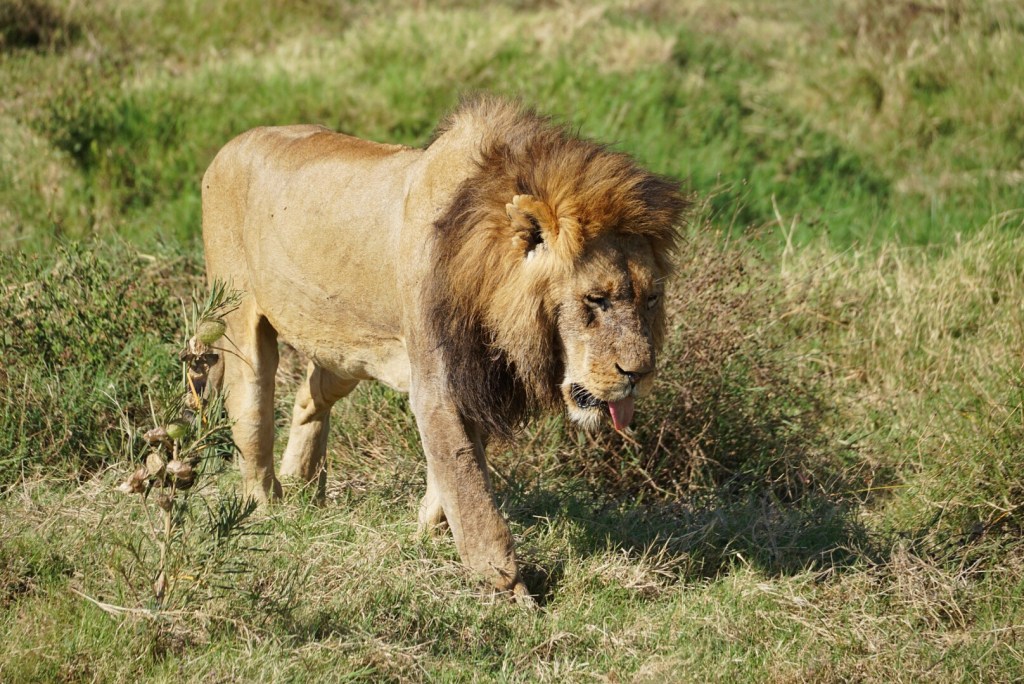
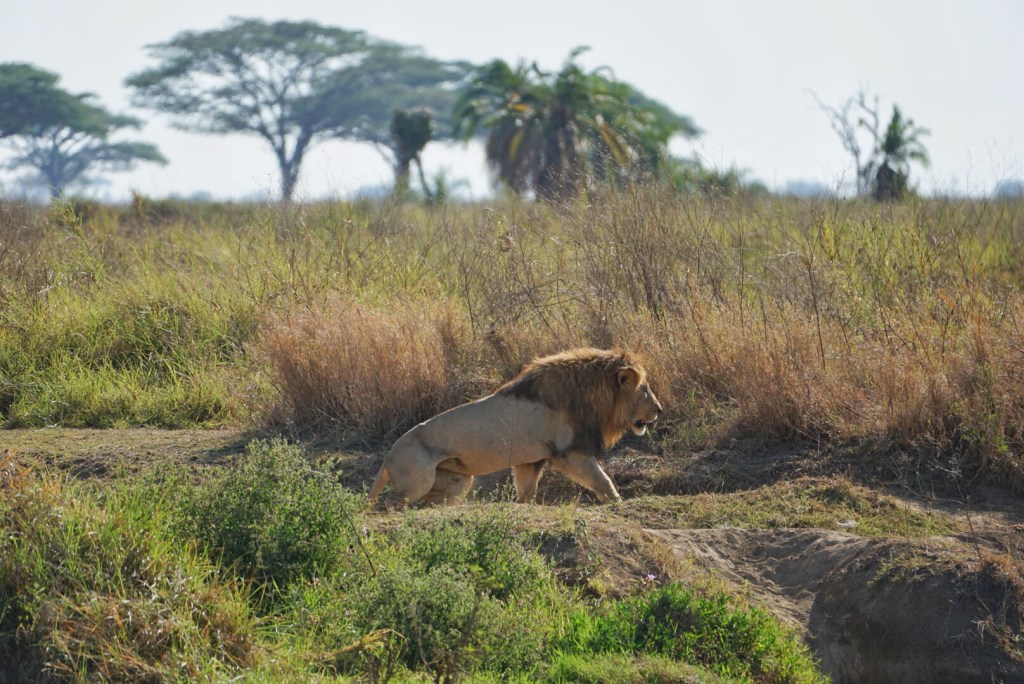
At one point, one of the other males got thirsty and crossed the road right in front of us to get to a stream on the other side. From that, we got a close up view of a male lion actually doing something other than idly sitting while the females did all the hard work. #feminism
Salvatori suspected that the rest of the pride would cross the road later on, but they didn’t seem to be in any hurry to do so even though the sun was starting to beat down harder. We then heard on the radio that there was a cheetah sighting, so we prioritized the spots over manes in the hopes that we might have our first cheetah sighting.
After racing toward the area of the reported sighting, we saw half a dozen safari jeeps parked, but no cheetah. We had to really strain our eyes to see it in the grass, lying down eating a gazelle. Eventually it poked its head up to look around, so we could finally catch a better glimpse of this elusive creature.
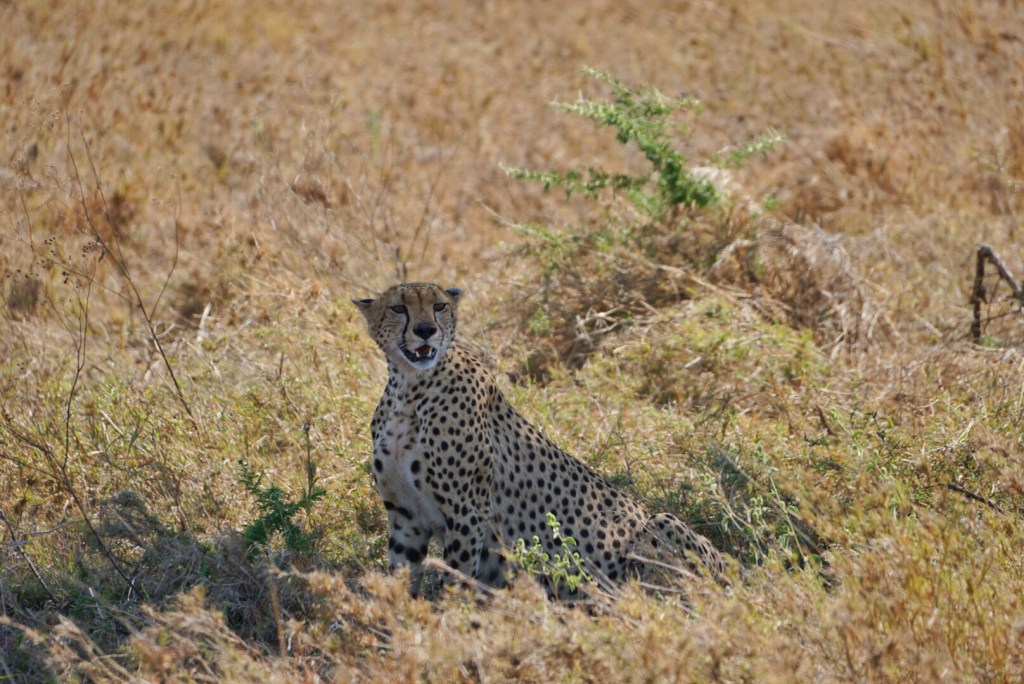
Our guide says the cheetah was searching its surroundings. Or perhaps it was sizing up the numerous safari jeeps staring at it while it tried to eat its meal. Bricole can relate to this having been basically stared at while eating dinner at our previous stay in Ngorongoro. In actuality, the cheetah could sense a threat, and sure enough, some ten minutes or so later a pack of baboons descended slowly on the area. Two rather bold ones got within 20m of the cheetah to size it up. One got up on a rock to look more intimidating, but the two ultimately retreated to a safer distance and waited for the rest of the baboons to show up.
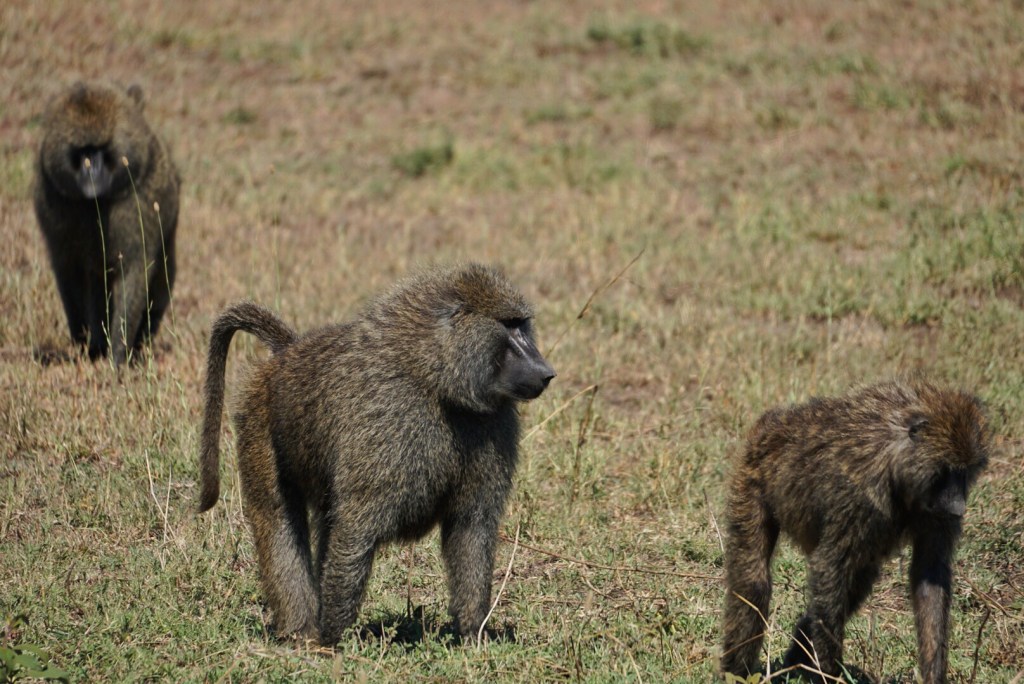
There were eventually more than 25 baboons slowly closing in on the cheetah to try and scavenge its kill. While the cheetah stood up to challenge them briefly, there were simply too many baboons taking up flanking positions, and the cheetah gave up its kill for safer territory.
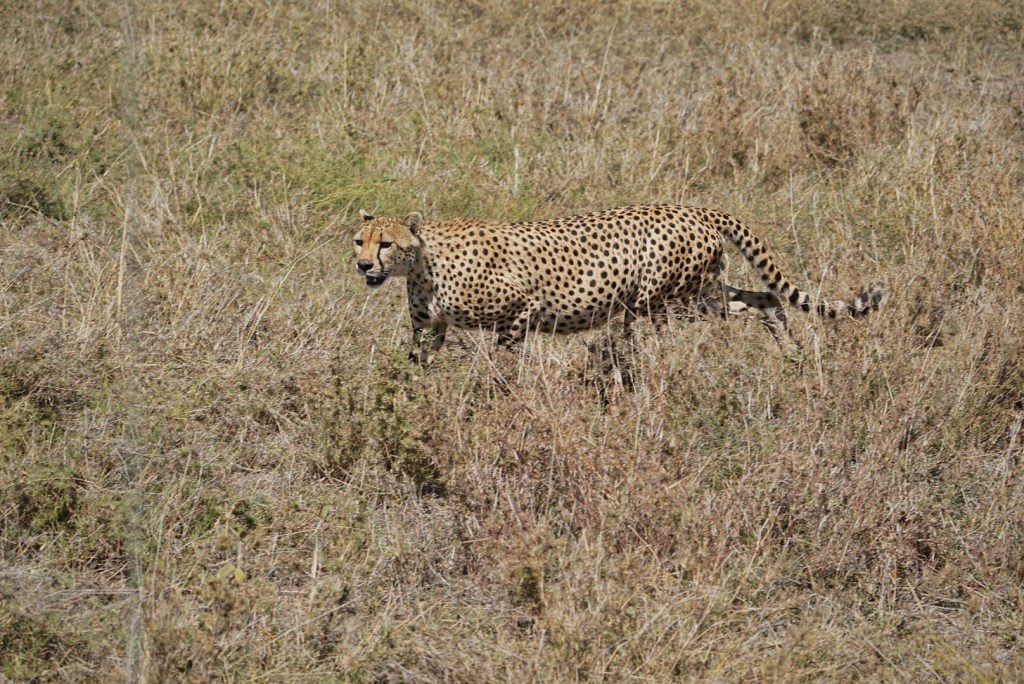
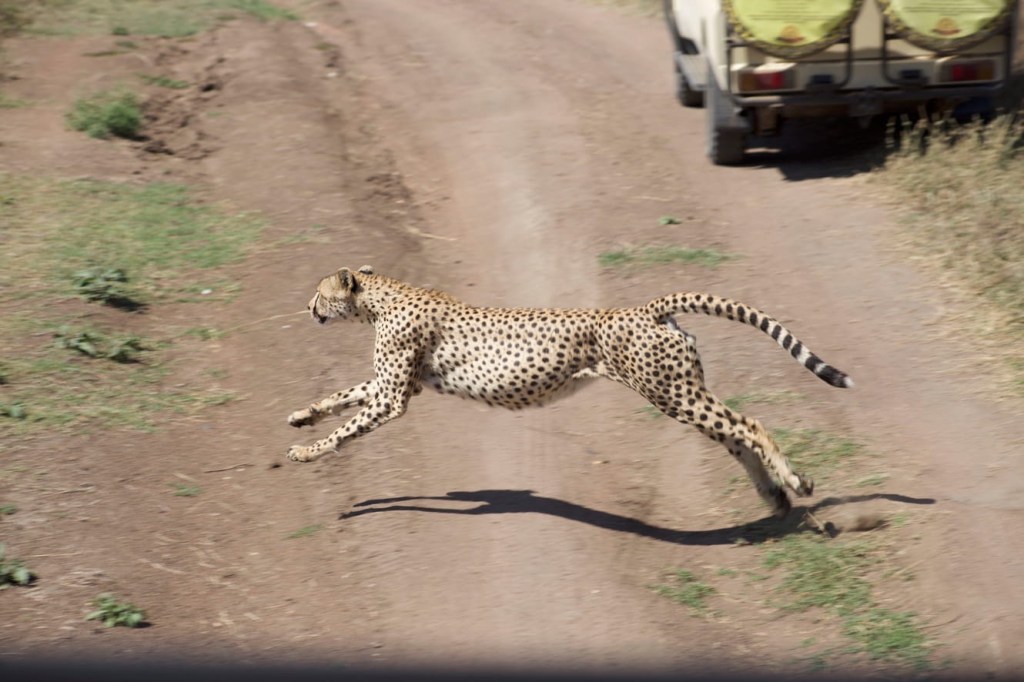
We spent the next hour or so driving on an extremely bumpy road without seeing anything more than a few Thomson’s gazelles. We were wondering if there was any payoff to this venture, but we were eventually rewarded for our efforts with another cheetah sighting. This time, it was simply cooling off in the shade, and we were able to get much closer.
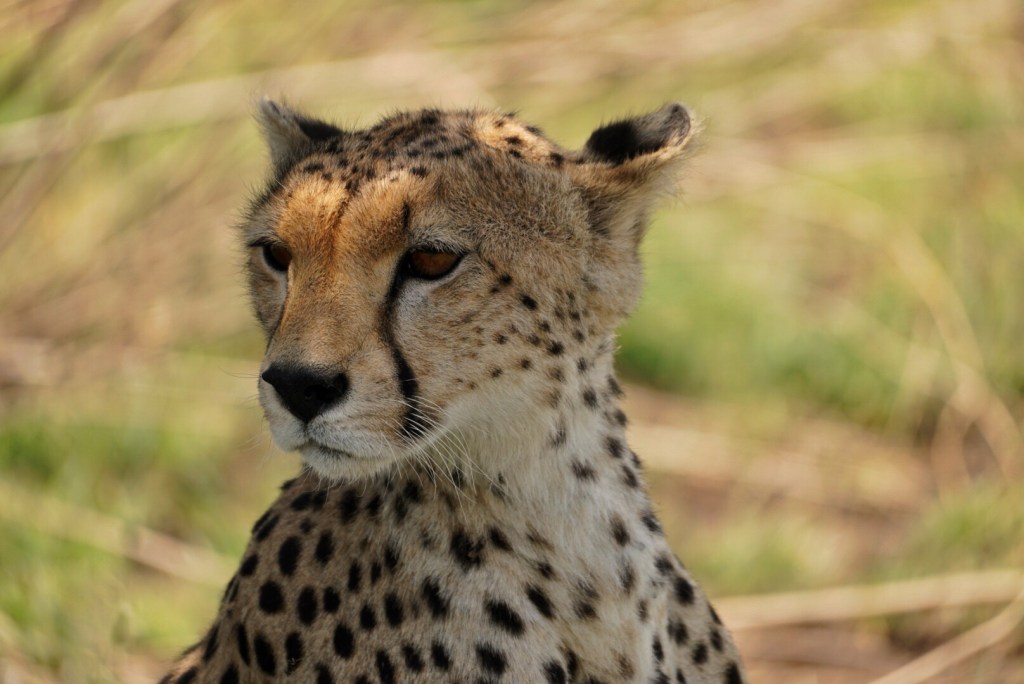
Nicole and I basically agreed with each other that we could basically end our safari now and be very content. We technically have another game drive tomorrow as we exit the Serengeti, but we’ve been absolutely amazed by the overall abundance of wildlife in this area, and are more than satisfied and grateful for what we’ve been able to see.
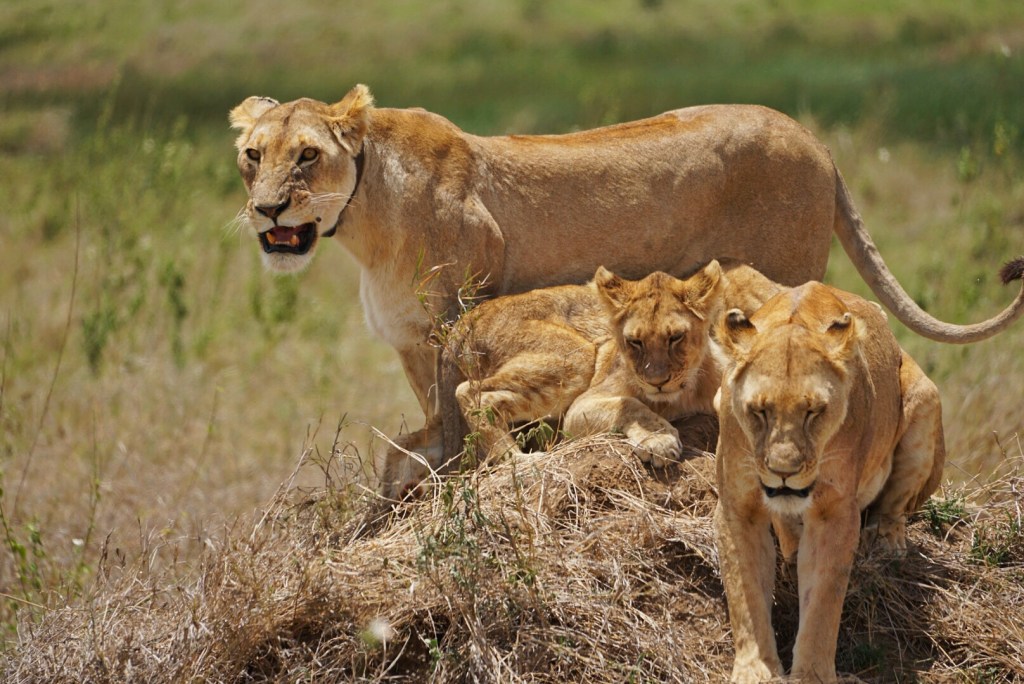
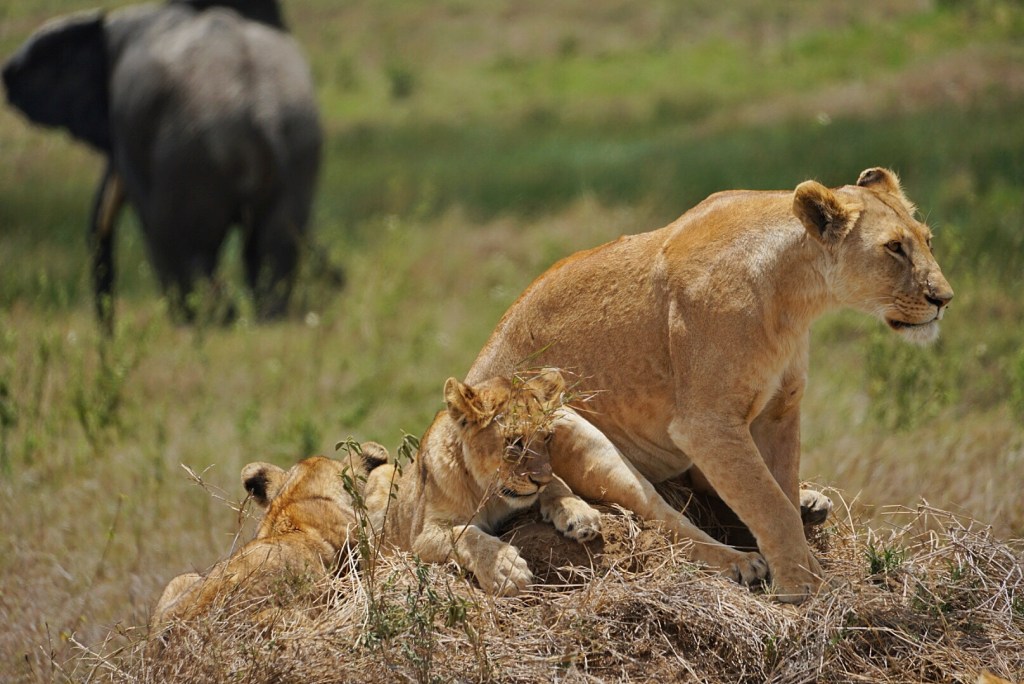
We encountered another pride of lions as we were slowly working our way back to camp. At this point of the day, the sun was very hot, and they were all resting, but the amount of lions we have seen in just the last couple days is absolutely incredible. And on top of that, a pack of elephants were walking along the riverbed just behind them, and it truly made for an incredible sight.
We arrived back at our camp around 2pm. We again had to brave the tsetse flies, who followed us to our tent. They are the absolute worst. Their motivations make no sense. Nicole got bit a couple of times. Their bite is very noticeable. The other day, I had bumps that rose rapidly after being bit, but they subsided shortly thereafter. Why they bite us is not known. They don’t seem to carry disease or anything along those lines, but they are extremely annoying. Wearing masks actually becomes a slight advantage because they like to fly around our faces.
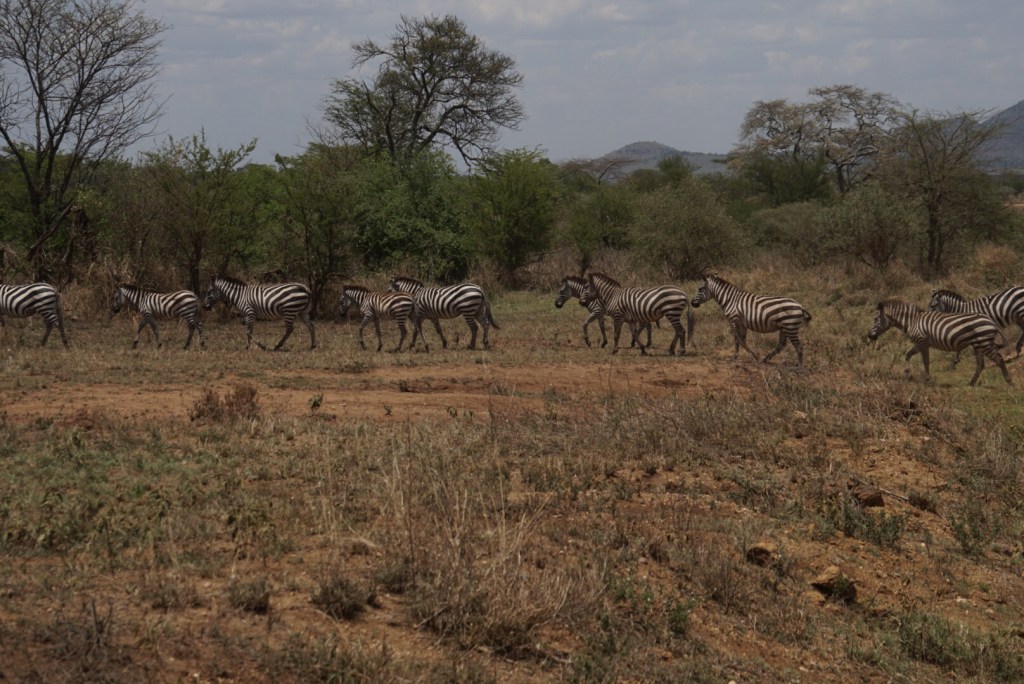
It’s said they follow the great migration of the various herd animals, but Nicole and I are not part of the herd and the tsetse flies are too dumb to notice. We were able to spend the rest of the afternoon/evening relaxing, but our tent was very hot because it doesn’t have any air conditioning, so we retreated to the main tent to grab some cold drinks. We were able to talk to one of the two staff there and were reminded that Africa is not just safaris. Gifty, the nice gentleman working the camp, was asking us about our next stop and we said we were headed to Turkey. He explained to us that it’s very difficult for Tanzanians to get even a tourist visa to anywhere in Europe because it’s assumed that they will overstay the visa and never return. While it can’t really compare, Nicole and I are getting a taste of not being wanted anywhere thanks to Covid and our country’s handling of it, but we are also working under the assumption that things will eventually change to our advantage, whereas Tanzanians will not catch the same break. Gifty talked to us for a while, sharing his tales of encountering a lion while trimming the grass, encountering a lion while filling a water tank, and expressed his shock when we told him it hasn’t rained in California since March.
It was nice to have some real talk, rather than the ubiquitous “Big-Five” animal tracking nonsense. While we avoided politics with Gifty, we have observed that Tanzania has really taken a confusing approach to the virus. While the government has declared victory over it through prayer, we continue to get our temperatures checked, we are given hand sanitizer every time we return to the camp or truck, staff are all wearing masks, and as a whole are following health guidelines much closer than their American counterparts. While Tanzania’s approach to the virus is pretty much universally viewed as backward and irresponsible, the country with self-proclaimed “zero-cases” seems to be addressing the virus much better than the United States. And that’s the tea.
 passports & pepto bismol